


A Brisbane Greens councillor has firmly rejected accusations that she distributed an “antisemitic” newsletter funded by the council, labeling the claims as “shameful and defamatory.” The controversy erupted after Lord Mayor Adrian Schrinner released an independent report on Wednesday concerning the actions of Greens councillor Trina Massey.
The report scrutinized a newsletter distributed by Cr Massey to her Gabba constituents in September 2024. The publication, which included an interview with a Palestinian refugee family residing in Brisbane and a timeline of the Israel-Palestine conflict, referred to a “genocide” against Palestinians. This sparked complaints from six residents who argued that the timeline was biased against Israel, notably omitting references to World War II, the Holocaust, or events of October 7.
Independent Report Findings
The investigation, conducted by an independent assessor retained by the council, concluded that while the newsletter was not antisemitic, Cr Massey had misused ratepayer funds to promote a “one-sided personal agenda” unrelated to local government matters. As a result, the council’s Ethics Committee mandated that Cr Massey issue an apology and repay the $10,000 used to produce the two-page spread.
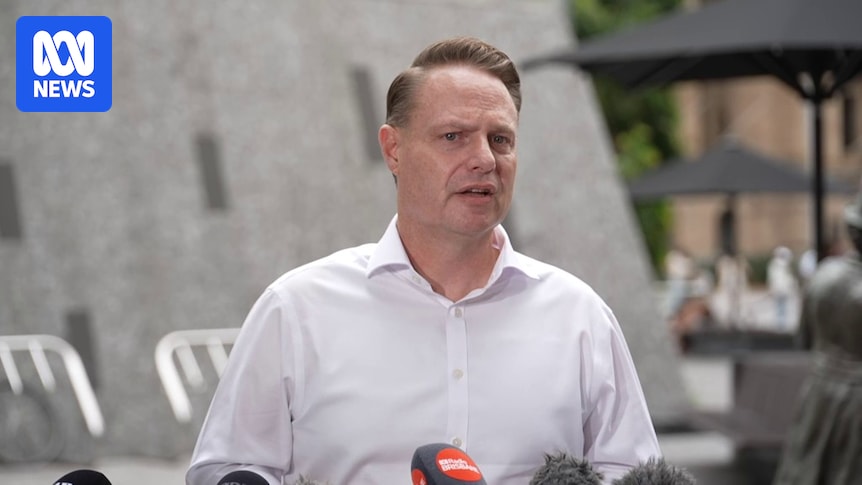
During a press conference on Wednesday, Cr Schrinner refrained from confirming whether the Ethics Committee possessed the authority to enforce compliance. However, he emphasized Cr Massey’s moral obligation to apologize, stating,
“We call on Cr Massey … to stop fanning the flames of hatred and antisemitism.”
Political Tensions and Reactions
Cr Schrinner dismissed allegations that the timing of the report’s release was linked to the recent Bondi terror attack, which resulted in 15 fatalities in Sydney. He clarified that the report was received on November 24, and the council required time to review its findings.
Cr Massey, however, accused the LNP of exploiting the Bondi attack for political gain. She remarked,
“It is disgraceful that this LNP politician would cynically exploit the nation’s grief in an attempt to silence my community’s strong advocacy for peace.”
She further criticized the mayor’s comments as “shameful” and “defamatory,” asserting that they were not supported by the council’s own report.
Cr Massey has not disclosed whether she will comply with the repayment demand, stating that she is “exploring her options.” She has consistently denied any antisemitic intent, highlighting that the newsletter was developed with input from the Jewish Council of Australia, a Jewish anti-Zionist organization.
Broader Implications and Historical Context
The incident highlights ongoing tensions within Australian politics regarding the Israel-Palestine conflict and the broader discourse on antisemitism. It underscores the delicate balance politicians must maintain when addressing international issues within local contexts. The allegations against Cr Massey have sparked a debate on the limits of free speech and the responsibilities of public officials.
Historically, similar controversies have arisen worldwide, where political figures face scrutiny over their statements or actions related to the Israel-Palestine conflict. These incidents often provoke heated discussions about bias, historical narrative, and the role of government in mediating such disputes.
Looking Ahead
As the situation unfolds, the focus will likely remain on Cr Massey’s response to the Ethics Committee’s demands and the potential political ramifications within the Brisbane City Council. The broader implications for the Greens party and its stance on international issues may also come under scrutiny as the public and political opponents closely watch the developments.
In the meantime, the debate over the newsletter serves as a reminder of the complexities involved in addressing sensitive geopolitical topics within local governance frameworks. The outcome of this controversy may set a precedent for how similar issues are handled in the future, both in Brisbane and beyond.