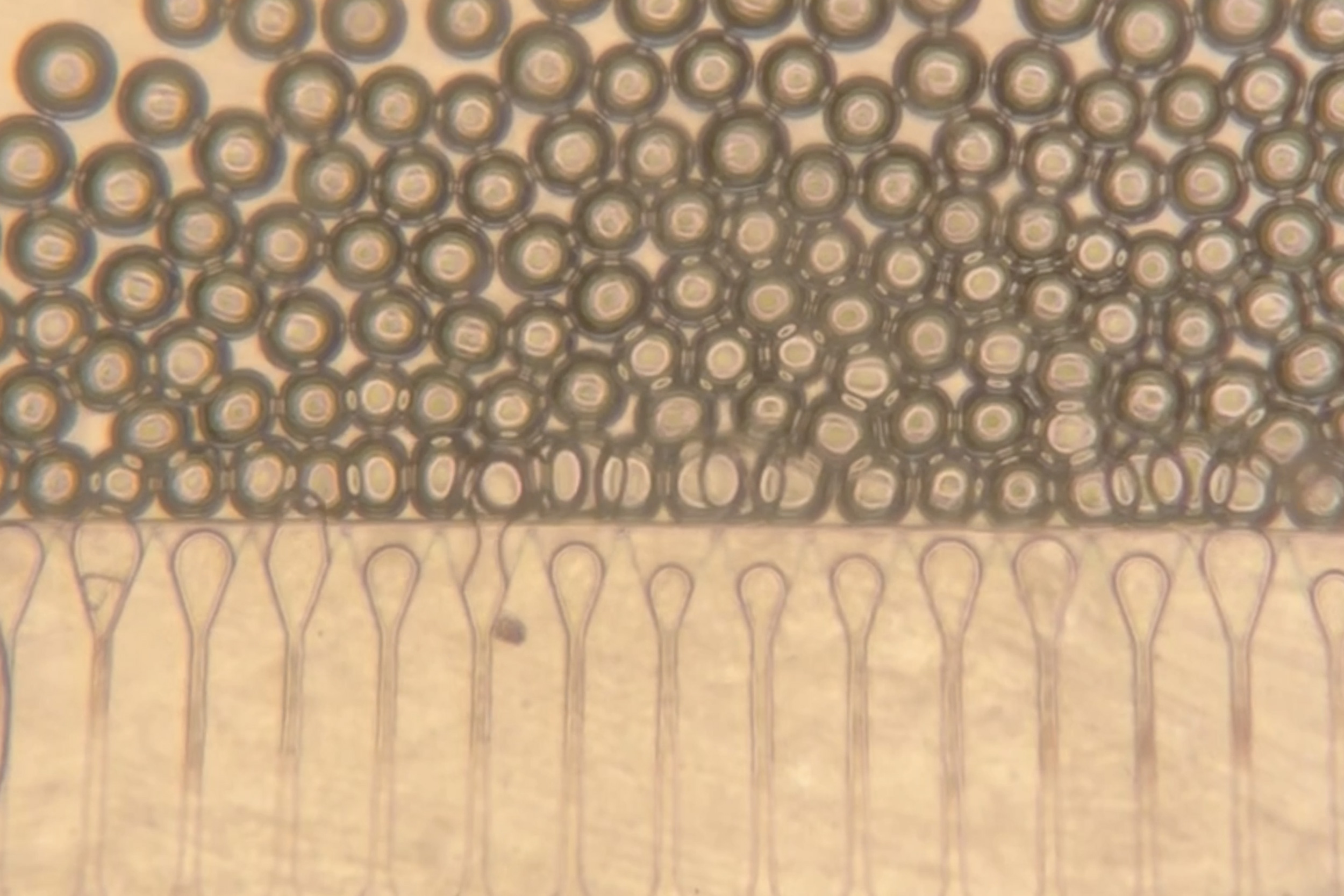




Red blood cells are crucial for transporting oxygen and supporting immune function in the human body. Abnormal shapes in these cells can signal serious health conditions such as diabetes, malaria, hereditary blood disorders, and vascular diseases. Traditionally, diagnosing these anomalies relies on optical microscopy, which requires fluorescent staining and expert manual inspection. However, this method is time-consuming, subjective, and often misses subtle cell changes.
Currently, advanced techniques like electron microscopy and super-resolution imaging can visualize cells at the nanoscale but are costly, complex, and still require staining. There is a pressing clinical demand for rapid, objective, and label-free methods to analyze red blood cell deformations at the single-cell level.
Innovative Polarized Light Solution
A research team led by Prof. Nan Zeng at Tsinghua Shenzhen International Graduate School has developed a groundbreaking solution using polarized light technology. The method, known as dual-angle Mueller matrix polarimetry (DMMP), analyzes individual blood cells by measuring how they alter the polarization state of light. This approach involves shining polarized light at cells and capturing their unique polarization signatures.
By integrating theoretical modeling with machine learning algorithms, the researchers identified six specific polarization feature parameters that quantitatively describe cell size, shape, refractive index, and surface characteristics. The team validated their method by testing red blood cells under various stress conditions that mimic disease states.
High Accuracy and Efficiency
The results demonstrated that the polarization parameters effectively distinguished between normal cells and those with abnormal deformations. In mixed blood samples containing both healthy and abnormal cells, a Random Forest classifier using these parameters achieved over 94% accuracy in determining cell type proportions.
“The technology offers several key advantages: it requires no staining or complex sample preparation, can analyze hundreds of cells per minute for high-throughput screening, and provides objective, quantitative measurements rather than subjective visual assessments.”
This label-free approach could be readily adapted for routine blood screenings in hospitals and clinics, potentially enabling earlier disease detection, more accurate diagnosis, and better monitoring of treatment responses for blood-related disorders.
Implications for Medical Diagnostics
The development of the DMMP method represents a significant advancement in medical diagnostics. By eliminating the need for staining and complex sample preparation, this technology allows for faster and more efficient blood cell analysis. The ability to process hundreds of cells per minute makes it particularly suitable for high-throughput screening, which is essential for large-scale clinical applications.
Moreover, the objective and quantitative nature of the measurements provided by this method could lead to more consistent and reliable diagnostic outcomes. This is a crucial improvement over traditional methods, which are often hampered by subjectivity and variability in results.
Future Prospects and Applications
The potential applications of this technology extend beyond routine screenings. It could be instrumental in research settings, where understanding the nuances of red blood cell deformations can contribute to the development of new treatments and therapies. Additionally, the adaptability of the DMMP method means it could be applied to other cell types, broadening its impact across various fields of medical research.
The work, entitled “Analysis of erythrocyte deformation characteristics based on dual-angle Mueller matrix measurement,” was published in Frontiers of Optoelectronics on December 3, 2025. As the field of medical diagnostics continues to evolve, innovations like this polarized light tool are paving the way for more efficient and accurate healthcare solutions.