




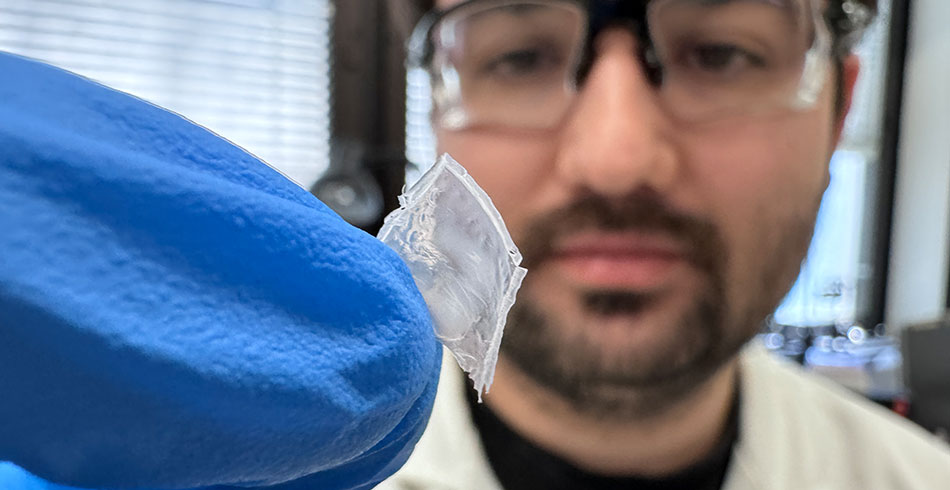
Researchers at RMIT University have unveiled a groundbreaking development in the field of energy harvesting: a flexible nylon-film device capable of generating electricity from compression. Remarkably, this device continues to function even after being repeatedly run over by a car, paving the way for self-powered sensors on roads and other electronic devices.
The innovation centers around the concept of piezoelectricity, a phenomenon where certain materials, such as quartz and ceramics, produce an electrical charge when subjected to pressure or vibrations. This principle is already employed in modern vehicles for components like fuel injectors and airbag systems. The RMIT team’s nylon film could serve as a more durable alternative for these applications, or even support new technologies for traffic-management sensing on roads.
The Science Behind the Innovation
The breakthrough addresses a long-standing challenge with energy-harvesting plastics, which, while capable of generating power from movement, often lack the durability needed for practical use. By harnessing ambient energy from movement and pressure, the new nylon film also contributes to reducing carbon emissions.
To achieve this, the research team, led by Distinguished Professor Leslie Yeo and Dr. Amgad Rezk, employed high-frequency sound vibrations and electric fields to reengineer the nylon at a molecular level. This process transformed a tough industrial nylon into a resilient power-generating film suitable for wearables, infrastructure, and smart surfaces.
“This method could power next-generation devices that need to survive real-world stresses—whether that’s wearable tech, sensors, or smart surfaces,” said Professor Yeo from the School of Engineering.
Potential Industrial Applications
Unlike common nylons, the material used, nylon 11, can generate electricity from pressure when its molecules are carefully aligned. Dr. Amgad Rezk highlighted the process’s significant advantages for industry, noting its energy-efficient and scalable approach.
“We’re excited to see where prospective industry partners could take this technology, from flexible electronics to sports equipment,” Rezk stated.
First author and RMIT PhD researcher Robert Komljenovic emphasized the film’s flexibility, toughness, and reliability. “Our nylon devices can harvest energy simply from compression during motion,” he explained. “The thin-film devices are so robust, you can fold them, stretch them, even run a car over them—and they keep making power. This could mean new ways to charge small devices using compression from the movement of people, machines, or vehicles.”
Looking Forward
The announcement comes as researchers plan to scale up the technology for larger applications, exploring partnerships with industry to bring this innovation to market. The potential for this technology is vast, with implications for a range of sectors from consumer electronics to infrastructure monitoring.
This development follows a broader trend in renewable energy technologies, where the focus is increasingly on harnessing ambient and otherwise wasted energy. As the world shifts towards more sustainable energy solutions, innovations like the nylon-film device could play a crucial role in reducing reliance on traditional power sources.
The move represents a significant step forward in the quest for more resilient and efficient energy-harvesting materials, and it will be intriguing to see how this technology evolves and integrates into everyday applications.