




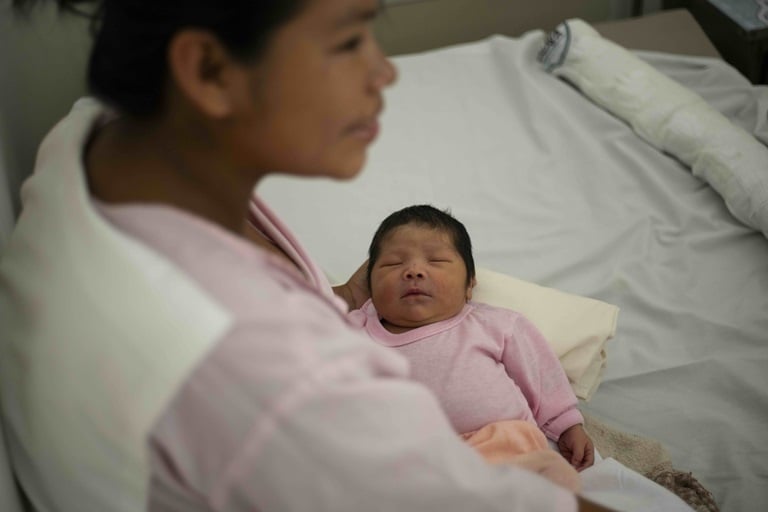
The World Health Organization (WHO) has validated Brazil for the elimination of mother-to-child transmission (EMTCT) of HIV, marking a significant public health achievement. As the most populous country in the Americas to reach this milestone, Brazil’s success underscores its commitment to universal and free access to healthcare through its Unified Health System (SUS), which is grounded in a robust primary health-care framework and a strong emphasis on human rights.
Dr. Tedros Adhanom Ghebreyesus, WHO Director-General, highlighted the significance of this accomplishment, stating, “Eliminating mother-to-child transmission of HIV is a major public health achievement for any country, especially for a country as large and complex as Brazil. Brazil has shown that with sustained political commitment and equitable access to quality health services, every country can ensure that every child is born free of HIV and every mother receives the care she deserves.”
Celebrating a Landmark Achievement
The milestone was celebrated during a ceremony in Brasília, attended by notable figures including President Luiz Inácio Lula da Silva, Brazil’s Minister of Health Alexandre Padilha, and Dr. Jarbas Barbosa, Director of the Pan American Health Organization (PAHO), alongside representatives from UNAIDS. This event marked a pivotal moment in Brazil’s public health journey.
Meeting Validation Criteria
Brazil met all the necessary criteria for EMTCT validation, such as reducing vertical transmission of HIV to below 2% and achieving over 95% coverage for prenatal care, routine HIV testing, and timely treatment for pregnant women living with HIV. The country also demonstrated a strong commitment to delivering quality services for mothers and infants, supported by robust data and laboratory systems, and a focus on human rights, gender equality, and community engagement.
The evaluation process, supported by PAHO, involved independent experts who reviewed comprehensive data, documentation, and health facility operations. These findings were assessed by WHO’s Global Validation Advisory Committee, which formally recommended Brazil’s validation for elimination.
Part of a Broader Initiative
Over the past decade, more than 50,000 pediatric HIV infections have been averted in the Region of the Americas due to initiatives aimed at eliminating mother-to-child transmission of HIV. Brazil’s achievement is part of the broader EMTCT Plus Initiative, which seeks to eliminate mother-to-child transmission of HIV, syphilis, hepatitis B, and congenital Chagas, in collaboration with UNICEF and UNAIDS.
Winnie Byanyima, UNAIDS Executive Director, expressed her enthusiasm, saying, “I am delighted that Brazil has just been certified by WHO/PAHO for eliminating vertical transmission – the first country of more than 100 million people to do so. And they did it by doing what we know works – prioritizing universal health care, tackling the social determinants that drive the epidemic, protecting human rights, and even – when necessary – breaking monopolies to secure access to medicines.”
Global Context and Future Implications
Brazil joins a select group of 19 countries and territories worldwide validated by WHO for EMTCT, with twelve located in the Region of the Americas. In 2015, Cuba became the first country globally to be validated for EMTCT of HIV and the elimination of congenital syphilis. Other countries in the region include Anguilla, Antigua and Barbuda, Bermuda, Cayman Islands, Montserrat, and Saint Kitts and Nevis in 2017; Dominica in 2020; Belize in 2023; and Jamaica and Saint Vincent and the Grenadines in 2024.
Outside the Americas, countries validated for EMTCT of HIV include Armenia, Belarus, Malaysia, Maldives, Oman, Sri Lanka, and Thailand. This global context highlights the growing momentum towards eliminating mother-to-child transmission of HIV and related conditions.
As Brazil celebrates this historic achievement, the focus now shifts to maintaining these gains and expanding efforts to address other communicable diseases. The success of Brazil’s approach serves as a model for other nations aiming to achieve similar public health milestones, reinforcing the importance of political commitment, community engagement, and equitable healthcare access.