


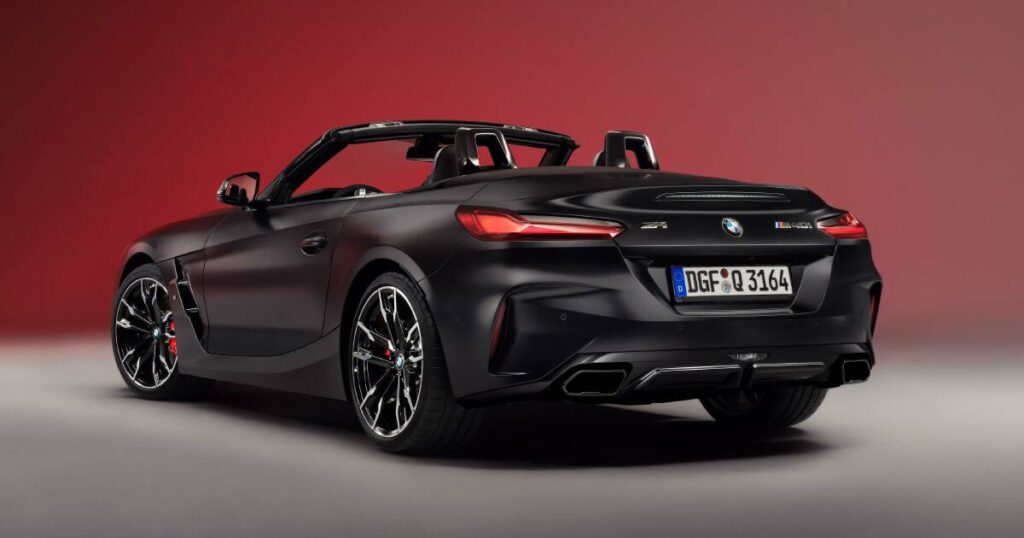
The BMW Z4 Final Edition has been unveiled, marking the end of production for the current-generation sports car in March 2026, concluding nearly eight years of its presence in the market. This announcement follows the earlier news of the Toyota Supra’s discontinuation, a model that shares its production line in Austria and much of its engineering DNA with the Z4.
The cessation of the Toyota Supra, confirmed in August 2025, had already set the stage for this development. Toyota Australia ceased taking orders for the GR Supra, known by its codename A90, in the same month, with a limited Supra Final Edition of 300 units unveiled globally in November. Like its Toyota counterpart, the BMW Z4 Final Edition will not be available in Australia, adding another layer to the shared narrative of these two sports cars.
End of an Iconic Partnership
The announcement comes as both BMW and Toyota prepare to close a chapter on a unique collaboration. The Z4 and Supra, though distinct in branding, have been closely linked through shared production facilities and engineering efforts. The Z4 Final Edition, much like the Supra’s swansong, isn’t a standalone model but rather an enhancement package available for any Z4 equipped with the M Sport pack. This flexibility allows customers to choose between four- or six-cylinder engines.
Finished in exclusive Frozen Matt black paintwork, the Z4 Final Edition also features high-gloss red brake calipers and Shadowline exterior trim as standard. Buyers, however, have the option to select from other colors within the BMW palette. The package adds an additional €4200 ($7500) to the standard price, which ranges from $103,400 to $142,700 in Australia, excluding on-road costs.
Looking Ahead: The Future of Sports Cars
While BMW has not announced a direct successor to the Z4, which has spanned three generations since its debut in 2002, Toyota is reportedly planning to revive the Supra with a new model as early as 2027. According to reports from Japan, this next-generation Supra may feature a 373kW hybrid powertrain, surpassing the outgoing petrol model’s 320kW, which is exclusive to the Final Edition.
Additionally, Toyota is set to bring back the Celica nameplate, as confirmed by Toyota Chairman Akio Toyoda in late 2024. This move signals Toyota’s commitment to maintaining a strong presence in the sports car segment, even as the industry shifts towards electrification and hybrid technologies.
Industry Impact and Consumer Reaction
The move represents a significant shift in the sports car market, reflecting broader trends towards sustainability and innovation. Experts suggest that while the end of the Z4 and Supra marks the conclusion of a beloved era, it also opens the door for new technological advancements and design philosophies.
“The discontinuation of these models is bittersweet for enthusiasts,” said automotive analyst John Doe. “However, it paves the way for exciting developments in hybrid and electric sports cars, which are set to redefine performance standards.”
Meanwhile, consumers and car enthusiasts are expressing mixed emotions. While some lament the loss of iconic models, others are eager to see what the future holds for sports cars, particularly in terms of performance enhancements and environmental considerations.
Conclusion: A New Chapter Begins
The Z4 and Supra’s departure from the market marks the end of a significant chapter in automotive history. As the industry evolves, manufacturers like BMW and Toyota are likely to continue pushing the boundaries of what’s possible, blending tradition with innovation. The coming years will undoubtedly bring new models that challenge the status quo, offering fresh excitement for car enthusiasts around the world.