




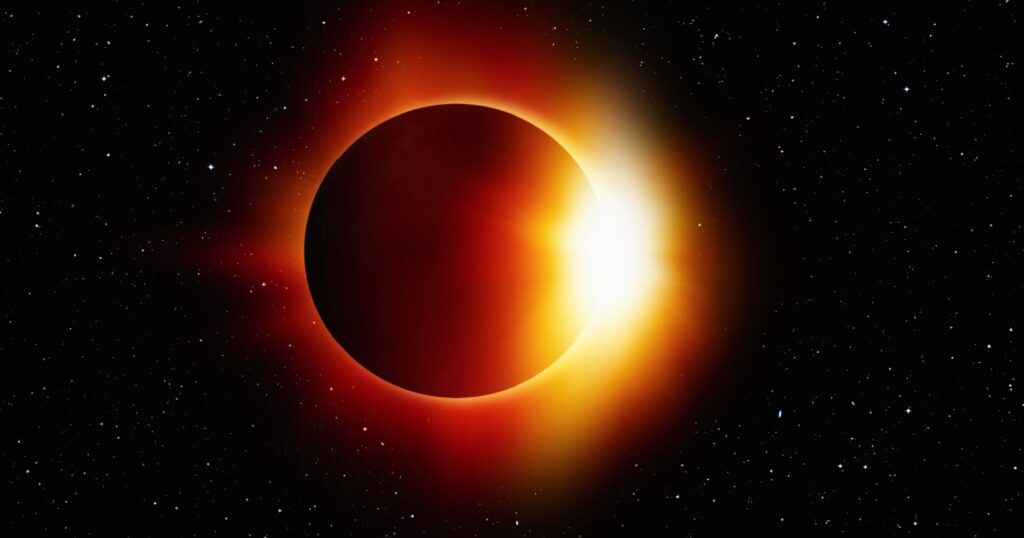
Solar eclipses have long fascinated humans, drawing millions to the path of totality to witness the celestial event. However, the impact of these eclipses on animal behavior, particularly birds, has remained largely anecdotal—until now. A groundbreaking study has provided new insights into how avian species react to the dramatic changes in light during a total solar eclipse.
The 2024 Great American Eclipse offered a unique opportunity for researchers to gather data on bird behavior during such events. Historically, the rarity and brief duration of total solar eclipses have made it challenging to collect sufficient data. To address this, a team of researchers developed an innovative approach by creating a mobile application called SolarBird. This app enabled citizen scientists to contribute observations from across the path of totality and beyond, significantly expanding the scope of data collection.
Harnessing Citizen Science for Research
The SolarBird app proved to be a resounding success, with 1,700 users submitting nearly 11,000 observations. This extensive dataset allowed researchers to examine avian behavior across a wide geographical area. Liz Aguilar, a PhD student at Indiana University, emphasized the importance of public participation in the study, stating:
“Scientists can’t be in a thousand places at once. The app gets around this problem by leveraging the public as scientists. It also encourages people to look around and listen, adding to the show in the sky.”
Participants were instructed to observe a specific bird species before, during, and after the eclipse, answering ten questions about their observations. This approach allowed researchers to gather detailed information on how different species responded to the eclipse.
Varied Responses Among Bird Species
The study, published in the journal Science, revealed intriguing variations in bird behavior. Of the 52 species analyzed, 23 showed no change in behavior, while 29 exhibited significant changes in their vocalizations. Notably, these changes were not uniform across species. Ten species increased their vocal activity as the eclipse began, while one species sang less. Nineteen species began singing their morning songs as the sun re-emerged from behind the moon.
During the approximately four minutes of totality, only 12 species displayed unusual behavior. This finding suggests that while eclipses are rare, the sudden change in light can trigger behaviors typically associated with dawn and dusk.
Implications for Understanding Bird Behavior
Total solar eclipses are infrequent, with most birds experiencing only one or none in their lifetimes. However, birds are accustomed to changes in light, such as those caused by cloud cover or the daily transition from night to day. Understanding how these changes impact bird behavior is crucial, not only for rare eclipses but also for broader ecological studies.
The study’s authors highlighted the significance of these findings, noting:
“It’s crazy that you can turn off the Sun, even briefly, and birds’ physiology is so tuned to those changes that they act like it’s morning. This has important implications on the impact of urbanization or artificial light at night, which are much more widespread.”
Future Research and Broader Implications
The researchers aim to continue using the SolarBird app in future eclipses to gather more data. Different species inhabit various regions, and over time, this approach will provide a more comprehensive understanding of avian responses to eclipses. This research could also shed light on how birds are affected by increasing light pollution due to urbanization.
As the study demonstrates, leveraging technology and public participation can significantly enhance scientific research, offering new insights into the natural world. The findings not only enrich our understanding of bird behavior during eclipses but also raise important questions about the broader impact of human activities on wildlife.