



The world’s largest mining company, BHP, is harnessing the power of artificial intelligence (AI) across its global operations, aiming to enhance efficiency and profitability. By integrating AI into various processes such as conveyor belts, blasting zones, and safety applications, BHP anticipates adding up to $250 million annually to its bottom line.
One of the most significant implementations of AI is at BHP’s Escondida copper mine in Chile, which contributes approximately 5% to the global copper output. The company has applied machine learning to optimize blast patterns, improving the efficiency of breaking up ore bodies of varying densities. This advancement not only reduces operational downtime but also enhances the overall productivity of the mine.
AI Transformations at Escondida
Mine operators traditionally drill ore samples weeks before excavation to assess mineral content. However, BHP’s Chief Technical Officer, Johan van Jaarsveld, explained that the company began utilizing AI to analyze historical drill data at Escondida about a year ago. This approach helps in predicting ore density and designing optimal blast patterns, leading to more efficient rock fragmentation.
“You break the rock a lot more efficiently, to the point where the mills don’t have to work so hard, which means you can actually get more rock through the mills,” van Jaarsveld stated. “The day we started doing that, mill throughput went up 3 per cent. On a mine like Escondida, that’s quite significant.”
This improvement translates to an additional 30,000 tonnes of copper from the mine, which is 57% owned by BHP and 30% by Rio Tinto. The remaining stake is held by a Japanese partner. In its latest annual results, BHP reported a record full-year copper production of 2 million tonnes, with a 16% increase at Escondida.
Expanding AI Across Operations
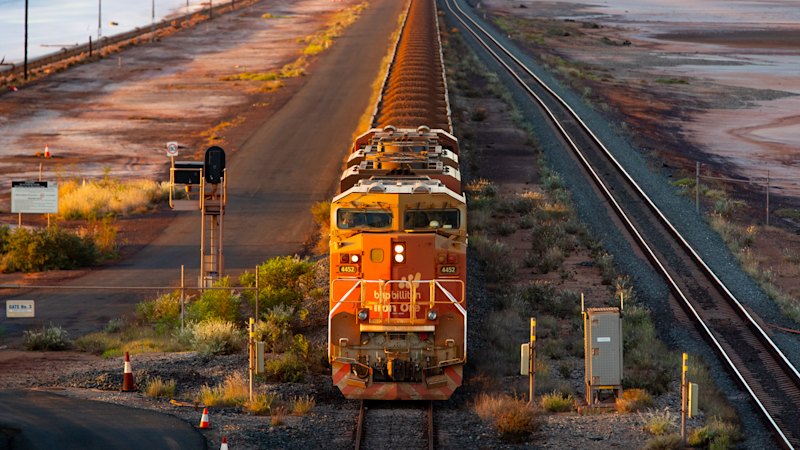
Beyond Escondida, BHP is implementing AI-driven solutions at its West Australian iron ore operations. Machine vision technology, coupled with software overlays, is used to detect spillage on ore rail transports and identify oversized rocks or foreign objects on conveyor belts. This innovation taps into existing CCTV systems, creating a real-time spillage detection model that halts operations to prevent damage.
“[We] have an AI agent that’s watching the video in real time and can identify objects quickly that will either tear a conveyor or that might block a crusher,” van Jaarsveld explained.
Such advancements prevent significant downtime, equating to up to 1 million tonnes of additional ore processed through BHP’s export system. This efficiency boost is particularly valuable as the ore is primarily shipped to China, a major player in the global steel industry.
AI-Driven Safety and Reporting Enhancements
AI is also transforming safety protocols within BHP. Simple tools like voice-to-text applications are revolutionizing hazard reporting, allowing employees to log incidents via mobile apps. These reports are geotagged and logged in real time, with the system providing digital risk assessments based on historical data.
“Since 2021, there’s roughly $2 billion in value that’s been created. You either increase revenue or you reduce costs, but it’s got a lasting [earnings] impact,” van Jaarsveld noted.
With approximately 200 AI solutions deployed across its operations, BHP is now focusing on a platform-wide approach to achieve annual savings or revenue gains of about $250 million. This strategy involves developing a unified system applicable across various sites, promising a more substantial impact on the business.
The move represents a significant shift in how BHP integrates technology into its operations, setting a precedent for the mining industry. As AI continues to evolve, its role in enhancing operational efficiency and safety is likely to expand, offering substantial benefits to companies willing to invest in these technologies.