
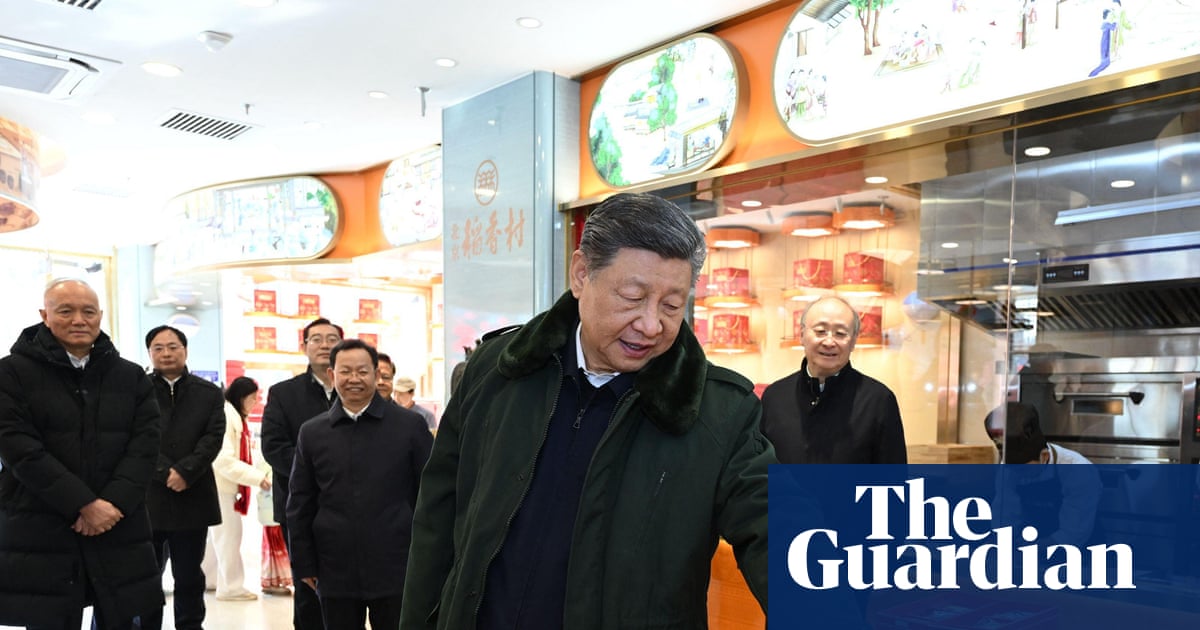
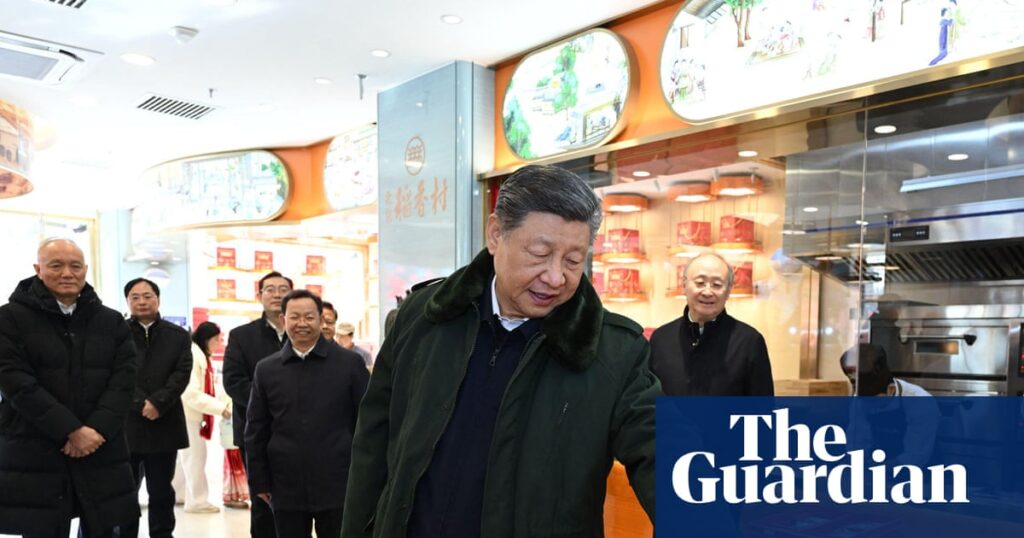
A historic pastry shop in Beijing has become the center of attention after Chinese President Xi Jinping stopped by during his lunar new year tour. The visit, which took place earlier this week, has led to a surge in customers eager to purchase the same sweet treats favored by Xi.
Traffic in Beijing’s bustling capital came to a halt as President Xi toured the city on Monday and Tuesday. His itinerary included visits to technology parks, meetings with business leaders, and a stop at a Chinese new year market in the Dongcheng district. The nine-day festivities, marking the most significant holiday in China’s calendar, are set to commence officially on Sunday.
During his visit to the festive market, Xi purchased a 45 yuan (£4.79) bundle of delicacies from Daoxiangcun, a renowned bakery celebrated for its traditional snacks. According to the shopkeeper, Xi selected three items: honey-glazed dough twists, cream-filled dough twists, and jujube flower pastries—a flaky, flower-shaped cookie filled with red dates.
Impact of Xi’s Visit on Daoxiangcun
Since the presidential visit, Daoxiangcun has been inundated with shoppers keen to sample the Xi-approved pastries. One enthusiastic customer, Zhao, bought 16 bags of the snacks, which are now being pre-packaged into Xi-themed triples. “These are the same new year’s goods recommended by the general secretary, and people really like them. I want to buy some to give to my friends,” Zhao told a reporter.
Xi Jinping, who serves as the general secretary of the Chinese Communist Party (CCP) in addition to being China’s president and the commander of the armed forces, has a significant influence on consumer behavior. Daoxiangcun has had to restock its pastries to meet the demand from patriotic and hungry customers.
Historical Context and Consumer Trends
Xi’s personal preferences have often sparked trends among the Chinese populace. In 2022, a viral sensation emerged on social media, with young people donning “office and bureau style clothes” as a humorous nod to the plain attire of CCP bureaucrats, mimicking the style of the party’s highest-ranking officials, including Xi.
This phenomenon is not entirely new. The influence of political figures on consumer behavior and fashion trends has historical precedents in China and beyond. The public’s desire to emulate leaders can be seen as a form of cultural homage, reflecting both admiration and a sense of national pride.
Broader Implications and Future Outlook
The surge in sales at Daoxiangcun highlights the profound impact of political figures on local economies and consumer trends. As China continues to navigate its economic landscape, the intersection of politics and consumerism remains a powerful force.
Looking forward, businesses may increasingly seek to align themselves with national figures to capitalize on such trends. The phenomenon underscores the importance of cultural symbolism in consumer behavior, particularly during significant national holidays like the lunar new year.
As the celebrations begin, it remains to be seen how long the “Xi effect” will last at Daoxiangcun and whether similar trends will emerge elsewhere. For now, the bakery enjoys its moment in the spotlight, serving as a testament to the enduring influence of China’s leadership on everyday life.