




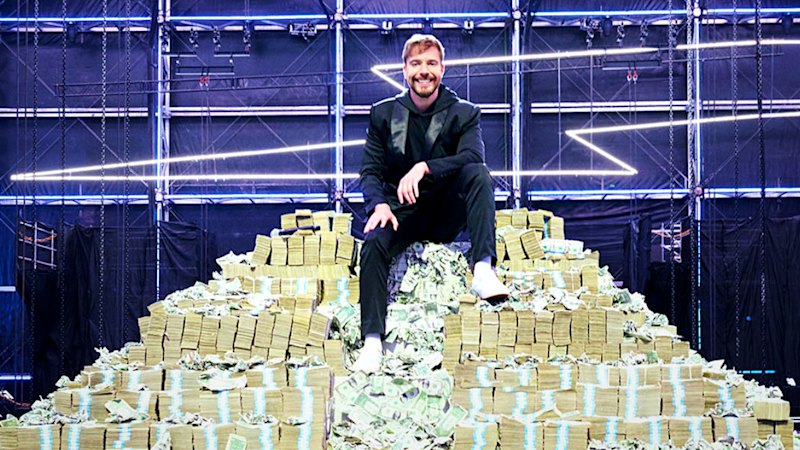
Beast Games, touted as the largest reality TV show globally, has returned for its second season, sparking both excitement and controversy. Created by YouTube sensation MrBeast, also known as Jimmy Donaldson, the show initially captivated audiences with its staggering scale—featuring 1,000 contestants and a $10 million prize in its inaugural season. The series, produced in collaboration with Amazon Prime, is a reality TV adaptation of the popular South Korean series Squid Game, albeit without the life-threatening stakes.
The first season of Beast Games, which premiered last summer, quickly became Amazon Prime’s most-watched unscripted series, attracting 50 million viewers within just 25 days. The show broke 44 Guinness World Records, solidifying its place in the annals of television history. However, it has not been without its critics. Described by some as a “dystopian nightmare” and a “cruel abstraction,” the show has faced backlash for its perceived insensitivity and the ongoing legal battle involving allegations of poor working conditions and a culture of misogyny and sexism.
The Phenomenon of MrBeast
Jimmy Donaldson, the mastermind behind Beast Games, has built a formidable empire on YouTube, amassing 458 million subscribers. His content is characterized by grandiose stunts and philanthropic endeavors, often involving significant financial giveaways. According to Forbes, Donaldson’s wealth is estimated at around $500 million, derived from various business ventures, including his snack food line, Feastables, and software company, Viewstats.
Despite his immense fortune, Donaldson claims to reinvest most of his earnings back into his content, even admitting to covering financial gaps when Beast Games’ first season exceeded its budget. His approach to content creation has always been about pushing boundaries, whether through elaborate challenges or life-changing acts of charity.
Inside Beast Games: Season Two
Season two of Beast Games has made some notable changes, reducing the contestant pool from 1,000 to 200. This decision, according to Donaldson, was influenced by viewer feedback and reviews, which highlighted difficulties in connecting with individual contestants. The new season introduces a “Smart vs. Strong” theme, dividing participants into two groups based on perceived intellectual and physical attributes.
In Beast City, a custom-built set in the Nevada desert, the “Strong” contestants are shown engaging in physical activities, while the “Smart” group, a diverse mix of individuals with various academic and professional backgrounds, is depicted in more cerebral settings. Despite these attempts at characterization, the show often reduces contestants to simplistic stereotypes, a criticism that has been leveled at MrBeast’s content in general.
Controversies and Criticisms
The criticisms of Beast Games extend beyond its portrayal of contestants. The show’s spectacle-driven format has been described as alienating, with life-changing moments reduced to brief, sensational clips. This approach has drawn comparisons to the original Squid Game, which offered a more nuanced critique of capitalism and societal pressures.
However, there is an argument to be made for the transparency of Beast Games’ spectacle. Reality TV enthusiasts often intellectualize shows like Real Housewives or Big Brother, but Beast Games embraces its role as pure entertainment. The upcoming fourth episode promises an intriguing crossover with the long-running competition show Survivor, featuring its iconic host Jeff Probst. This collaboration could potentially infuse Beast Games with some of the depth and character development that it currently lacks.
The Future of Reality Television
As Beast Games continues to evolve, it raises important questions about the future of reality television. Is bigger always better? While the show’s massive scale and high stakes have undoubtedly captured public attention, there is a growing demand for more substantive content that goes beyond mere spectacle.
For MrBeast, the challenge lies in balancing his trademark grandiosity with meaningful storytelling. If Beast Games can successfully integrate more character-driven narratives and thoughtful commentary, it could redefine what it means to be the “biggest” reality show in the world—not just in terms of numbers, but in cultural impact as well.
As season two unfolds, viewers and critics alike will be watching closely to see if Beast Games can rise to this challenge and deliver a reality TV experience that is both entertaining and enriching.