



The global energy landscape is undergoing a significant transformation as battery storage costs have plummeted by 60 percent over the past two years. This dramatic decrease is reshaping power grids and altering the nature of long-term energy contracts. The insights were shared by Connor Teskey, CEO of Brookfield Renewable Partners, during a discussion on the company’s annual earnings.
Brookfield Renewables, a major player in the energy sector, acquired the assets of Neoen, a French-based leader in renewable energy, for $11 billion just over a year ago. Teskey emphasized the rapid growth of battery storage within their portfolio, noting, “Batteries are the fastest growing part of our platform today, and we expect that to continue.”
Impact of Falling Battery Costs
The substantial reduction in battery costs is attributed to technological advancements and increased production scale. Teskey highlighted that these cost reductions have made batteries a viable and economic solution in numerous global markets. “Battery costs have come down more than 60% over the last 24 months,” he stated, underscoring the potential for batteries to support various energy projects worldwide.
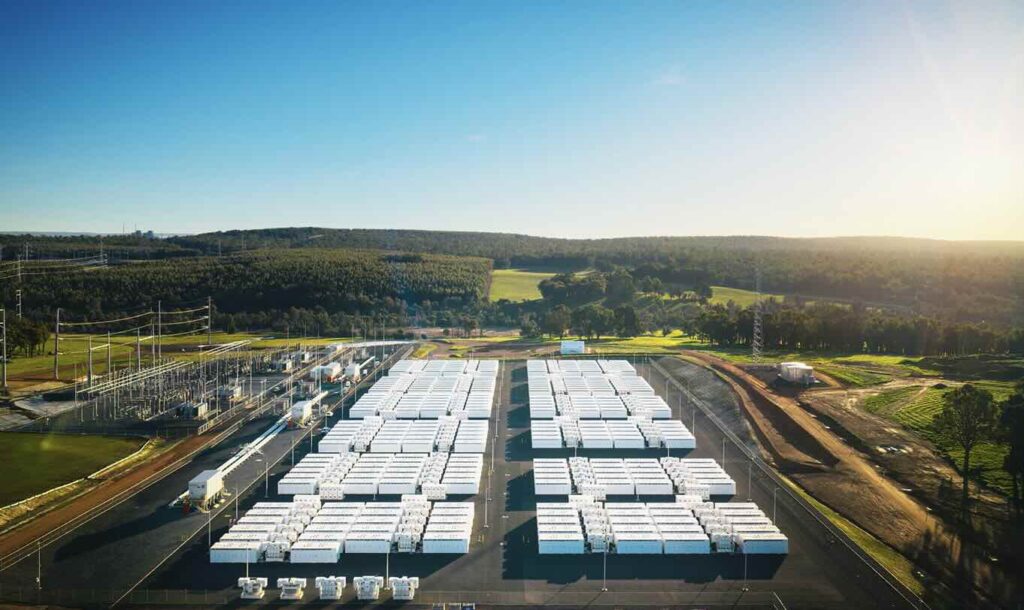
Neoen, under Brookfield’s ownership, is spearheading some of the largest battery projects globally, including the Collie battery in Western Australia and a similar project in Ontario, Canada. These initiatives are designed to bolster renewable energy integration, particularly rooftop solar power, and support nuclear-dominated grids.
Changing Nature of Energy Contracts
As battery storage becomes more economically feasible, the nature of energy contracts is evolving. Teskey noted a shift from traditional revenue models like arbitrage to long-term tolling or take-or-pay capacity contracts. This change is evident in Neoen’s projects, which are now often fully contracted for their entire lifespan.
Brookfield’s acquisition of Neoen has significantly expanded its capabilities and development pipeline in battery technology. The company aims to quadruple its battery storage capacity to over 10 gigawatts (GW) within the next three years.
Broader Energy Market Trends
Energy demand is surging at an unprecedented rate, driven by electrification, renewed industrial activity, and the energy-intensive needs of major corporations, particularly in the IT sector. Teskey remarked, “We are not only transitioning the grid, but adding substantial net new generation for the first time in decades.”
This growth is prompting a shift from incremental grid upgrades to large-scale expansions, prioritizing fast-to-deploy renewables and baseload generation to ensure reliability. Solar and onshore wind are crucial due to their quick deployment and low costs, while hydro and nuclear provide essential baseload capacity.
“Meeting this demand will require a mix of all the scale and efficient technologies over time. Solar and onshore wind will play a critical role, given their speed to market and low cost,”
Teskey explained.
Future Outlook and Challenges
Despite political challenges, particularly in the United States, the deployment of solar and battery storage continues to accelerate. Teskey noted, “We are seeing an acceleration. And this is driven by solar …. it is quick to deploy, it’s cheap, it’s the lowest cost form of production.”
While there have been some permitting slowdowns for onshore wind projects, progress continues. The energy sector is poised for continued growth, driven by the need for reliable, sustainable, and economically viable energy solutions.
For more detailed insights into battery storage developments, refer to the Renew Economy’s Big Battery Storage Map of Australia. To stay updated with the latest clean energy news, consider subscribing to our free daily newsletter.