



The cost of battery storage has plummeted by 60% over the past two years, fundamentally transforming the energy grid and reshaping long-term contract structures. This significant development was highlighted by Connor Teskey, CEO of Brookfield Renewable Partners, during a recent earnings call. Brookfield, a global leader in renewable energy, acquired Neoen’s assets for $11 billion just over a year ago, marking a pivotal moment in the energy transition landscape.
“Make no mistake, batteries are the fastest growing part of our platform today, and we expect that to continue,” Teskey stated. He emphasized that the dramatic reduction in battery costs is making them an increasingly viable solution in markets worldwide. “They’ve come down more than 60% over the last 24 months, and as a result, they are becoming an increasingly economic solution in more and more markets around the world,” he added.
Impact on Global Energy Projects
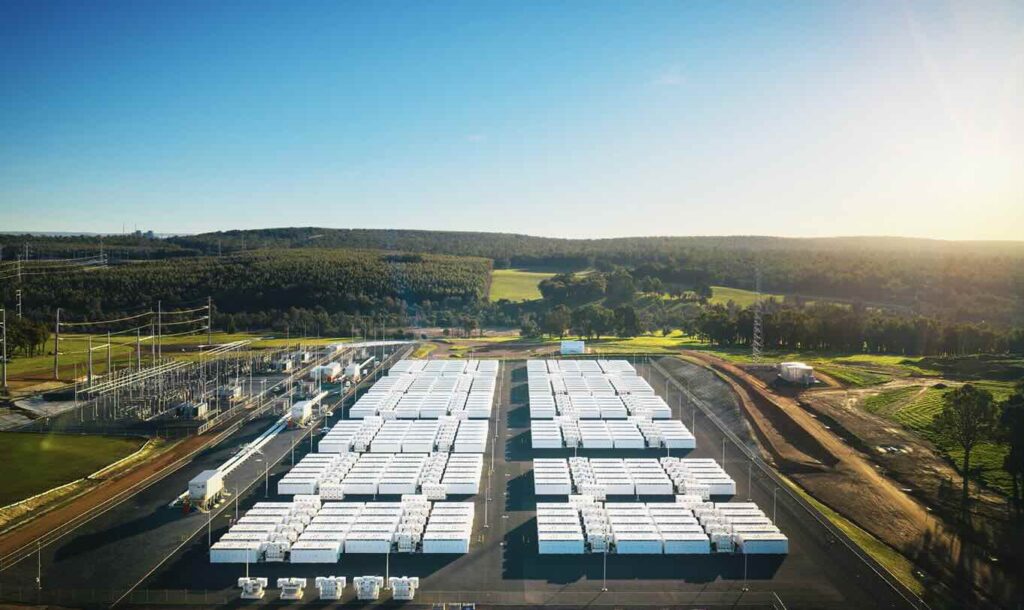
Neoen, now under Brookfield’s ownership, has been at the forefront of major battery projects globally, including the Collie battery in Western Australia and a similar project in Ontario. These initiatives are designed to bolster renewable energy rollouts and support grids dominated by nuclear power.
Brookfield’s strategic investments also extend into nuclear energy, with a significant stake in Westinghouse acquired in late 2023. Despite the Trump Administration’s preference for non-renewable technologies, Brookfield remains optimistic about advancing its small modular reactor projects.
Changing Nature of Energy Contracts
Teskey highlighted a shift in the nature of contracts for battery storage. Previously reliant on arbitrage or merchant revenue models, contracts are now evolving towards long-term tolling or take-or-pay capacity agreements. “We’re very excited about the evolution of what we’ve seen in the energy storage space,” Teskey noted, referencing Neoen’s large-scale projects that are fully contracted for their operational lifespan.
Brookfield plans to quadruple its battery storage capacity to over 10 GW within the next three years, leveraging its expanded capabilities and development pipeline following the Neoen acquisition.
Driving Forces Behind Rising Energy Demand
Energy demand is surging at unprecedented rates, driven by trends in electrification, industrial activity, and the energy-intensive needs of AI technologies. “We are not only transitioning the grid, but adding substantial net new generation for the first time in decades,” Teskey explained. This shift from energy transition to energy addition necessitates large-scale expansions and rapid deployment of renewable energy sources.
Solar and onshore wind are crucial due to their speed and cost-effectiveness, while hydro and nuclear provide essential baseload capacity. Natural gas offers flexibility, and battery solutions are critical for grid reliability.
Future Outlook and Market Dynamics
Despite political challenges, particularly in the US, the deployment of solar and battery storage continues to accelerate. “We are seeing an acceleration. And this is driven by solar … it is quick to deploy, it’s cheap, it’s the lowest cost form of production,” Teskey emphasized. While federal permitting has slowed some onshore wind projects, progress remains steady.
Brookfield’s strategic vision aligns with the growing corporate demand for rapid and reliable power solutions, underscoring the critical role of renewable energy in meeting future energy needs.
For more insights into the evolving energy landscape, see Renew Economy’s Big Battery Storage Map of Australia and explore how big batteries are influencing market prices during peak demand periods.