


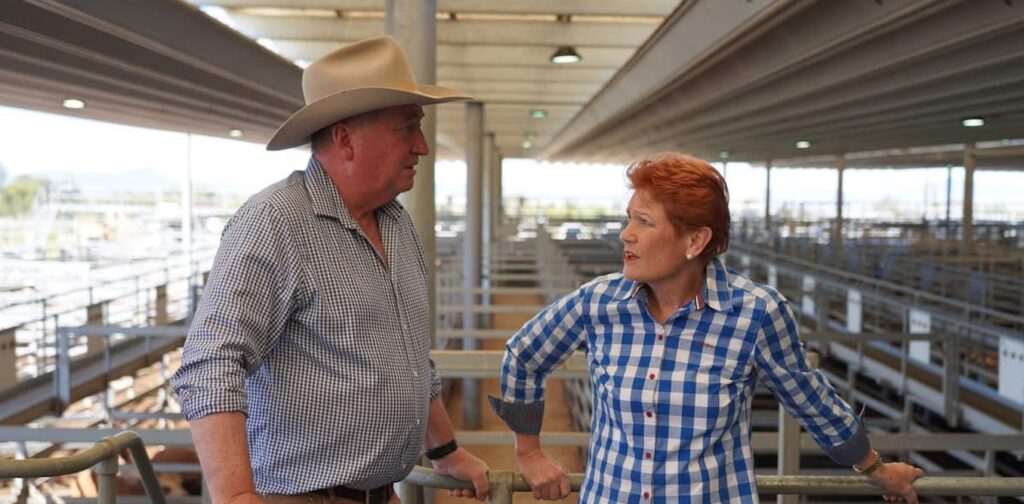
Barnaby Joyce has made a significant political shift by joining One Nation, where he will lead the party’s New South Wales Senate ticket for the 2028 federal election. This move was officially announced by Pauline Hanson on Tamworth’s 88.9FM radio station, marking a new chapter in Joyce’s political career.
Pauline Hanson, leader of One Nation, expressed her enthusiasm on social media, stating, “It’s official! We have made our announcement on 88.9FM in Tamworth. Welcome on board.” In a formal statement, Hanson added, “I am pleased he’s chosen One Nation, and I welcome his experience, his advice, and his determination to get a fair go for farmers and regional Australia. Mr. Joyce strengthens One Nation’s position in parliament just as many Australians are strengthening our position in the polls.”
Background and Transition
The announcement comes as Joyce, a veteran politician, navigates a new path after parting ways with the Nationals. The transition to One Nation had been speculated for weeks, with Joyce confirming his departure from the Nationals during the last parliamentary sitting. He had already stopped attending Nationals party meetings, signaling a shift in allegiance.
Joyce’s political career began in the Senate after his victory in the 2004 election, later transitioning to the House of Representatives. His decision to leave the Nationals was partly influenced by his demotion to the backbench by Nationals leader David Littleproud after the May election. Joyce was also restricted to campaigning in his own seat during the recent election cycle.
Impact on One Nation and the Political Landscape
Joyce’s move is a strategic gain for One Nation, a party that has been experiencing a surge in popularity, polling between 15% and 18%. His presence is expected to bolster the party’s influence in parliament and appeal to regional voters, particularly in New South Wales.
Meanwhile, David Littleproud, leader of the Nationals, expressed disappointment over Joyce’s decision. In a statement, Littleproud remarked, “Today, Barnaby’s decision breaks the contract he made with the people of New England at the 2025 federal election. It is disappointing for the people of New England and disappointing for the loyal National Party members who worked day and night volunteering to support him.”
“Barnaby has chosen to turn his back on The Nationals and on his electorate and instead join a party of protest, which is never able to achieve anything other than headlines,” Littleproud added.
Expert Opinions and Historical Context
Political analysts suggest that Joyce’s move could signify a broader trend of realignment within Australian politics, where traditional party loyalties are increasingly fluid. Dr. Sarah Collins, a political science professor at the University of Sydney, noted, “Joyce’s shift to One Nation reflects a growing disenchantment with major parties and a desire among politicians to align with movements that resonate more directly with their personal and regional priorities.”
Historically, such shifts have occurred during periods of political upheaval, often leading to significant changes in the political landscape. Comparisons can be drawn to the late 1990s when several politicians moved towards emerging parties that promised to address specific regional and national issues.
Future Implications
Joyce will continue to serve as a One Nation member in the House of Representatives for the remainder of this term, setting the stage for his Senate candidacy in 2028. His transition may influence other politicians considering similar moves, potentially reshaping the dynamics of Australian politics.
As the 2028 election approaches, Joyce’s role in One Nation will be closely watched, with implications for both regional representation and the balance of power in the Senate. The political landscape in Australia continues to evolve, and Joyce’s decision is a testament to the shifting allegiances and priorities within the nation’s political sphere.