

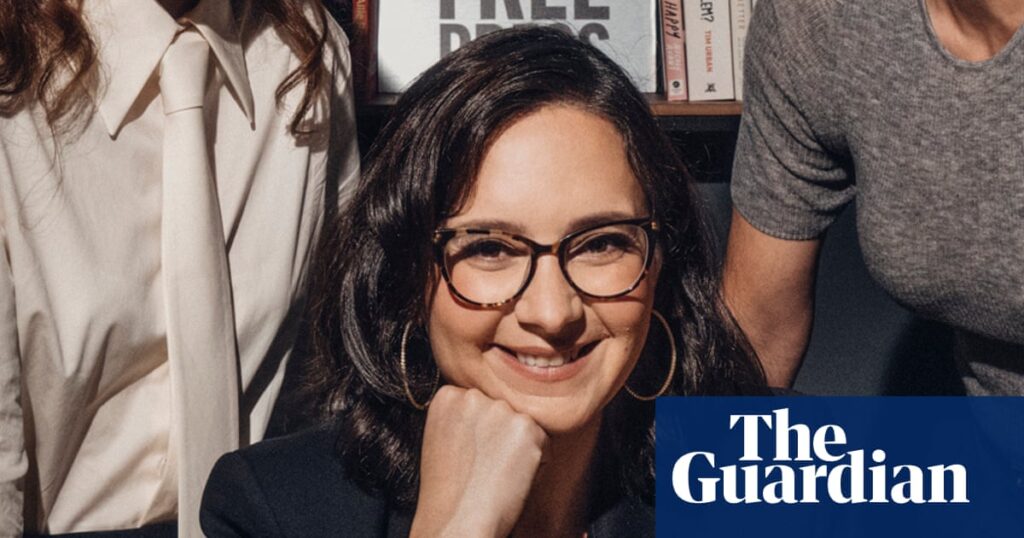
Taking the helm of CBS News in early October, Bari Weiss entered the television industry without prior experience, confronting skepticism from network employees and a struggling business model. Despite these challenges, her initial three months as editor-in-chief have been more tumultuous than anticipated. “There is blood in the water,” remarked one CBS News journalist, reflecting the internal unrest.
Recently, a group of former CBS News journalists drafted a letter to David Ellison, who placed Weiss in charge after acquiring her company, the Free Press. The letter expressed concerns over Weiss’s decision to pull a segment from the December 21 episode of 60 Minutes, marking the first significant crisis of her tenure. The segment, reported by veteran correspondent Sharyn Alfonsi, was removed due to perceived issues, including the absence of a response from the Trump administration. CBS has stated that the segment, focusing on abuses at the Cecot prison in El Salvador, will air at a later date.
Editorial Decisions Under Scrutiny
The decision to pull the segment has sparked criticism, with a draft of the letter stating, “This clumsy editorial interference endangers 60 Minutes‘ role as CBS’s flagship public interest broadcast and as the news division’s most profitable franchise.” The letter, which gathered nearly 200 signatories, including veteran journalists and entertainment industry figures, has been temporarily shelved to allow CBS News staff to continue their work.
Among the signatories was former 60 Minutes producer Lowell Bergman, who faced a similar editorial blockade in the mid-1990s. Alfonsi’s email to colleagues, protesting Weiss’s decision, echoed this sentiment, labeling the move as “political.” Rome Hartman, a former 60 Minutes producer, expressed his support for Alfonsi, stating, “I trust and support her completely.”
Challenges and Criticism
Weiss’s tenure has not only drawn criticism from within but also from conservative media figures, typically aligned with her anti-woke stance. A town hall with Erika Kirk, widow of conservative activist Charlie Kirk, failed to attract advertisers and viewers. Megyn Kelly criticized Weiss’s approach, stating, “Bari Weiss wants to couch herself as Erika’s protector, Erika’s defender.”
Former Fox News host Tucker Carlson also dismissed Weiss’s influence, questioning her support for Israel and stating, “I’m not too worried about Bari Weiss taking over the world.” Despite these critiques, Weiss remains focused on her role, though CBS News journalists report a lack of clear strategy from her.
Internal Cultural Clashes
Weiss’s leadership has also sparked internal debates, particularly around language choices concerning transgender individuals. A prominent correspondent’s email suggested CBS should avoid adopting terminology from the Trans Journalists Association’s stylebook, leading to a heated exchange with a producer advocating for better coverage.
Despite these challenges, some believe Weiss is capable of enacting the cultural change she envisions. Catherine Herridge, a former CBS News investigative journalist, commented, “She’s trying to affect a deep cultural change at that network, and that is probably one of the toughest challenges in media.”
Looking Forward
Amidst the controversies, CBS News continues to produce significant stories, such as reporting on the Trump administration’s involvement in Venezuela explosions. Weiss’s revamped evening news show, anchored by Tony Dokoupil, is set to launch, although preparations have been described as “chaotic.”
As CBS News navigates these turbulent times, the network’s future under Weiss remains uncertain. While some employees express dissatisfaction, the opportunity for change and adaptation persists. The upcoming programming and events, including the Things That Matter series, may provide Weiss with a platform to solidify her vision for CBS News.
Ultimately, the success of Weiss’s tenure will depend on her ability to balance editorial integrity with the demands of a rapidly evolving media landscape, a challenge that will require both resilience and adaptability.