



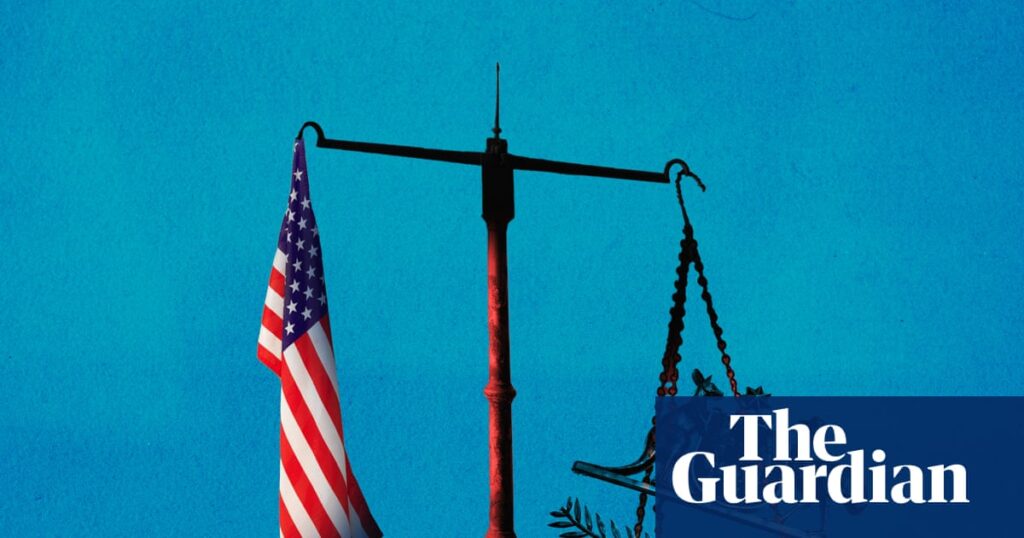
Perched high above Canberra, the stylized American eagle statue on a towering column stands as a symbol of the Australian-American alliance. Colloquially known as the Phallus in Blunderland or the Chicken on a Stick, the Australian-American Memorial was erected by mid-century Australians to honor American service and sacrifice during World War II. Yet, for some, the statue also represents a more ominous presence—a powerful ally monitoring a subordinate nation.
For over seven decades, Australia has relied on its alliance with the United States for security. This relationship, however, hinges on the social license granted by the Australian public—a belief that the alliance serves Australia’s interests. While it remains a cornerstone of Australian political strategy, recent developments under the Trump administration have led many Australians to question this long-standing partnership.
Confidence in the US: A Decline Under Trump
The belief in the United States as a benign force for good has been challenged by its history of controversial interventions, from arming coups to launching wars based on questionable intelligence. The Trump administration’s actions, including its intervention in Venezuela and threats against Cuba and Iran, have further eroded trust. This has led to a significant decline in Australian confidence in the US.
According to a Lowy Institute poll from June 2025, 72% of Australians have little or no confidence in Trump “to do the right thing.”
The YouGov poll for the Australia Institute in November revealed that only 8% of Australians believe their country shares values with modern America. Former Australian foreign ministers Gareth Evans and Bob Carr have openly questioned the future of the alliance, citing Trump’s disregard for international law and ally interests.
What Comes After Trump?
Michael Fullilove, executive director of the Lowy Institute, suggests that Australians can distinguish between President Trump and the broader American nation. Despite a fall in trust, support for the US alliance remains strong.
“Even though trust in the United States has fallen from 56% to 36%, eight out of 10 Australians still say that the alliance is fairly important to our security,” Fullilove notes.
Trump’s presidency is set to end on January 20, 2029, but the legacy of his administration will linger. Fullilove warns that while America may recover, it will not return to its pre-Trump state. The dismantling of international order under Trump poses challenges for Australia’s strategic positioning.
Strategies for a New World Order
Fullilove advocates for increased self-reliance, stronger regional partnerships, and continued engagement with the US in the Indo-Pacific. He questions the alternatives to the US alliance, emphasizing the importance of a stable balance of power in the region.
Generational Shift and Changing Perspectives
Professor Bec Strating of La Trobe Centre for Global Security highlights the importance of trust in alliances. While optimism persists, the US’s treatment of allies like NATO raises concerns for Australia. Strating suggests that Australia should hedge its bets by strengthening other international relationships.
“If the United States continues to slip into authoritarianism, Australians may start to question the alliance,” Strating warns.
Demographic shifts in both countries could further impact the alliance. Younger Australians, demanding action on climate change, may find the alliance less appealing if the US continues to neglect environmental issues.
Australia’s Strategic Dilemma
Emma Shortis, director of international and security affairs at the Australia Institute, argues that Australia’s alliance with the US is on shaky ground. The Trump administration’s national security strategy, which includes potential interference in allies’ domestic politics, poses serious implications for Australia.
“The alliance is built on a house of cards if the deeper relationship is being eroded,” Shortis asserts.
Shortis emphasizes the need for Australia to recognize the threat posed by the Trump administration to the international order. The nuclear submarine deal with the US, she argues, compromises Australia’s sovereign decision-making power.
The Way Forward
As the American century draws to a close, Australia faces a fundamental question about its security. While no one suggests abandoning the US alliance, genuine concerns about its future cannot be ignored. The alliance’s foundation must be reinforced by a deeper relationship, lest it collapse under the weight of changing global dynamics.