




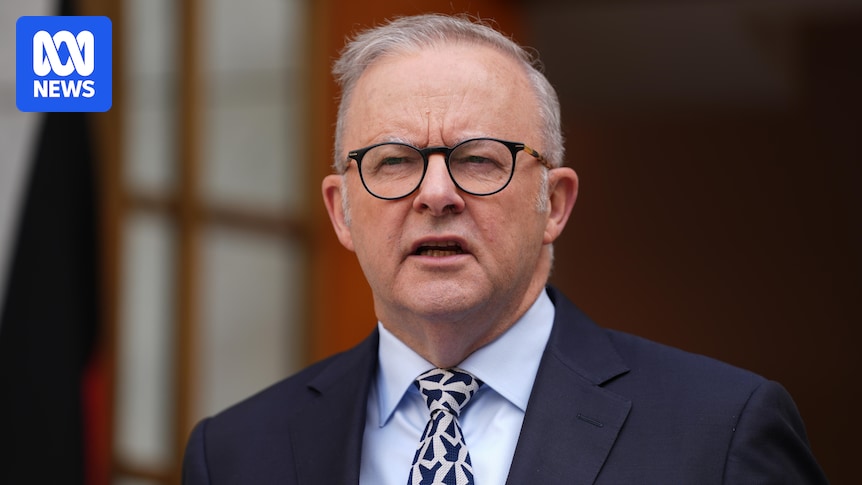
Australia’s decision to back the US-Israel military operation against Iran has raised eyebrows, particularly given the traditionally progressive stance of its center-left government. The rapidity with which the Albanese administration aligned itself with the Trump-Netanyahu initiative underscores a significant shift in both global and domestic political landscapes.
The Albanese government has justified its support by emphasizing the threat posed by Iran’s nuclear ambitions to the international rules-based order. However, it has been cautious about endorsing any rhetoric that suggests regime change. “Well, that is a matter for the Iranian people,” Prime Minister Anthony Albanese stated. “But we stand with the Iranian people in standing up for their human rights. They have suffered brutal repression.”
Changing Dynamics and Domestic Implications
The prime minister further accused Iran’s Supreme Leader Ali Khamenei of orchestrating attacks on Australian soil, stating, “His passing will not be mourned. We have not been immune from the impacts of the regime’s actions right here in Australia. Our valued Iranian Australian community, which is 50,000 strong, sees what happens overseas and, understandably, it affects them greatly as they fear for the safety and security of family and friends.”
Albanese highlighted two specific incidents in 2024, including the firebombing of the Adass synagogue in Melbourne, orchestrated by the Iranian Revolutionary Guard Corps (IRGC). These attacks were seen as attempts to instill fear among Jewish Australians and to divide the nation. Consequently, the government’s response has been to firmly back US actions, arguing that these measures are necessary to neutralize threats and maintain Australia’s sovereignty.
Criticism from Within and Beyond
Despite the government’s firm stance, it has faced criticism from within its ranks and from other political factions. Former Labor senator Doug Cameron voiced his disapproval, asserting, “Albanese’s backing of Israeli and US attacks on Iran shows that we are completely devoid of acting independently from Trump and Netanyahu. There was a time when Labor pursued peace, not war. That time is long gone.”
Similarly, the Greens’ defense spokesperson, David Shoebridge, condemned the government’s position, stating, “Australia’s support of Trump and Netanyahu’s illegal attack is disgraceful.” These criticisms reflect a broader unease within certain segments of the political spectrum regarding Australia’s foreign policy direction.
Strategic Considerations and Economic Impact
Albanese’s decision to support the US-Israel operation is not solely about aligning with allies. It also reflects a strategic calculation amid rising tensions. In June, Israel’s attack on Iranian nuclear-linked sites led to a 12-day conflict, during which the US also targeted reported nuclear facilities. At that time, Albanese’s response was more restrained, advocating for “dialogue, diplomacy, and de-escalation.”
However, the stakes have since escalated. In August 2025, Australia expelled Iran’s ambassador, Ahmad Sadeghi, over inflammatory social media posts and alleged regime-orchestrated attacks on Australian soil. The current alignment with the US and Israel signals a hardening of Australia’s position.
The implications of this conflict extend beyond geopolitics. As an island nation heavily reliant on trade, Australia is vulnerable to disruptions in global supply chains. The Strait of Hormuz, a critical transit point for oil, is at the center of this conflict. Any obstruction in this vital sea route could lead to increased oil prices, directly impacting Australian consumers at the petrol pump.
The price of oil is likely to rise, and that cost will be felt here when people fill up their cars.
With the risk of this conflict driving up petrol and energy prices, public anxiety about global unrest and economic uncertainty is likely to increase. The Albanese government is acutely aware that it must manage these economic pressures, especially as it approaches the delivery of the national budget.
Looking Ahead
As the situation unfolds, Australia is not alone in its stance. Canadian Prime Minister Mark Carney is set to address the Australian parliament, highlighting the shared position of Australia and Canada in supporting the US’s actions against Iran. This alignment comes despite concerns from other nations about potential violations of international law.
Ultimately, the Albanese government’s support for the US-Israel operation against Iran reflects a complex interplay of strategic, domestic, and economic considerations. As the conflict continues to evolve, its ramifications will be closely watched, both within Australia and on the global stage.