



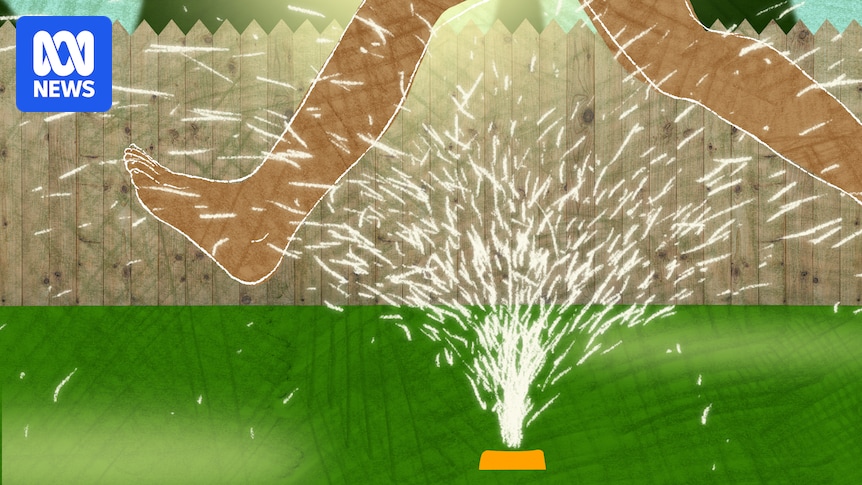
In the world’s driest inhabited continent, a daily ritual unfolds that is both ordinary and extraordinary. Garden sprinklers, affectionately dubbed “the sound of summer,” release billions of liters of water onto household gardens across Australia. This practice has helped sustain the suburban dream, creating lush oases amidst the arid bushland. However, as climate change intensifies, the sustainability of this green vision is increasingly under scrutiny.
The invention of the cheap plastic sprinkler was a pivotal moment in Australia’s suburban development. It transformed garden maintenance from a labor-intensive chore into a convenient, automated process. But as rainfall patterns shift and water scarcity becomes more pressing, the reliance on sprinklers is at the center of a growing climate dilemma.
The Rise of the Plastic Sprinkler
Sixty years ago, a young irrigation pump repairman named Bill Antel from Adelaide revolutionized garden watering. Inspired by a new, stronger plastic, Antel envisioned a sprinkler that was cheaper and lighter than the heavy, expensive models of the time. His invention quickly became a staple in Australian gardens, public parks, and sporting grounds, turning him into a wealthy entrepreneur.
Initially, Antel’s primary customers were fruit growers, but the introduction of automation in the late 1960s by a small company in Perth, Hugall & Hoile, expanded the market to households. This innovation allowed for the creation of lush, European-style gardens in Perth’s sandy landscape, despite its long, dry summers.
Perth’s Green Transformation
Historian Andrea Gaynor from the University of Western Australia explains that making Perth green was seen as a mark of civilization. The city, built on a sand plain, faced challenges due to its soil’s inability to retain water. However, the advent of automated irrigation systems made it possible for thousands of homes to afford their own lush gardens.
Hugall & Hoile’s solution to low water pressure—dividing irrigation systems into segments with electronic valves—revolutionized the market. By the end of the 1970s, about 10 percent of Perth homes had automated sprinkler systems, a figure that would rise dramatically in the following decades.
Challenges of Water Scarcity
As Perth embraced the sprinkler, the city’s water supply became increasingly precarious. Rainfall’s contribution to the metropolitan water supply plummeted from 100 percent to about 8 percent, prompting concerns about the city’s sustainability. Peter Newman, a sustainability expert at Curtin University, highlights the critical role of desalination in averting a crisis similar to that faced by ancient Uruk, where water scarcity led to the city’s decline.
“It’s not possible to build a city around 8 percent [rainfall contribution],” Newman said.
Perth’s reliance on desalination, however, comes with significant energy costs. Desalination is 40 times more energy-intensive than sourcing water from dams, raising concerns about its environmental impact.
Facing Climate Change
The effects of climate change are becoming increasingly evident in Perth, with hotter summers and declining rainfall. The 2022-23 summer was the hottest on record, exacerbating the challenges of maintaining green spaces. Despite these difficulties, the demand for sprinklers remains strong, with Bunnings reporting an increase in sales, particularly for water-efficient drip irrigation systems.
Geoff Connellan, a Melbourne-based irrigation expert, warns that while automated watering systems offer convenience, they can lead to increased water usage. “Someone holding a hose gets sick of it,” Connellan notes, emphasizing the need for mindful water management.
Future Prospects and Adaptation
As Australia grapples with water scarcity, the role of sprinklers in suburban life is being reevaluated. While they have become a symbol of the Australian dream, their environmental impact cannot be ignored. Sue Murphy, former CEO of The Water Corporation, underscores the importance of maintaining green spaces for urban cooling, while also advocating for equitable access to water.
“A green Perth is essential as we face hotter summers,” Murphy stated. “We can’t make water so expensive that only rich people have gardens.”
The sprinkler story is one of adaptation and resilience in the face of changing environmental conditions. As Australia moves towards a future with more efficient water use, the challenge will be to balance the desire for green spaces with the realities of a drier climate.
In the words of Bill Antel, “We’re going to have to change.” As the nation navigates this complex landscape, the legacy of the sprinkler will continue to evolve, reflecting both the aspirations and challenges of modern Australian life.