

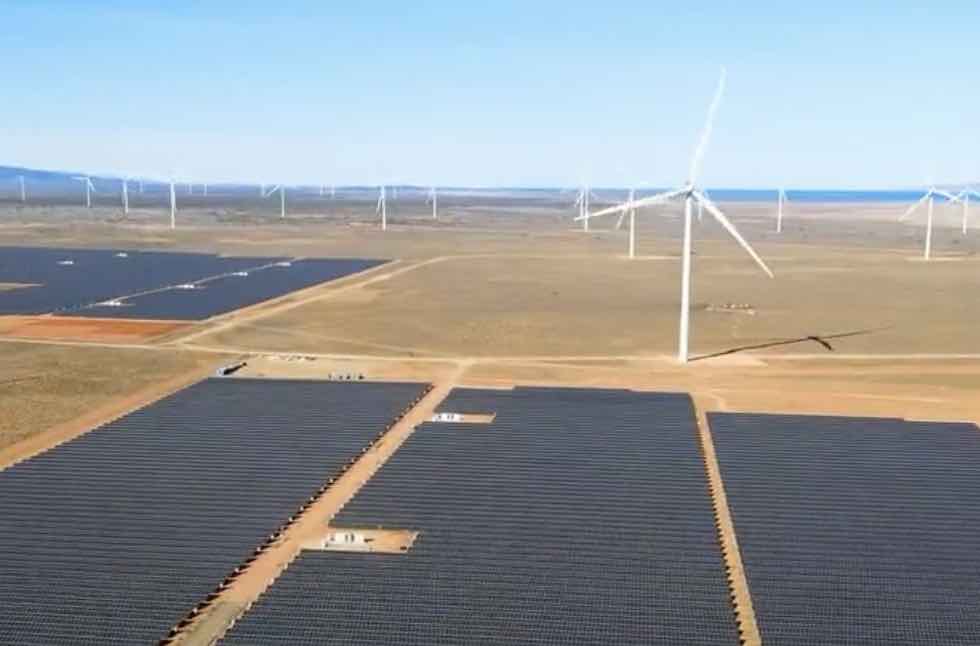
If the new leader of the opposition, Angus Taylor, thought there was “too much wind and solar” on Australia’s grid back when he was federal energy minister in 2018, the developments in 2026 might come as a surprise. In the last three months of 2025 alone, nine wind and solar projects added a staggering 2.1 gigawatts (GW) of new electricity generating capacity to the grid, alongside 1 GW and 2.3 gigawatt hours (GWh) of battery storage, according to the latest data from the Clean Energy Council (CEC).
The CEC’s latest quarterly report highlights Australia’s significant progress since 2018, when renewables reached 7.5 GW of total installed capacity, and wind energy began to recover from an investment drought. The recent surge saw more renewables “switched on” in the final months of 2025 than in any previous quarter, surpassing the 1.3 GW added in the third quarter of 2021.
Record-Breaking Installations and Future Projections
By the end of 2025, approximately 12.18 GW of renewable generation was either under construction or had reached financial commitment, according to CEC data. Battery installations also surged, with a total capacity of 1.9 GW and 4.9 GWh installed throughout the year, outpacing the combined figures for the previous eight years.
“The final quarter of last year saw many new renewables records broken,” said CEC chief Jackie Trad in a statement. “Sixty-three percent of total renewable generation capacity that was switched on in 2025 was delivered in Q4 (2.1 GW). That scale of projects being commissioned in a single quarter is an Aussie first.”
Trad further noted that renewable energy supplied over half (51%) of all electricity in the National Electricity Market (NEM) for the first time during Q4 2025, reaching up to 77% of peak demand during January’s extreme heatwaves, according to the Australian Energy Market Operator. “As more renewable projects come online, we’re seeing them do exactly what they’re designed to do: stabilize the energy system as coal-fired generators retire. It’s more evidence that Australia’s transition to renewables is well underway,” Trad added.
Political and Economic Implications
The future appears promising, with the CEC reporting 81 renewable energy projects either under construction or financially committed, totaling nearly 13 GW. For battery projects, that number stands at 75, promising 13 GW and 34.7 GWh. Trad commented on the political landscape, noting that Australians have clearly expressed their support for renewable energy policies, particularly during the 2025 election.
“The fact that here we are in 2026 with almost half of our energy being from clean energy, we know that one in three households have solar on their roof, and hundreds of thousands of Australians are adopting the Albanese government’s Cheaper Home Battery scheme,” Trad remarked.
However, Trad also pointed out that the biggest challenge now is not planning but transmission, highlighting the difficulty in network access as a key hurdle. Federal changes to the EPBC Act have sparked optimism about planning reforms, with industry players eager to engage with the government to ensure swift project approvals.
Regional Developments and Challenges
While the final quarter of 2025 set records, the year was not without its challenges, partly due to the federal election in May. The election was a contest between continuing with renewable energy or shifting to nuclear, a technology still favored by the Coalition. Despite these hurdles, the ramp-up in activity in the last quarter indicates a robust outlook for 2026.
New South Wales led with the most projects reaching financial close or under construction, followed by Queensland, Victoria, and Western Australia. Notably, Western Australia has emerged as a case study for running a main grid on majority renewables.
By the end of 2025, there were 143 wind, solar, and battery projects underway, representing $38 billion in capital spending.
The report also highlights the varying speeds at which projects are completed across regions. South Australia is the fastest, with solar projects taking 21 months, wind 23 months, and batteries 20 months. Western Australia is notable for its quick solar-battery hybrid projects, averaging 17 months.
Batteries Lead the Charge
Australia’s big battery story, which began in 2024, continued to make headlines in 2025. Across the year, 11 projects with 1.9 GW of capacity and 4.9 GWh of energy reached final commissioning, with 1 GW and 2.3 GWh of that occurring in the final quarter. However, the pace of projects reaching financial close moderated, with 20 battery projects totaling 4.2 GW and 13.4 GWh reaching this milestone.
As Australia continues its transition to renewable energy, the focus shifts to overcoming transmission challenges and ensuring that the momentum gained in 2025 carries forward into 2026 and beyond. With significant investments and political support, the country’s renewable energy future looks bright.