


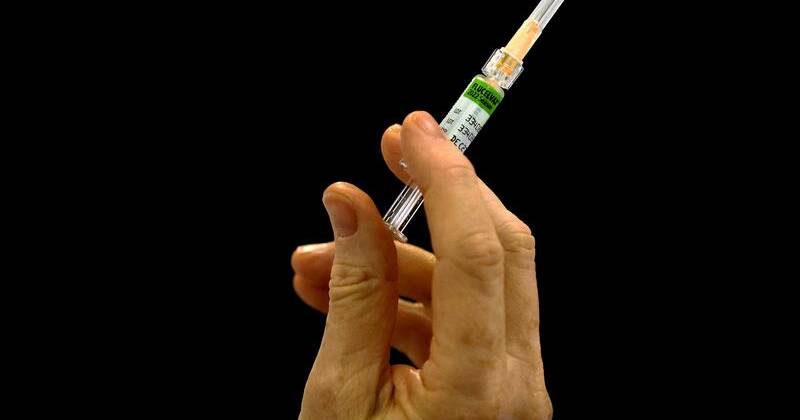
Measles vaccination coverage in Australia is on a concerning decline as cases of the disease spike, warn health authorities. This development raises alarms as Australia had once been celebrated for eliminating measles over a decade ago. However, with vaccination rates stagnating, experts emphasize the need for continued vigilance.
Recent notices from Victoria and New South Wales highlight the ongoing risk of measles, particularly linked to travel both overseas and interstate. The Department of Health has reported that vaccination coverage rates for children have dropped below the 95% target over the past three years, a benchmark critical for herd immunity.
Measles cases in Australia have surged from zero in 2021, a year marked by stringent COVID-19 lockdowns, to 181 cases in 2025. This rise is attributed to several factors, including the reopening of borders post-pandemic, the influence of anti-vaccine rhetoric from political figures like former US President Donald Trump, and economic pressures affecting healthcare access.
Challenges in Vaccination Access
Meru Sheel, a professor of infectious diseases at the University of Sydney, notes that the decline in vaccination rates is primarily due to access issues rather than misinformation. “The vaccine dose is free, but getting to the clinic and the cost of seeing a doctor can be prohibitive,” she explained. “There are also issues around knowledge and doubts about vaccination.”
The World Health Organization estimates that measles is 12 times more contagious than influenza, with symptoms such as coughs, rashes, high fever, and red eyes, which can lead to severe complications or death. This underscores the importance of maintaining high vaccination coverage.
“What happens in one part of the world impacts many parts of the world,” said Dr. Sheel. “We need robust checks and balances and policies that are consistent with scientific evidence.”
Global Context and Comparisons
Globally, measles cases have been on the rise, with the United States experiencing record highs in 2025 and over 900 cases recorded in 2026 alone. The contagious nature of measles poses a significant risk, especially to vulnerable populations such as young children, pregnant women, and individuals with compromised immune systems.
In Australia, the National Centre for Immunisation Research and Surveillance reports that on-time childhood vaccination rates remain significantly lower than pre-pandemic levels. In 2024, one in three children received their first dose of the measles-mumps-rubella (MMR) vaccine late, while one in five children received their second dose of the diphtheria-tetanus-pertussis (DTP) vaccine late.
“It’s more infectious even than COVID,” emphasized Dr. Sheel, highlighting the urgency of addressing the vaccination gap.
Implications and Future Steps
The decline in vaccination rates and the rise in measles cases present a public health challenge that requires immediate attention. Health authorities are urged to enhance public awareness campaigns, improve access to vaccination services, and address economic barriers that hinder families from vaccinating their children.
Looking ahead, maintaining Australia’s reputation for effective disease control will depend on collaborative efforts between government agencies, healthcare providers, and communities. Ensuring that vaccination policies are informed by scientific evidence and effectively communicated to the public is crucial in preventing further outbreaks.
As Australia navigates these challenges, the focus remains on safeguarding public health and preventing the resurgence of diseases once thought to be under control.