

Four hours ago, Sydney — It was a Sunday afternoon in April 1996 when a lone gunman armed with semi-automatic rifles killed 35 people in the Australian tourist town of Port Arthur. The massacre, nearly three decades ago, ushered in some of the strictest gun laws in the world, marking a pivotal moment in Australia’s history.
However, the recent attack at Bondi Beach, which left 15 dead, has rekindled memories of the Tasmanian tragedy. For leading gun control advocate Roland Browne, the parallels are particularly poignant. As the country’s deadliest modern-day mass shooting unfolded just an hour’s drive from his home, Browne was meeting with fellow advocates to lobby for stricter firearm regulations.
Australia’s Gun Control Reputation Under Scrutiny
Australia has long been seen as a global leader in gun control, following a path similar to the UK after its own mass shooting in Dunblane. Despite this reputation, the reality of gun ownership in Australia is more complex. A report by the Australia Institute earlier this year revealed over four million privately-owned firearms in the country, nearly double the number from 20 years ago.
There is now approximately one gun for every seven Australians, with Queensland leading in registered firearms, followed by New South Wales and Victoria.
Gun ownership is not limited to rural areas; one-third of firearms in New South Wales are located in major cities. This concentration of guns in fewer hands, with each license holder owning an average of more than four firearms, is a key issue for advocates like Browne.
Debate Over Gun Control Measures
Currently, only Western Australia imposes a cap on the number of firearms a license holder can possess. Under new laws introduced in March, gun owners can have between five and ten firearms, depending on the license type. Authorities confirmed that one of the alleged Bondi gunmen, Sajid Akram, owned six registered guns.
Browne argues for a nationwide cap of one to three guns per license holder. However, Tom Kenyon, chief executive of the Sporting Shooters Association of Australia, contends that such a cap would be ineffective. He points to the 2016 Bastille Day attack in Nice, France, as an example of how those intent on harm can use other means.
“Limiting the number of guns wouldn’t have made a difference on Sunday,” Kenyon asserts. “And it wouldn’t have changed the fact that an attack occurred because those two individuals had been radicalised.”
Current Gun Laws and Loopholes
Gun control laws in Australia vary across states and territories. Generally, applicants must be over 18, pass a safety course, and provide a “genuine reason” for owning a firearm. However, loopholes exist, such as minors in some jurisdictions being allowed supervised access to firearms.
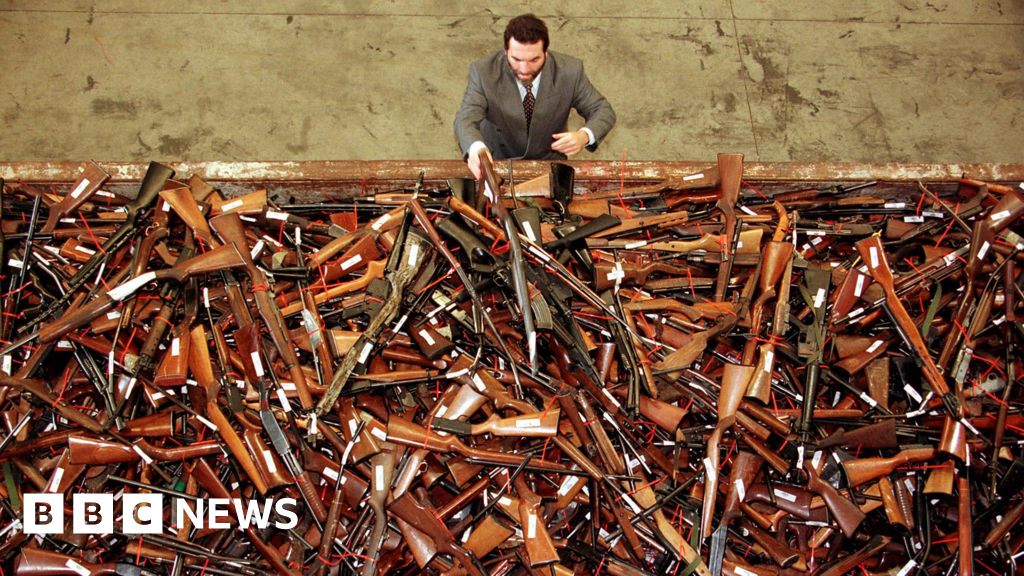
In the wake of the Port Arthur massacre, then-Prime Minister John Howard led a national overhaul of gun laws, including a buyback program that saw over 650,000 firearms destroyed. Similar reforms followed the Christchurch mosque shootings in New Zealand in 2019.
Calls for Reform and Political Responses
In response to the Bondi shooting, NSW Premier Chris Minns and Prime Minister Anthony Albanese have called for tighter gun laws. Albanese announced a national gun buyback scheme, the first of its size since 1996, alongside proposals to limit gun ownership and improve intelligence sharing.
“If you’re not a farmer, you’re not involved in agriculture, why do you need these massive weapons?” Minns questioned.
Despite support for stricter laws, some, including Howard, view the focus on gun control as a diversion from addressing the root causes of such tragedies, like rising antisemitism.
Future Directions and Challenges
The Bondi shooting has accelerated plans for a national firearms register, a measure proposed in 1996 but yet to be implemented. The government aims to have the database operational by mid-2028, following recent incidents that highlighted its necessity.
Recreational hunting licenses are also under scrutiny. Browne argues for their abolition, citing ambiguous definitions, while Kenyon defends hunting as a valuable social good, contributing to pest control and community bonding.
Reflections and the Path Forward
For Browne, the Bondi tragedy is a wake-up call for Australia to update its gun laws to reflect changing societal attitudes and technological advancements. He stresses the importance of comprehensive assessments of license holders and stricter regulations on gun types.
“It’s sad that it takes such a tragedy to get people to wake up and listen,” Browne laments.
The Bondi shooting serves as a stark reminder of the ongoing challenges in balancing gun rights with public safety. As Australia grapples with these issues, the nation must navigate the complex interplay of policy, enforcement, and societal change to prevent future tragedies.