


Australians planning to visit the United States are now required to disclose extensive personal information, including social media activity from the past five years, email accounts, phone numbers, and detailed family histories. This new mandate by the Department of Homeland Security is part of a broader security measure affecting 42 countries under the US visa waiver program. The move has sparked concern among Australians, particularly in politically active cities like Canberra.
The policy shift has raised alarms, especially among students, academics, political operatives, journalists, and commentators who may have expressed views deemed “unfriendly” by US authorities. The implications are significant, as even private communications could be scrutinized, potentially leading to denied entry. The situation is reminiscent of earlier reports where tourists and visitors were subjected to invasive searches of their phones and personal data.
Impact on US-Australia Relations
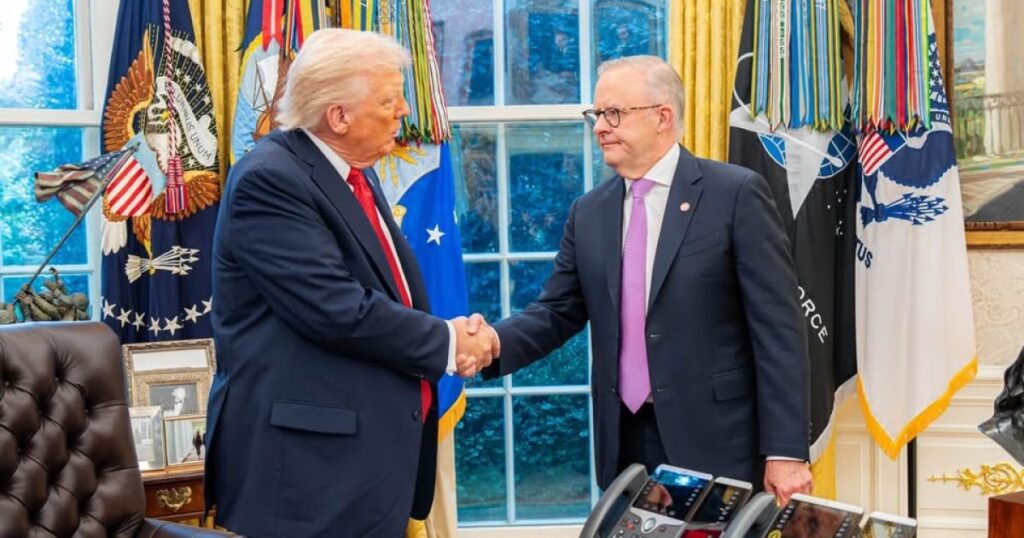
This development follows a series of actions by the US that have strained its reputation as a trusted ally. Despite the longstanding friendship between the two nations, characterized by shared cultural ties and historical military alliances, recent US policies under President Donald Trump have left many Australians questioning the strength of this relationship.
The US’s approach to international relations, including its treatment of Ukraine and its overtures to Russian President Vladimir Putin, has further complicated its alliances. These actions have raised concerns about the US’s commitment to its allies, including Australia and Taiwan. The 2025 National Security Strategy under Trump explicitly states that no ally can feel secure, a sentiment that has resonated deeply in Australia.
Historical Context and Current Concerns
Historically, Australia has stood by the US through contentious conflicts, such as the Vietnam and Iraq wars, driven by a shared commitment to liberal democratic values. However, the current political climate in the US, marked by authoritarian tendencies and a transactional approach to international relations, has left many Australians uneasy.
The AUKUS alliance, intended to bolster Australia’s defense capabilities, is now under scrutiny. Critics argue that the alliance may be more of an expensive protection racket than a genuine security partnership, especially given the unpredictable nature of the Trump administration.
Expert Opinions and Future Implications
Experts warn that Australia’s strategic position is precarious, caught between its largest trading partner, China, and its primary ally, the US. The hope is that Trump’s presidency will be a temporary deviation, allowing for a return to more stable relations. However, the rapid transformation of America’s political landscape suggests that Australia must carefully navigate its alliances.
“The pillars of a free society — fair elections, the rule of law, freedom of association — are all under attack. Who would have thought that people, including citizens, would be whisked off the street by masked agents simply for looking different from white Americans?”
Conclusion: Navigating a Complex Relationship
As Australia grapples with these challenges, the question remains: how long can it maintain its close ties with an America that seems increasingly at odds with its own values? The model may be to agree to disagree, as Australia does with other nations, while leveraging its strategic resources like rare earths to maintain its position.
The tragedy is that, despite its flaws, America has long been a significant ally to Australia. Yet, the America that Australians have known and admired seems harder to find in the current political climate. The future of this relationship will depend on how both nations adapt to these evolving dynamics and whether they can find common ground in an increasingly complex world.