



The recent amendments to Australia’s Environment Protection and Biodiversity Conservation (EPBC) Act have sparked significant debate, with critics arguing that the changes may lead to further environmental degradation. The reforms, introduced by Prime Minister Anthony Albanese, aim to balance environmental protection with economic growth. However, many environmentalists and political analysts remain skeptical about their effectiveness.
The amendments, which passed through parliament with the support of the Greens, have been criticized for potentially allowing continued exploitation of natural resources. The Greens faced a tough decision between improving or blocking the bill, ultimately choosing to negotiate amendments that they believed would offer better protection than delaying the debate.
Historical Context and Legislative Changes
The EPBC Act, originally enacted in 1999 under Prime Minister John Howard, was seen as a step forward for environmental protection. However, it was critiqued for its vague language, which allowed for ministerial discretion in environmental matters. The recent amendments have further devolved federal powers to state governments, raising concerns about the potential for increased environmental exploitation.
Historically, federal intervention has been crucial in protecting significant natural sites in Australia. In the 1970s, the Whitlam government established the Department of the Environment and signed the World Heritage Convention, leading to federal actions that saved iconic sites such as Tasmania’s Franklin River. The recent reforms, however, appear to reverse this trend, granting more autonomy to states and potentially undermining federal oversight.
Implications for Native Forests and Wildlife
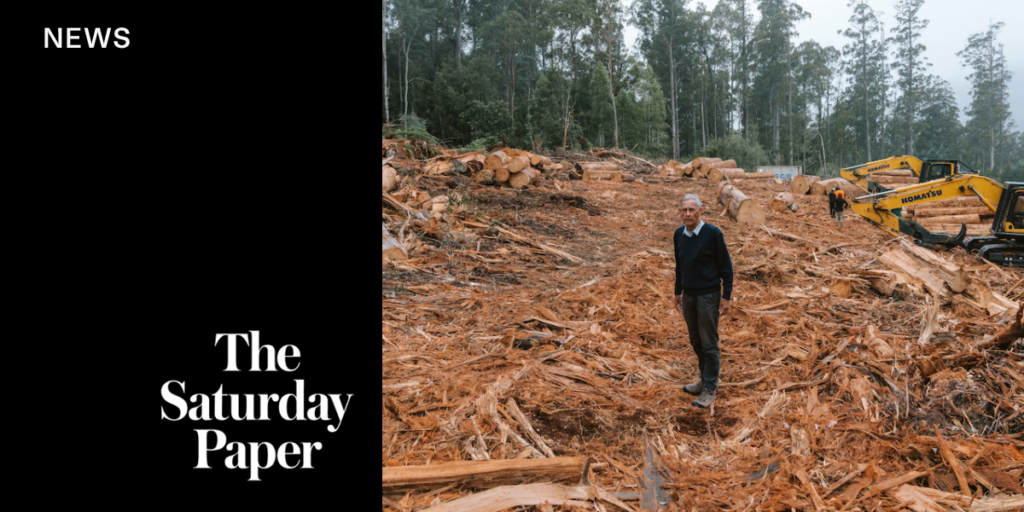
One of the most contentious aspects of the reforms is their impact on native forest logging. Despite a Wilderness Society poll indicating that only 12% of Tasmanians support native forest logging, the Albanese government has not moved to end the practice. Instead, it has agreed to require loggers to follow the same laws as other industries, but not for another 18 months.
The decision to delay stricter regulations has raised alarm among environmentalists, who fear continued destruction of habitats for endangered species such as the black cockatoo and swift parrot. The government has also promised $300 million in compensation to the logging industry, a move seen as contradictory to environmental protection goals.
Expert Opinions and Environmental Concerns
Environmental experts have voiced concerns that the reforms do not adequately address the urgent need to combat climate change. The Albanese government’s focus on economic growth, potentially at the expense of environmental health, is seen as a significant risk. The reforms have been criticized for not addressing greenhouse gas emissions, which are a major contributor to climate change.
“The risk of Planetary Insolvency looms unless we act decisively. Without immediate policy action to change course, catastrophic impacts are eminently plausible, which could threaten future prosperity.” — Institute and Faculty of Actuaries and the University of Exeter
This warning underscores the urgency of addressing climate change, a challenge that the current reforms may not sufficiently tackle.
Future Prospects and Global Implications
The establishment of a national environment protection authority has been touted as a positive step. However, critics argue that it may simply be a rebranding of existing structures with limited capacity to enforce meaningful change. The true impact of the reforms will depend on forthcoming standards, which are yet to be released and will be critical in determining the effectiveness of the new legislation.
Globally, Australia is part of an interconnected ecosystem where environmental policies have far-reaching implications. The country’s approach to environmental protection will not only affect its own biodiversity and natural resources but also contribute to global efforts to combat climate change.
As the world faces the prospect of a 2-degree Celsius increase in temperature by 2050, the need for robust environmental policies is more pressing than ever. The Albanese government’s reforms, while a step in a particular direction, may not be sufficient to meet the challenges of the future.
In conclusion, the recent amendments to Australia’s EPBC Act have opened a new chapter in the nation’s environmental policy. While the government promises a balance between economic growth and environmental protection, the effectiveness of these reforms remains to be seen. As Australia navigates its role in the global fight against climate change, the decisions made today will have lasting impacts on the environment and future generations.