



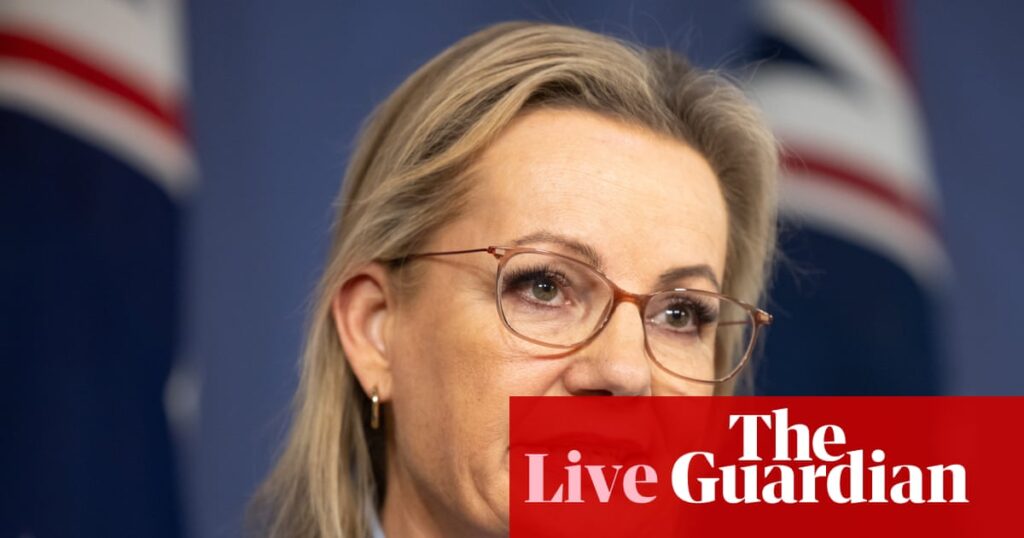
The political landscape in Australia has been shaken by a contentious environmental bill, with opposition leader Sussan Ley accusing the government of striking a “dirty deal” with the Greens. Ley claims this agreement will lead to increased energy prices, affecting households across the nation. The bill, which was passed in a swift move by the Labor government and the Greens, has sparked a fierce debate in the Senate.
Speaking to reporters while clutching the Coalition’s energy policy booklet, Ley criticized the Greens for their stance against gas and resource industries. She argued that the concessions made by the government could endanger communities and jobs, stressing that the bill was unnecessary to pass this year.
“What is very clear from the reaction so far to the dirty deal done by the Labor party with the Greens, a deal that was not necessary to conclude today or this year, is that this is going to put energy prices up. It will provide further pressure on electricity bills for struggling households and families,” Ley stated.
Senate Debate and Coalition’s Response
The Senate saw heated discussions as the Coalition attempted to remove the debate guillotine, which would cut off further deliberations on the bill. Despite their efforts, the Coalition lacked the numbers to extend the debate, with crossbenchers David Pocock and Tammy Tyrrell siding with them but ultimately falling short.
Shadow Environment Minister Angie Bell rejected claims that the Coalition was absent from negotiations, asserting that they were engaged in discussions until late the previous night. “It is a bad bill for those Australians who work in the sectors that will be impacted by this,” Bell said, emphasizing the Coalition’s commitment to negotiating adjustments.
Industry and Environmental Reactions
The Australian Energy Producers’ chief executive, Samantha McCulloch, criticized the deal, labeling it a “squandered opportunity.” She argued that excluding gas from streamlined reforms was not in the national interest and would lead to increased energy costs and investment deterrence.
“Carving gas out of streamlined reforms is simply not in the national interest. The deal will entrench slow approvals which will drive up energy costs, deter investment, and further delay the new gas supply Australia urgently needs,” McCulloch warned.
Conversely, environmental groups have largely welcomed the agreement, with Greenpeace Australia Pacific CEO David Ritter acknowledging improvements in environmental protection laws. However, he expressed concerns about the continued allowance for fossil fuel project expansions.
“The agreement announced today secures a significant improvement on the broken laws that for too long failed to deliver credible environmental protection,” Ritter said. “But the big sting in the tail is that the legislation still fails to address the enormous climate harm to nature from these sorts of projects.”
Political Implications and Future Outlook
The passage of this bill marks a significant moment in Australian politics, highlighting the growing influence of the Greens in shaping environmental policy. The Coalition’s frustration with the process underscores the deep divisions within the political landscape regarding energy and environmental policy.
As the debate continues, the government faces the challenge of balancing environmental commitments with economic impacts, particularly in energy-dependent sectors. The opposition’s criticism suggests that energy policy will remain a contentious issue, potentially influencing upcoming elections.
Looking forward, the implications of this bill will likely be felt across various sectors, from energy producers to households. The government must navigate these complexities to ensure a sustainable and economically viable energy future for Australia.