



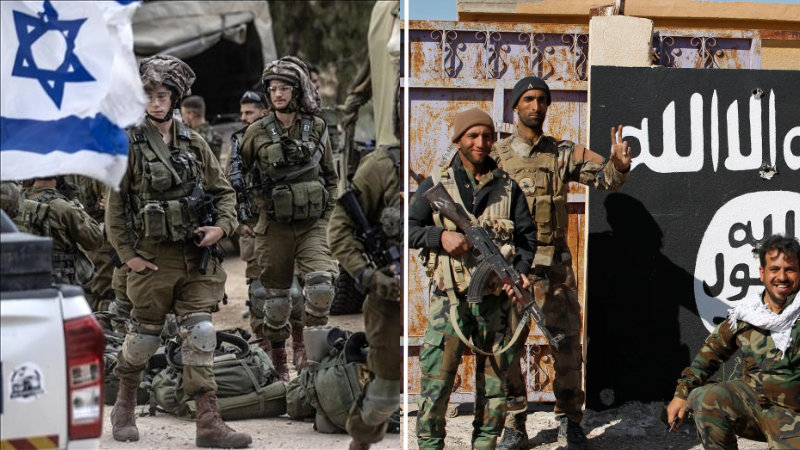
Australians who joined ISIS faced prosecution and public vilification, while former Israeli Defense Forces (IDF) soldiers living in Australia walk freely among us. This disparity in treatment raises questions about the principles underpinning Australia’s justice system. Andrew Brown investigates the double standards at play.
Australians pride themselves on a justice system that is principled, judging crimes based on actions rather than the identity of the perpetrator. This narrative of even-handed justice is comforting, but it unravels under scrutiny. The Brereton Report demonstrated Australia’s commitment to accountability, as entire Australian Defence Force platoons were investigated for alleged war crimes in Afghanistan. Careers were put on hold, and medals were questioned, with one soldier charged and many others left in legal limbo.
This pursuit of justice was neither timid nor symbolic. Australia showed the world it would hold its own forces accountable, regardless of rank or reputation. However, when Australians traveled to join ISIS, the response was swift and severe. Passports were canceled, homes raided, and citizenships stripped. Wives and children were treated as accomplices and future threats, with due process often overlooked.
The Gaza Conflict and Civilian Casualties
Meanwhile, the situation in Gaza presents a stark contrast. What is occurring is not chaotic warfare but a civilian catastrophe. Credible analyses indicate that approximately 84% of those killed are civilians, with around 33% being children. By comparison, in Ukraine, children account for around 0.3% of casualties, highlighting a significant disparity.
The destruction in Gaza follows a pattern. Residential districts, schools, and hospitals have been systematically destroyed, depriving civilians of the conditions necessary for life. Hospitals have been targeted, with electricity and fuel cut off, leading to untreated deaths and medical staff detained without charge.
Human Rights Atrocities and Legal Implications
Mass detentions have accompanied the physical destruction in Gaza. Thousands of Palestinians have been taken without charge, facing documented abuses in detention. Journalists and aid workers have been killed, including Australian humanitarian Zomi Frankcom. The case of Hind Rajab, a six-year-old girl killed alongside paramedics, underscores the severity of the situation.
The language of genocide is no longer rhetorical but legal. The International Court of Justice has identified a plausible risk of genocide, and the International Criminal Court is pursuing accountability for war crimes. Despite this, Australia remains silent. Senior human rights lawyer Chris Sidoti has warned that Australians who served in Gaza may face criminal liability if genocide or war crimes are established.
Selective Justice and National Policy
Despite these warnings, no Australian Federal Police task force has been established to investigate potential complicity in genocide or war crimes. Instead, an estimated 1,000 former or current IDF soldiers live freely in Australia, enjoying suburban normality without scrutiny. This indulgence extends to proposals for arming former IDF soldiers to protect Jewish institutions in Australia, a move that raises significant concerns.
If ISIS returnees sought to bear arms in public, the response would be swift and severe. The fact that such a proposal is entertained for former IDF soldiers exposes the fiction of equal justice in Australia. The law remains unchanged, but its application varies based on who it protects.
Conclusion: A Call for Consistent Accountability
Australia’s actions against its own soldiers and ISIS recruits demonstrate its capacity for accountability. However, when it comes to Australians fighting in Gaza under the Israeli flag, the state turns a blind eye. This is not restraint but complicity, and history may judge this moment as one where Australia failed to uphold the principles of justice it claims to value.