




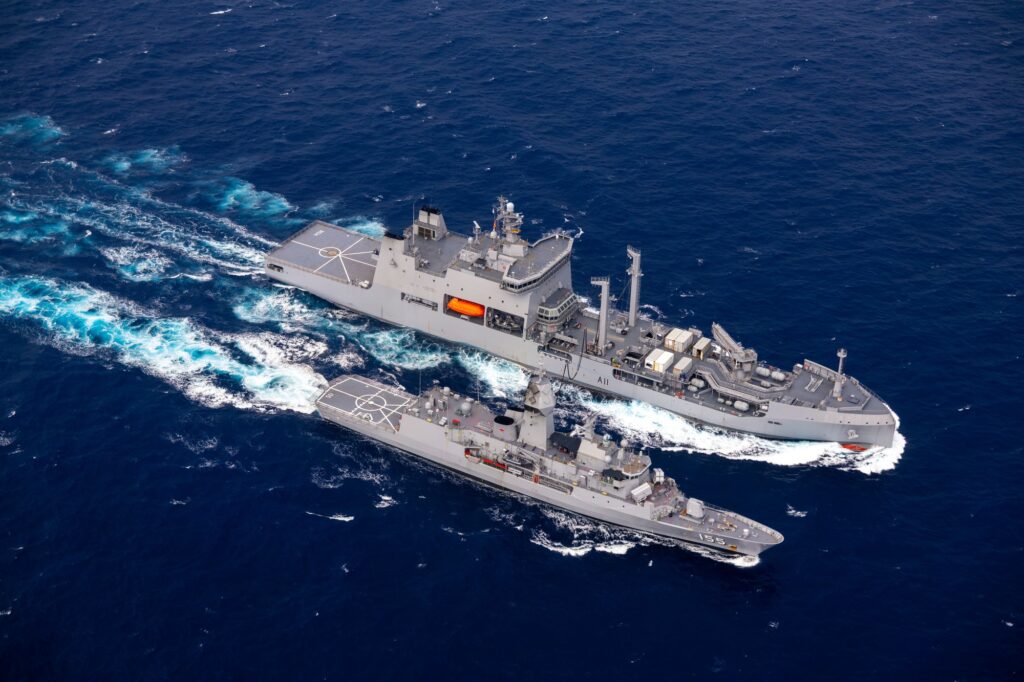
Rumors are swirling that another Chinese naval task group might soon be heading towards Australia. While such a deployment poses no immediate threat, and warships are entitled under international law to operate in international waters, it inevitably brings to mind the Chinese task group that circumnavigated Australia earlier this year. This voyage, while perhaps overstated by some, served as a deliberate display of maritime coercion in an evolving strategic environment.
China’s increasing assertiveness in the Indo-Pacific, coupled with Russia’s aggression in Ukraine and ongoing conflicts in the Middle East, underscores a critical reality: military force has re-emerged as a conventional tool of coercion. For Australia, the pressing question is how to mitigate its vulnerability to such coercion, a discussion that inevitably begins with defense spending.
Australia’s Defense Capabilities Under the Microscope
Despite recent incremental funding increases, Australia still lacks the capabilities necessary to safeguard its national interests in a significantly more contested world. The nation cannot guarantee the security of its ports due to outdated mine-detection systems; its land-based missile-interception capability is largely symbolic; and it possesses minimal sovereign space assets to support defense operations. In a period of mounting global instability, budget constraints have led to reduced operational time for military aircraft and naval vessels.
The stark reality is unavoidable: Australia’s current resourcing does not align with its strategic objectives or the threats repeatedly highlighted by its leaders. The situation is reminiscent of historical moments when Australia faced direct threats, such as the fear experienced in Darwin in February 1942, or in Sydney when midget submarines infiltrated the harbor later that year.
Strategic Challenges in the South China Sea
The South China Sea is a vital artery for Australia’s maritime trade, with two-thirds of its trade passing through this region. As an island nation heavily reliant on maritime commerce, the security of these waters is paramount. Australia has maintained a presence in the South China Sea since the end of World War II. However, with China’s growing military power, Australian Defense Force personnel have encountered increasingly aggressive harassment in international waters and airspace.
The most recent incident occurred in October when a Chinese fighter aircraft released flares dangerously close to an Australian patrol aircraft, a move that could have disabled its engine and resulted in loss of life. This act exemplifies military coercion, an attempt to deter Australia from operating freely in international airspace.
“The circumnavigation of Australia by a Chinese naval task group of three ships fits into the same category. It was a demonstration of capability and a show of force we will see again.”
The Imperative for Increased Defense Spending
The recent Lowy Poll indicates that 51 percent of Australians support higher defense spending. Although the Albanese government has announced plans for new submarines, surface ships, and an expanded missile inventory, Australia still lacks a range of key capabilities essential for mitigating military coercion and, in the worst-case scenario, responding to conflict.
Currently, Australia is attempting to navigate a rapidly changing strategic environment with a lean budget, allocating about 2 percent of its GDP to defense. During the Cold War, this figure was around 2.7 percent, and in the 1950s, it was approximately 3 percent. While nominal spending has increased, it constitutes a smaller share of the economy, limiting the acquisition of critical capabilities needed to counteract rising trends of military coercion and conflict.
“The government’s plan to reach 2.3 percent of GDP by 2033–34 does not match the pace or scale of the strategic deterioration we face.”
Australia must recognize the rapid pace of global change and act accordingly. Modest increases in defense spending will not bridge the gap between its strategic ambitions and the capabilities it can deploy. If Australia is serious about resisting coercion and safeguarding its national interests, defense funding must rise beyond current projections, and soon. Delaying action only exacerbates the nation’s vulnerability to military coercion.