




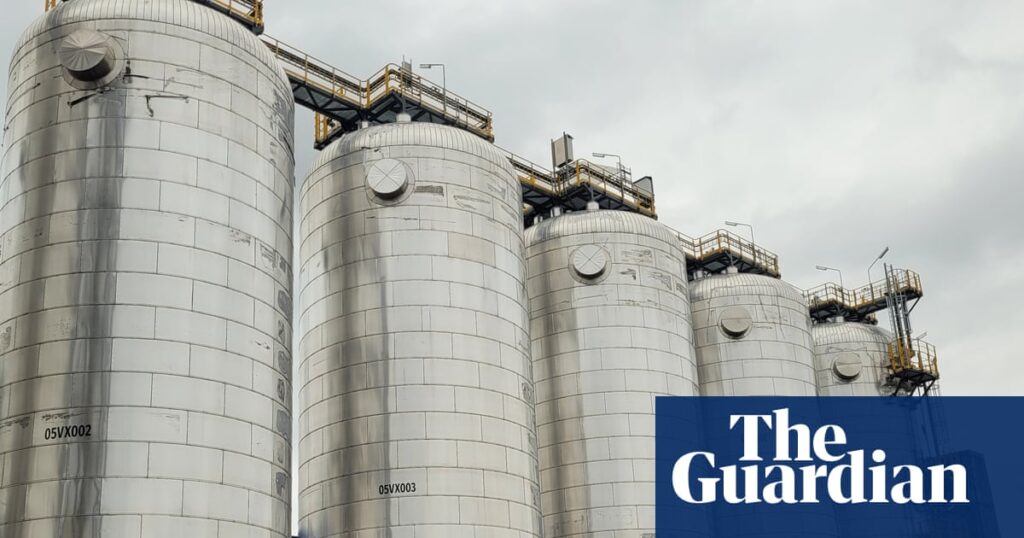
The US energy giant Chevron heralds its Gorgon carbon capture and storage (CCS) project as the world’s largest of its kind. However, this $3 billion venture, located on Barrow Island off Western Australia’s Pilbara coast, has yet to meet its ambitious promises. Initially set to begin operations in 2016 with $60 million in federal funding, the project aimed to capture up to 4 million tonnes of carbon dioxide (CO2) annually, injecting it into a reservoir more than 2 kilometers beneath the island. Nearly a decade later, these targets remain unmet.
The Gorgon liquified natural gas (LNG) facility, completed in 2017, recently underwent a $3 billion expansion. However, the CCS project faced repeated delays due to technical issues, only commencing operations in August 2019. Despite an initially promising start, the amount of CO2 injected has decreased annually. Chevron’s latest data reveals only 1.33 million tonnes were injected last financial year, down from 1.59 million tonnes in 2023-24, and 1.72 million tonnes the year prior.
Technical Challenges and Industry Criticism
Critics argue that the Gorgon project exemplifies the shortcomings of CCS technology, despite substantial financial investments. Chevron maintains that the technology itself is sound, attributing the issues to the need for careful pressure management in the geological reservoir. A Chevron Australia spokesperson stated, “While we have continued to store as much carbon dioxide as we safely can during this period, carbon dioxide injection rates have decreased.” The company is working to optimize the pressure management system, with plans to increase injection rates once project works are complete.
“The results are obviously underwhelming. It just calls into question the viability of all CCS projects at scale,” said Kevin Morrison, an analyst with the Institute for Energy Economics and Financial Analysis.
Morrison further noted that even if the Gorgon CCS development’s issues are resolved, it would still only address less than 3% of the total emissions from the LNG development, especially when considering emissions from burning the LNG overseas. He emphasized, “It underlines that CCS should be in no way treated as a climate solution.”
Broader Implications and Government Stance
Australia hosts another significant CCS project: Santos’ Moomba project in South Australia, which injects CO2 into depleted onshore wells. Recently, Santos received over 614,000 carbon credits, valued at approximately $22 million, for its initial six months of operation. Meanwhile, the Japanese company Inpex proposes the Bonaparte CCS development, potentially Australia’s largest, aiming to store up to 10 million tonnes of CO2 annually.
The Australian government supports CCS technology but has redirected funding post-2022 elections. Climate Change Minister Chris Bowen has cautioned that CCS is “not the answer to all our problems.” Resources Minister Madeleine King, however, described CCS as “part of the solution,” highlighting its necessity for achieving net zero emissions.
“We must do everything in our power to ensure the technology becomes as effective as possible,” King asserted, referencing government efforts to facilitate CCS project approvals.
Expert Opinions and Future Prospects
Despite governmental support, many experts remain skeptical of CCS’s effectiveness. Critics argue that it serves as a form of greenwashing, enabling continued fossil fuel expansion while capturing only a small fraction of emissions. According to the Global CCS Institute, 77 CCS projects are operational, with many used for enhanced oil recovery, a process that paradoxically contributes to further emissions.
“The total amount of emissions stored in nearly 30 years equates to just 10 days of global pollution,” noted Dr. Martin Jagger, a CCS consultant and supporter.
Jagger acknowledges the technical feasibility of CCS but cautions that it remains a marginal technology, capturing only 0.1% of global emissions annually. He warns that without confronting this reality, public funding may dwindle for projects that, while active, lack significant climate impact.
Australia’s Climate Change Authority has also questioned CCS’s potential, with Chair Matt Kean indicating that initial optimism about the technology’s role in emissions reduction was not supported by evidence. Kevin Morrison attributes continued political support for CCS to the lobbying influence of the oil and gas industry, despite the growing economic viability of renewable energy sources.
As Australia and the world grapple with climate change, the debate over CCS’s role continues. While some see it as a necessary tool in the transition to net zero, others view it as an inadequate solution that diverts attention and resources from more effective climate strategies.