



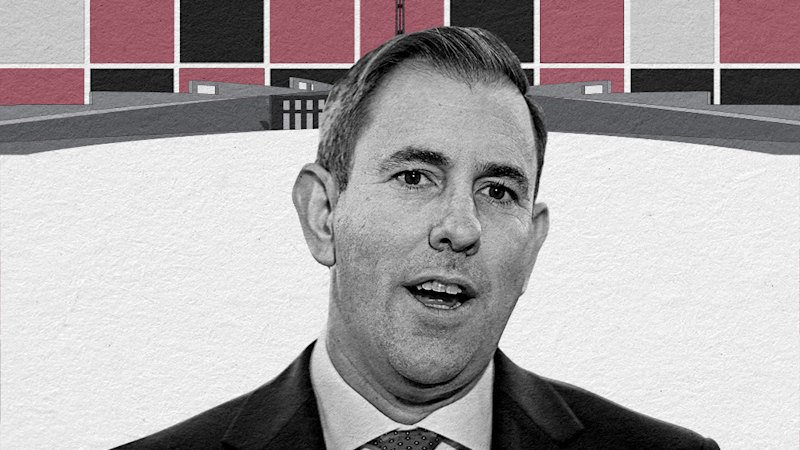
Treasurer Jim Chalmers has announced significant cuts to government spending in an effort to manage the projected budget deficit, with the mid-year budget update revealing a $20 billion reduction. Key areas affected include consultants, Defence projects, and a clean energy initiative.
Chalmers, alongside Finance Minister Katy Gallagher, confirmed that these cuts and reprioritisations aim to address the nation’s financial challenges, which are expected to persist throughout the decade. The announcement comes as the government grapples with a $42.1 billion deficit forecast for 2025-26, following the earliest budget release in Commonwealth history this past March.
Details of the Budget Cuts
The government has identified $25 billion in additional spending requirements, ranging from natural disaster relief to age pension adjustments. To balance this, the $20 billion in cuts will include $6.8 billion from consultants, contractors, and labor hire, as well as non-wage expenses such as travel and hospital costs. This is in addition to $5.3 billion saved from previous cuts to external labor since the government took office.
Further savings include $1.8 billion from changes to the assumed rate of return on retirees’ savings and $900 million from adjustments to veterans’ pensions. While overall Defence spending is on the rise, $574 million will be reprioritised within the department.
Impact on Clean Energy Initiatives
Chalmers had previously announced a $2 billion investment in the “Hydrogen Headstart” program to boost the hydrogen industry. However, over $400 million of this will now be redirected to low- and zero-emissions technology, reflecting a shift in industry interest away from hydrogen. Additional savings are expected to be disclosed on Wednesday.
“Delivering savings isn’t just good fiscal management – it’s about guaranteeing that the services our communities depend on remain strong and sustainable,” Finance Minister Katy Gallagher stated.
Economic Context and Revenue Increases
The government’s fiscal strategy also involves increasing taxation revenue, with recent figures showing a $6.6 billion improvement in the budget’s bottom line compared to expectations set in March. This improvement is largely driven by stronger income tax collections, which exceeded forecasts by nearly $4 billion in the first four months of the 2025-26 financial year. Additionally, taxes on superannuation funds surpassed projections by $3.1 billion.
The budget is based on several assumptions, including inflation rates and commodity prices. Notably, iron ore, a major export, is currently priced at $US106 per tonne, contrary to the forecasted drop to $US60. A 64% increase in gold prices this year has also contributed to higher tax revenues from the sector.
Broader Economic Indicators
The Australian dollar’s strength against the US dollar, influenced by economic policy instability in the Trump administration, is another factor impacting the budget. Despite a slowdown, jobs growth remains above forecast levels, and wages have increased by 3.4% over the past year. Consumer spending is also on the rise, potentially boosting GST collections, as indicated by recent data showing increased expenditure on recreational activities.
Future Implications and Government Strategy
Chalmers has refrained from predicting the exact impact of the budget update on the deficit, emphasizing the goal of avoiding significant setbacks. The March budget projected deficits of $35.7 billion, $37.2 billion, and $36.9 billion over the next three years.
Last week, the government announced it would discontinue its energy subsidy program, despite its popularity among voters. Chalmers described this decision as challenging but necessary, highlighting a strategic shift in addressing cost of living pressures through permanent measures such as tax system adjustments, bulk-billing, affordable medications, and student debt reductions.
“Our commitment to helping with the cost of living has not changed even as the nature of that cost of living help has evolved over time,” Chalmers told Sky News.
As the government navigates these fiscal challenges, the focus remains on sustainable financial management and ensuring essential services continue to support Australian communities effectively.