




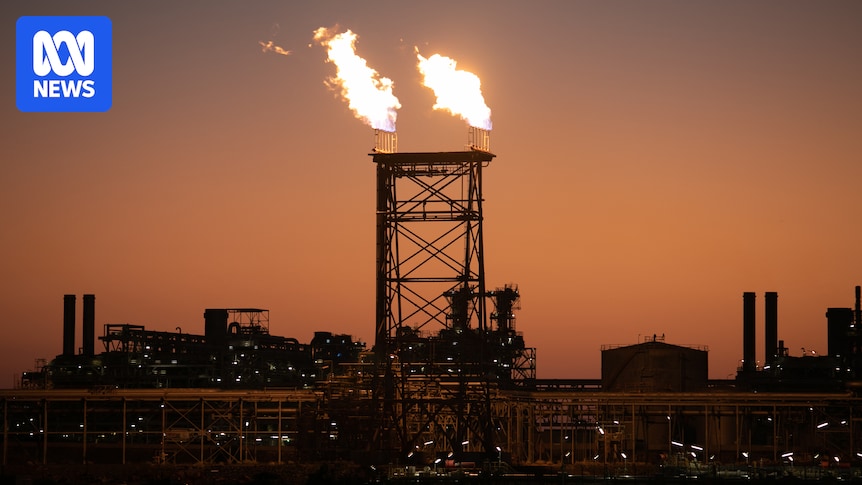
Financial support from governments worldwide to industries that harm the environment remains a significant barrier to halting biodiversity loss. In 2022, Australia signed the Global Biodiversity Framework (GBF), an international agreement aiming for a $700 billion annual reduction in harmful subsidies by 2030. However, Australia’s first GBF progress report notably omits data on incentives provided to the fossil fuel industry, despite estimates from the Organisation for Economic Co-operation and Development (OECD) indicating Australia offers $8 billion annually in fossil fuel support.
Conservation groups express concern that Australia may not meet its biodiversity targets, even as the government claims it is mostly “on track.” Brendan Sydes, the Australian Conservation Foundation’s national biodiversity policy adviser, highlighted that while Australia’s progress report mentions reforming national protection laws, the implementation of these reforms remains a critical test of the government’s commitment to stronger nature protection.
Fossil Fuel Data Exclusion Raises Questions
While the GBF outlines 23 biodiversity targets, Australia has chosen to focus on 17, leaving out Target 18, which calls for the elimination or reform of harmful incentives. Australia’s progress report, submitted earlier this month, acknowledges $242 million in financial support to agriculture and fishing sectors that could harm the environment but excludes fossil fuel data, arguing that OECD estimates include schemes outside the report’s scope.
An independent estimate by Australia’s Biodiversity Council suggests fossil fuel support could be even higher, at $14 billion in 2022–23. Paul Elton of the Australian National University criticized the exclusion of fossil fuel data, stating,
“Australia has both the responsibility, as one of only 17 megadiverse nations, and the capacity, as one of only two wealthy and megadiverse nations, to be a leader on GBF delivery and biodiversity conservation.”
A government spokesperson emphasized Australia’s commitment to climate action, noting the approval of over 137 renewable energy projects and the transition to cleaner energy. However, Australia needs to triple its emissions reduction rate by 2035 to meet net zero targets.
Global Context: Rich Nations and Biodiversity Funding
Australia is not alone in its omission of fossil fuel subsidies in biodiversity reports. Of the 196 countries signed up to the GBF, only 122 have submitted progress reports. The United States has not submitted a report, Canada provided no data, and New Zealand claimed subsidies could not be linked to biodiversity harm. Meanwhile, China reported no harmful subsidies, despite OECD data suggesting $121 billion in fossil fuel subsidies in 2024.
The European Union stands out as a major participant that calculated its harmful subsidies, identifying $150 billion in fossil fuel support with plans to phase out half by 2030.
Challenges in Meeting Biodiversity Targets
Australia’s report claims it is on track for no new extinctions, but data gaps remain for threatened species, particularly invertebrates. Independent studies suggest one to three invertebrate species have gone extinct weekly since European colonization. Despite the government’s claim of no documented extinctions since 2022, the IUCN declared the Christmas Island shrew extinct in 2025.
Sydes emphasized the need for funding to back key government promises such as zero new extinctions, noting the lack of commitment to continue the Saving Native Species program. The government has spent $700 million on threatened species recovery over four years, focusing on 110 species, which is about 6% of the more than 2,000 listed species.
A government spokesperson stated that Australia is on track to deliver on seven of its nine national priorities, supported by billions in investment for environmental protection. However, independent estimates suggest biodiversity spending is below $1 billion, despite the government’s annual $19 billion environmental protection expenditure.
Restoration Efforts and Future Challenges
The GBF targets 30% restoration of degraded ecosystems by 2030, but Australia has not set a specific target percentage for landscape restoration. The progress report cites challenges such as the continent’s size, climate change, widespread degradation, and limited resources. An implementation plan is expected to be released in early 2026.
Elton expressed concern about meeting restoration targets without a clear plan, stating,
“Many of the GBF’s targets are framed as actions to be achieved by 2025 or 2030. Time is not on Australia’s side.”
The government acknowledges more work is needed and plans to develop an implementation plan with states and territories to address biodiversity decline and drive systemic change.