


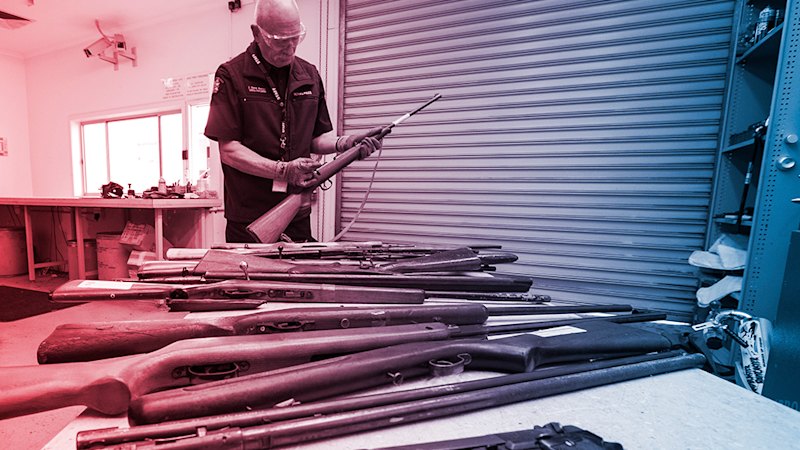
Australians across the political spectrum are calling for stricter gun laws, advocating for tighter restrictions on gun ownership and the number of firearms one can possess. This unified stance reflects a growing consensus among voters that no measure is too extreme in the pursuit of enhanced public safety.
The push for reform comes as the New South Wales (NSW) government advances changes to its gun laws. A recent Resolve Political Monitor poll revealed that three-quarters of Australians believe existing laws need to be strengthened, with only ten percent expressing satisfaction with the current regulations.
National Cabinet’s Unified Front
Last week, the national cabinet agreed on several measures to bolster gun laws, including the establishment of a national firearms register and the imposition of limits on open-ended licenses. These proposals have sparked some political opposition, notably from the NSW Nationals, who have diverged from the state Liberal party. They have vowed to reject proposals such as capping individual firearm ownership at four and implementing biennial reviews of gun licenses, recently introduced in the NSW parliament by Premier Chris Minns.
Meanwhile, Victorian Premier Jacinta Allan announced that former police chief commissioner Ken Lay would review the state’s gun laws. This review is part of broader reforms, including changes to hate speech powers and granting additional authority to local police to manage protests.
Public Sentiment and Poll Findings
The Resolve poll, conducted with 1,010 Australians between Wednesday and Saturday last week, followed the Bondi terror attack and has a margin of error of 3.1 percent. It highlighted that support for tougher gun laws is highest among Labor voters (80 percent) and One Nation supporters (82 percent), with Coalition voters not far behind at 78 percent.
Among Greens voters, 65 percent support changes, though they also have one of the highest proportions of supporters (15 percent) who favor maintaining current laws. Independent voters showed the greatest satisfaction with existing arrangements, with 20 percent content with the status quo.
“There’s strong support for a raft of measures to tighten gun control, which reflects the want to do something, anything, to make access to such deadly weapons more difficult,” said Resolve founder Jim Reed.
Proposed Reforms and Public Support
The poll also indicated that Australians prioritize addressing gun access (35 percent) as a key government focus following the Bondi attack, alongside preventing terrorism (49 percent) and tackling crime (45 percent).
Among the proposed gun law changes, there is overwhelming support for each measure. The least supported was restricting gun licenses to Australian citizens, with 72 percent in favor and 11 percent opposed. The creation of a national firearms database received the highest backing, with 83 percent supporting the initiative and just 3 percent opposing it. This national register, agreed upon by states and territories in 2023, is expected to be operational by 2028 but is now being “fast-tracked.”
Additionally, 81 percent of respondents agree that gun licenses should have time limits requiring regular renewal, and the same percentage supports stricter regulations on high-powered firearms. Limiting the number of guns an individual can own is the second most supported proposal, with 82 percent in favor and only 5 percent opposed.
Political Reactions and Historical Context
Federal Nationals leader David Littleproud has backed the state party’s opposition to the Minns government’s gun reforms, arguing that Australia faces an “Islamic extremist” problem rather than a gun problem. “While we support measures to strengthen hate speech laws, this issue should not be conflated with law-abiding gun ownership,” he stated.
Prime Minister Anthony Albanese refrained from commenting on the Nationals’ opposition, instead highlighting the bipartisan efforts of the past. He referenced the role of former National Party leader Tim Fischer in supporting John Howard’s firearm reforms following the Port Arthur massacre in 1996.
“One of the things that happened there was that not just John Howard took action as prime minister, and he deserves credit for that, so too does Tim Fisher, who was at the time the leader of the National Party,” Albanese said. “But so too does Kim Beazley, who offered that bipartisan support. The parliament came together. That’s what Australians wanted to see then, and it’s what Australians want [now].”
As the debate continues, Australians remain united in their call for change, seeking a balance between individual rights and collective safety. The outcome of these discussions will likely shape the nation’s approach to gun control for years to come.