

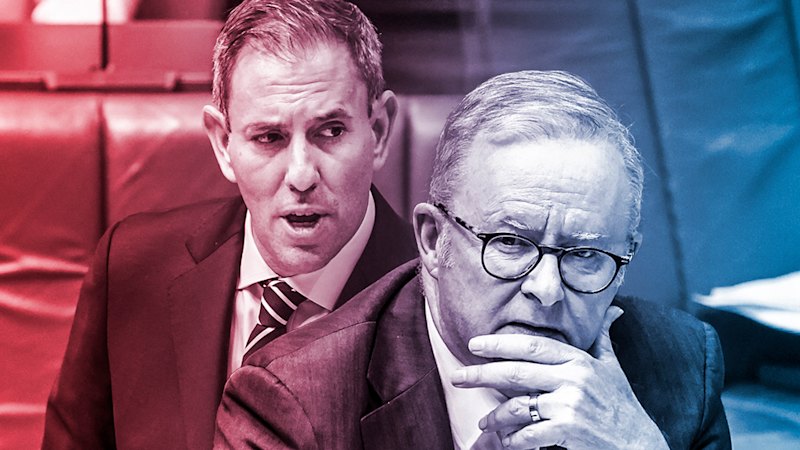
March 16, 2026 — Australians are increasingly pointing fingers at Prime Minister Anthony Albanese and his government for the nation’s mounting inflation pressures. As households tighten their belts by cutting back on takeaway meals, canceling streaming subscriptions, and delaying essential repairs, the economic strain is palpable across the country.
The latest Resolve Political Monitor reveals that 40 percent of Australians attribute the rising cost of living to the federal government. This sentiment emerges as the Reserve Bank of Australia (RBA) prepares for a likely interest rate hike, potentially pushing the nation towards a recession to rein in inflation.
Inflation and Economic Pressures
Over the past six months, inflation has surged from 1.9 percent to 3.8 percent. Treasurer Jim Chalmers recently cautioned that the ongoing conflict in Iran, which has driven oil prices above $100 per barrel, could further elevate inflation to the high four percent range.
A poll conducted with 1,803 participants between March 9 and 14 indicates that only a minority of voters believe external factors are responsible for inflation. While 40 percent blame the government, a mere 6 percent hold businesses or the RBA accountable, and only 3 percent see consumers as a contributing factor.
Seventeen percent, the highest proportion since Resolve began polling on this issue, agree that global factors outside Australia’s control are driving the cost-of-living spike.
Interest Rates and Economic Outlook
The Reserve Bank’s impending decision on interest rates is critical, with financial markets estimating a 75 percent chance of a second consecutive hike. This would elevate the cash rate to 4.35 percent, matching levels from early last year, and add approximately $300 to the monthly repayments on a $600,000 mortgage.
HSBC Australia chief economist Paul Bloxham has warned that the RBA may need to take even more drastic measures to curb inflation. He stated that the bank’s options have “narrowed significantly” due to inflation exceeding the target band, exacerbated by Middle Eastern geopolitical tensions.
“Australia’s economy needs a downturn to deliver the necessary disinflation to get inflation back to the RBA’s 2.5 percent target. This is the tough, hard, and unfortunate reality,” Bloxham remarked.
Cost of Living Challenges
As inflation persists, Australians are feeling the financial pinch each time they spend. The most significant cost-of-living pressure remains grocery prices, with 55 percent of respondents citing it as a major issue. Low-income earners, retirees, and the unemployed are particularly affected.
Utility costs, including electricity and gas, are the second-largest concern at 41 percent, though this is below the peak of 47 percent seen in mid-2023 before the cessation of energy subsidies by federal and state governments.
The cost of renting has also become a notable pressure, rising to 26 percent from 21 percent in late 2024.
Consumer Behavior and Economic Sentiment
To cope with rising expenses, 55 percent of Australians report cutting back on non-essential purchases such as clothing and electronics. A similar proportion is focusing on supermarket specials, a trend observed by major grocery retailers in recent months.
Additionally, 47 percent are dining out less frequently, a third have canceled subscriptions, and many are deferring significant expenses like home or car repairs. These adjustments are more pronounced among low-income earners, renters, and retirees.
Looking ahead, Australians anticipate further economic challenges. Only 8 percent foresee an improvement in the economic outlook over the next month, while 47 percent expect conditions to worsen. Over the next six months, just 14 percent predict an improvement, with half anticipating further decline. By next year, 22 percent hope for economic betterment, contrasted with 44 percent who expect deterioration.
As the nation grapples with these economic realities, the government’s response and the RBA’s monetary policy decisions will be pivotal in shaping Australia’s financial landscape in the coming months.