



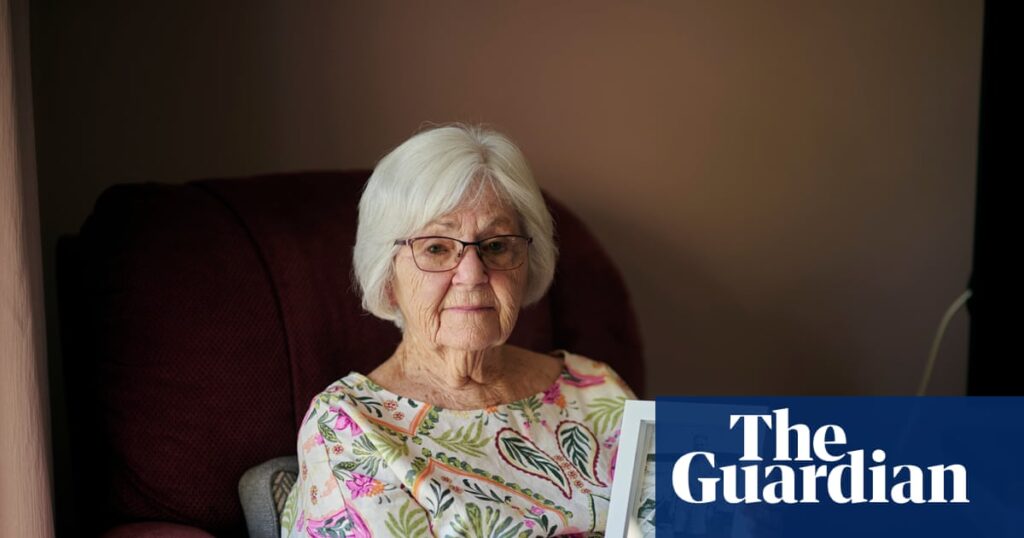
“Fighting for those who love him, our darling daddy died,” the inscription reads. These words, etched into the now-destroyed tombstone of Albert Kemp, an Anzac buried in the Gaza War Cemetery, bring tears to the eyes of his daughter, Wilma Spence. In her quiet living room, she grapples with the overwhelming grief of learning that her father’s grave has likely been obliterated by the Israel Defense Forces (IDF).
Wilma, who has not received official confirmation, knows the exact location of her father’s grave, nestled in a corner of the cemetery dedicated to Australians who perished during World War II. Satellite imagery indicates this area has suffered significant damage. An IDF spokesperson stated that the graves were destroyed to address “underground terrorist infrastructure,” a claim met with skepticism by the families of the deceased.
Historical Significance and Personal Loss
Albert Kemp enlisted in Dandenong, Melbourne, in October 1939, joining the 2/7 Battalion of the Australian Imperial Force. He fought across Europe and the Middle East, earning the Africa Star and the 1939-45 Star. Promoted to acting corporal in 1941, he died in Palestine the following year at just 27.
Wilma, too young to remember her father, learned about him through family stories. She has retraced his steps across Crete and the Middle East, but it was at his grave in Gaza where she felt closest to him. Her visit in 1995 was a poignant pilgrimage, marked by a two-hour Mossad interrogation and armed checkpoints. Alone in the cemetery, she found solace in the presence of her father’s tombstone.
Military Operations and Controversy
The recent destruction of the Gaza War Cemetery, where Albert Kemp was buried, has sparked outrage. Satellite images reveal extensive earthmoving in the cemetery’s southern corner, where rows of gravestones have been removed. The IDF explained that these actions were necessary for troop safety during operations against nearby threats.
Wilma, however, is unconvinced. “They have no respect for the living, so why would they respect the dead?” she questions, expressing her anger towards the Israeli government. Her appeals to Australian Prime Minister Anthony Albanese have been met with referrals to other departments, leaving her frustrated and seeking accountability.
Calls for Government Action
With the impending visit of Israeli President Isaac Herzog, Wilma urges the Albanese government to address the issue. She wants pressure placed on Israel to allow the Office of Australian War Graves to assess the damage. “I’d like them to raise it with the Israeli president,” she insists, criticizing the government’s tendency to “pass the buck.”
The Australian government has acknowledged the destruction. Acting Prime Minister Richard Marles stated, “We have clearly expressed our concern. As soon as the situation is one where we can safely repair those graves, obviously, we will do that.”
Future Implications and Emotional Toll
The destruction of the Gaza War Cemetery underscores the broader implications of military operations on historical sites. The Commonwealth War Graves Commission plans to secure and repair the cemetery, but full reconstruction will take time, with immediate efforts focused on humanitarian needs.
For Wilma, the loss is deeply personal. Her poem about her father reflects the pain of losing a connection to him through his grave. “I stood at your grave in the Gaza sun, the smell of Eucalypts filling the air. My tears fell in the dust, it seemed unjust to lose you, so young – unfair,” she writes, capturing the enduring heartache of her father’s absence.
As the situation unfolds, Wilma and others affected by the destruction continue to seek answers and justice for their loved ones, hoping for a resolution that honors the memory of those who served and sacrificed.