

The Australian sharemarket concluded Thursday’s session nearly unchanged, as declines in energy stocks countered modest gains across other sectors. The S&P/ASX 200 edged up by just 3 points to close at 8588.20, with seven out of its 11 industry sectors ending in positive territory. This flat outcome follows three consecutive days of losses on the ASX. Meanwhile, the Australian dollar slipped to US66.03¢ by 4:51 PM AEDT.
The minor uptick coincided with advances in futures for the tech-heavy Nasdaq and the S&P 500, suggesting a potential recovery from Wednesday’s sell-off of AI stocks on Wall Street. However, energy stocks emerged as the day’s biggest losers, primarily driven by a 2.7% decline in Woodside shares. The drop came after Woodside announced that its CEO, Meg O’Neill, has resigned to take the helm at global oil major BP.
Sector Performance and Key Movements
In contrast to Woodside’s decline, smaller rival Santos saw a 1% rise following a $1 billion settlement payment from Fluor Australia, as ruled by the Supreme Court in Queensland. Technology shares demonstrated resilience, largely ignoring the overnight weakness of their US counterparts. Software companies WiseTech, Xero, and Technology One posted gains of 1.6%, 2.5%, and 1.2%, respectively, although AI data centre operator NextDC fell 4.4%.
The banking sector, a significant influencer due to its substantial market share, showed mixed results. Commonwealth Bank of Australia (CBA) rose by 0.5%, while Westpac, National Australia Bank, and ANZ Bank experienced slight declines. Notably, ANZ faced shareholder discontent, receiving a second consecutive “strike” against its executive pay scheme, with 32.3% of shareholders voting against it. Despite this, resolutions to spill the board did not pass, with only 1.45% in favor.
Mining and Real Estate Developments
Mining stocks presented a mixed picture, with iron ore giants BHP and Rio Tinto each climbing 1.1%, and Fortescue adding 0.7%. However, gold miners struggled, as Northern Star, Evolution Mining, and Newmont saw declines. In the financial sector, Netwealth shares rose by 1.9% after agreeing to a $100 million compensation for investors affected by the collapse of the First Guardian Master Fund. This follows admissions of insufficient risk evaluation by Netwealth’s super trustee businesses.
Real estate investment trusts also advanced, with Scentre, Vicinity, and GPT Group all posting gains. Property developer Mirvac rose by 1.5%, reflecting positive sentiment in the real estate sector. Meanwhile, Bapcor surged 15.5% after announcing the departure of CEO Angus McKay, to be succeeded by industry veteran Chris Wilesmith.
Global Market Influences
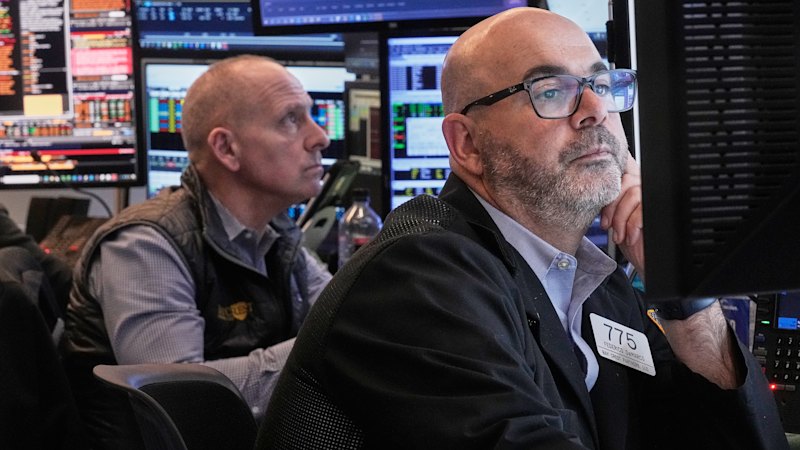
On Wall Street, the S&P 500 experienced its worst day in nearly a month, falling 1.2%, while the Dow Jones and Nasdaq composite also declined. The downturn was led by companies in the artificial intelligence industry, raising concerns about whether their valuations are sustainable. Notable losses included Broadcom, Oracle, and CoreWeave, with Nvidia also contributing significantly to the S&P 500’s decline.
“Questions continue to dog the former superstars about whether their years-long dominance of Wall Street meant their prices shot too high, as well as whether all the investment in AI will produce enough profit and productivity to prove worth the cost.”
Despite these challenges, oil companies benefited from geopolitical developments, as President Donald Trump ordered a blockade of sanctioned oil tankers into Venezuela, causing US crude prices to rise. Brent crude also climbed, reflecting the market’s response to the heightened tensions.
In the media sector, Netflix saw a slight increase after Warner Bros Discovery’s board recommended accepting a buyout offer from Netflix over a competing bid from Paramount Skydance. This development highlights the ongoing consolidation and strategic maneuvers within the streaming industry.
Looking Ahead
The Australian sharemarket’s performance reflects a complex interplay of local and global factors, with energy sector challenges and tech rebounds shaping the day’s outcomes. As investors navigate these dynamics, attention will remain focused on geopolitical developments, corporate governance issues, and the evolving landscape of the technology and energy sectors.
With the ASX’s direction influenced by both domestic and international events, market participants will be closely monitoring upcoming earnings reports and economic indicators to gauge future trends.