



The Australian sharemarket concluded Tuesday’s session with minimal change as gains in energy stocks and miners were counterbalanced by a decline in technology and retail stocks. This mirrored a downturn on Wall Street, driven by renewed anxiety over the impact of artificial intelligence on corporate profits and ongoing uncertainty regarding tariffs.
The S&P/ASX 200 index opened with a positive outlook but eventually erased its early gains, closing slightly above the 9000-mark at 9022.30, a marginal decrease of 3.7 points from Monday’s close. Five of the market’s 11 industry sectors experienced declines, while the Australian dollar traded at US70.60¢ by late afternoon.
Initial optimism was fueled by strong performances from companies like Woodside Energy and Nine Entertainment, alongside a record high for BHP shares and a 2.1 percent increase in gold prices overnight. However, these gains were insufficient to counteract the downturn in the finance and tech sectors.
Impact of AI and Tariff Concerns
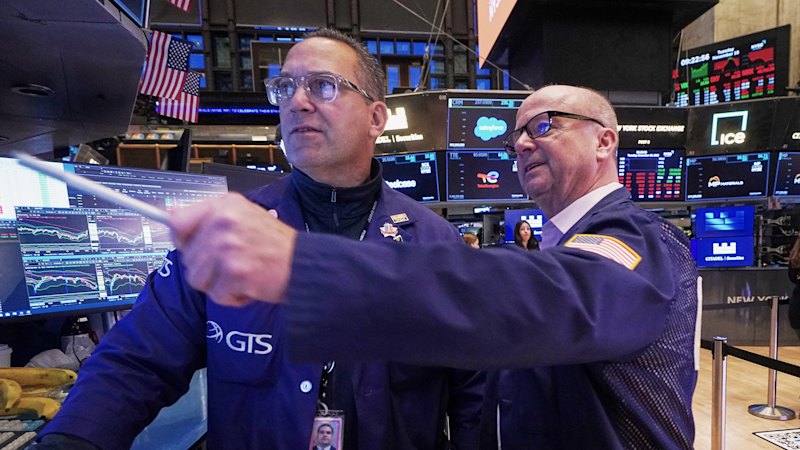
On Wall Street, traders have been offloading shares of companies perceived to be at risk from AI-driven disruptions, despite solid results from major corporations. This has been exacerbated by lingering uncertainties over President Donald Trump’s tariff policies, which continue to unsettle the market.
“The software sell-off is a reminder of what can happen when momentum-driven sectors shift into reverse,” said Steve Sosnick at Interactive Brokers. “The broader, more important question is: How many sectors can go into reverse before they drag the broader market along with them?”
In Australia, the tech sector experienced significant declines, with WiseTech Global down 3.5 percent, and software companies Xero and TechnologyOne falling by 4.6 percent and 3.8 percent, respectively. Data center operator NextDC also saw a slight decrease of 0.5 percent.
Financial and Property Sectors Under Pressure
Financial stocks, comprising over a third of the ASX, also faced setbacks. Macquarie, known as the “Millionaires’ Factory,” dropped 3.6 percent, while insurers QBE and IAG fell by 1.6 percent and 3.3 percent, respectively. ANZ Bank saw a 0.7 percent decline, despite the resolution of former CEO Shayne Elliott’s legal battle over denied bonuses.
Property stocks were similarly affected, with Goodman Group falling 2.6 percent and Scentre, the owner of Westfield shopping centers, dropping 1.1 percent. Consumer discretionary stocks, including Wesfarmers, Harvey Norman, and Aristocrat, also struggled, with declines of 1.8 percent, 1.4 percent, and 2 percent, respectively.
Southern Cross Media faced the steepest drop, plunging 9 percent following the unexpected resignation of CEO Jeff Howard and disappointing interim results.
Energy and Mining Sectors Show Resilience
Amidst the market’s overall stagnation, some sectors displayed resilience. Woodside Energy rose 2.4 percent, buoyed by an increased dividend despite a 24 percent drop in full-year profit. The company is actively searching for a new CEO following Meg O’Neill’s departure.
Nine Entertainment saw a modest 0.5 percent increase after reporting a 6 percent rise in earnings for the December half, marking its second consecutive period of profit growth.
BHP, the second-largest stock on the ASX, contributed to the mining sector’s strength with a 1.4 percent rise, reaching a new high of $55.33. Fortescue Metal also gained 1.1 percent, although Rio Tinto declined by 1.1 percent.
Gold stocks had a mixed performance, with Northern Star and Evolution Mining posting gains of 1.6 percent and 0.6 percent, respectively, while Newmont Mining fell 1.6 percent.
Global Market Trends
The US sharemarket experienced a downturn overnight, with the S&P 500 falling 1 percent, the Dow Jones dropping 1.7 percent, and the Nasdaq composite sinking 1.1 percent.
“The push and pull with tariffs is likely to be a distracting theme for markets for the remainder of the year, albeit with less volatility than the initial shock last April,” commented Michael Landsberg of Landsberg Bennett Private Wealth Management.
As the global market continues to navigate the complexities of AI advancements and tariff negotiations, investors remain cautious. The Australian market’s flat close reflects broader uncertainties, with stakeholders closely monitoring developments in these key areas.