



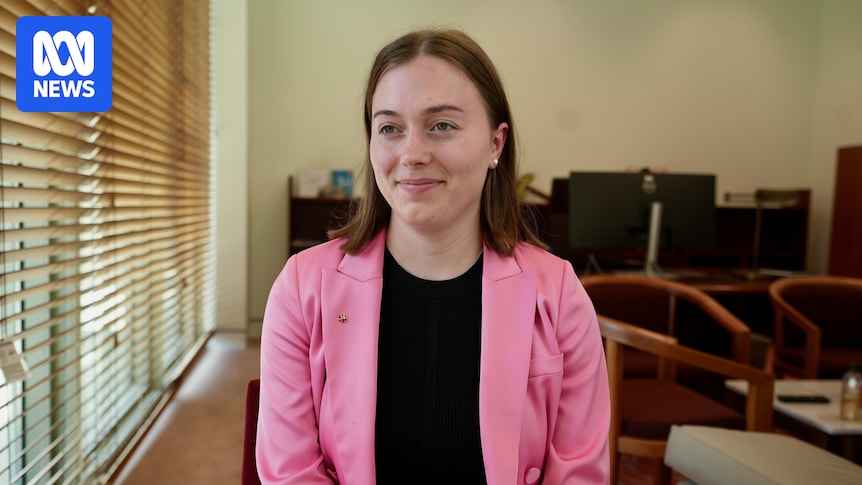
Recently elected Labor senator Charlotte Walker has revealed her personal experience as a victim of catfishing during her high school years. This revelation comes as the Australian government prepares to implement a groundbreaking social media ban for individuals under the age of 16. The 21-year-old senator shared her story to highlight the potential dangers young people face online and to support the new legislation.
Senator Walker recounted how a fellow student pretended to be someone else in an attempt to obtain nude photos from her and other classmates. Fortunately, they were able to identify the deception and reported the incident to their teacher and subsequently to the police. Reflecting on the experience, Walker described it as “quite distressing” and acknowledged the embarrassment that often prevents young people from speaking up about online harassment.
The Dark Side of Social Media
Unlike many of her parliamentary colleagues, Senator Walker grew up immersed in the world of social media, witnessing firsthand its potential dangers. Her personal experience has fueled her strong support for the impending social media ban, which she believes will protect children from online harm.
“Tucked up in bed at night on your phone… the things that can be sent to you and the interactions that you can have with other people when no-one is watching… it’s really dangerous,” she said. Walker also emphasized the pressure young people face to maintain a high “snap score” on Snapchat, which often leads them to interact with strangers.
Walker shared her own encounters with unsolicited nude photos from older boys on Snapchat, highlighting the app’s feature of instantly deleting photos as a barrier to reporting inappropriate content. Snapchat, along with other major platforms like Instagram, Facebook, TikTok, and YouTube, will be required to block under-16s from creating accounts under the new legislation.
Debate Over the Ban’s Effectiveness
The legislation, which passed with bipartisan support last year, has sparked debate over its enforceability and potential unintended consequences. Communications Minister Anika Wells has acknowledged that the ban may not immediately capture all underage users but insists it is a necessary step to “police the sharks.”
Teenagers themselves are divided on the issue. A recent survey by BTN revealed that 70 percent of respondents did not support the ban. Three student volunteers at Melbourne’s community radio station SYN expressed skepticism but also recognized the potential for positive outcomes. Bernie Gloag, a 15-year-old facing the ban, believes it will not effectively address safety concerns, while Kayla Hong and Bryce Good, both 16, are uncertain about the ban’s necessity.
“Most people I know pretty much exclusively use [Snapchat] to communicate — you don’t ask for someone’s phone number, you ask ‘how can I reach you on Snapchat,'” said Bryce Good.
Expert Opinions and Future Implications
Research by Dr. Kim Osman from the Queensland University of Technology, involving nearly 90 students nationwide, reflects similar skepticism. Many respondents felt that a stricter crackdown on harmful content would be more effective than an outright ban.
Dr. Osman noted that while some parents support the ban for its potential mental health benefits, social media also serves as a crucial tool for connection and learning among young people. “Not having access to some of these platforms and their accounts, it’s going to be a real loss of community and connection for young people,” she said.
As the ban’s implementation approaches, the debate over its effectiveness and impact on youth continues. The conversation highlights the broader challenge of balancing online safety with the benefits of digital connectivity. As policymakers, parents, and young people navigate these complexities, the future of social media regulation remains a critical issue.