

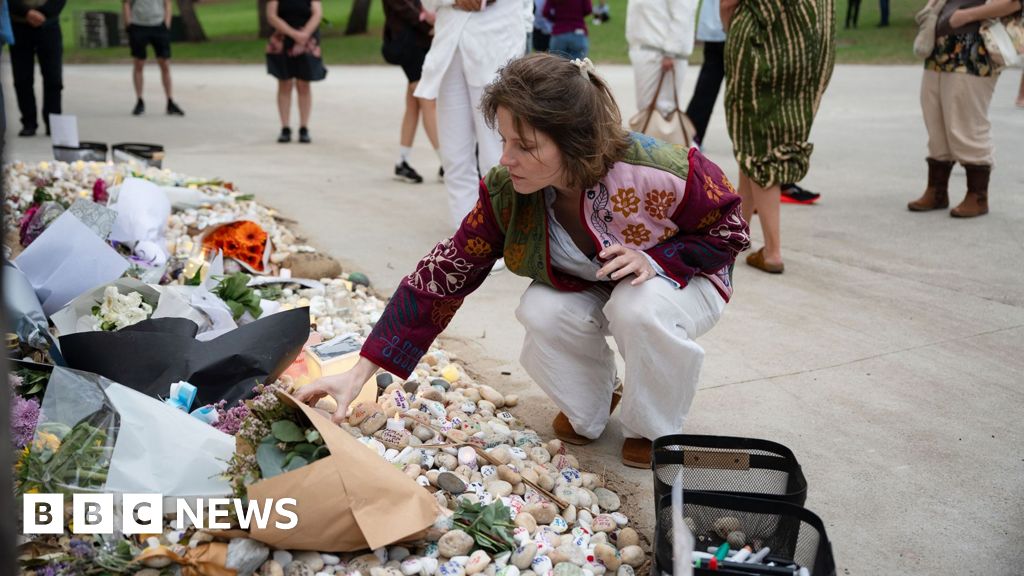
A national tragedy 30 years ago united Australia, but the recent Bondi shooting has instead plunged the nation into political chaos. Thursday was meant to be a day of mourning for the victims of last month’s antisemitic attacks in Bondi, yet it was overshadowed by a political dispute that led to the collapse of the opposition coalition.
“I mean, you would have thought they could have put this off for 24 hours,” veteran political commentator Malcolm Farr told the BBC. “It’s at the very least unfortunate timing and shows a certain amount of self-indulgence.”
The conflict, centered around reforms prompted by the tragedy, threatens to topple two political leaders and damage their parties’ electoral prospects, capping off what many Australians describe as a disappointing month in politics.
Political Fallout from a Tragic Event
When two gunmen opened fire at a Hanukkah event on Bondi Beach, killing 15 people, including a 10-year-old child, political recriminations began almost immediately. “The turnaround was amazing in the way they [politicians] politicised it,” says Bondi local Kass Hill, 52. “The fingerpointing isn’t solving anything.”
As families prepared to bury their loved ones, a parade of politicians, including the opposition leader, visited the scene to assign blame. Populist leaders used the opportunity to criticize immigration policies, while prominent business figures posed for photos with flowers.
Prime Minister Anthony Albanese, accused by many Jewish Australians of ignoring their concerns before the attack, faced public heckling and calls for a national inquiry into antisemitism. His response was to accuse his parliamentary rivals of “playing politics” with tragedy.
Comparisons to the Past: Port Arthur Massacre
The Bondi attack is Australia’s worst mass shooting since the 1996 Port Arthur massacre, which resulted in 35 deaths. The response to the two tragedies, however, could not be more different. In 1996, then-Prime Minister John Howard visited the scene in Tasmania with opposition leaders, who later supported him in passing groundbreaking firearms legislation.
“Australian society and politics is very different than it was 30 years ago, and we’re just a far more divided society,” says John Warhurst, an emeritus professor of political science at the Australian National University.
A Society Divided by International Conflicts
The Bondi shooting has further divided a society already fractured by the ongoing Israel-Gaza conflict. According to Mark Kenny, a political columnist and host of the Democracy Sausage podcast, the attack was immediately politicized due to the existing tensions over Israel, Gaza, and antisemitism.
Since the 7 October 2023 attack on Israel by Hamas and subsequent protests in Australia against Israel’s actions in Gaza, Albanese has been accused of failing to adequately address antisemitism. The Executive Council of Australian Jewry reports a sharp increase in antisemitic incidents, from an average of 342 before the 2023 attacks to 1,654 last year.
“It began on 9 October 2023 at the Sydney Opera House,” said Jillian Segal, the antisemitism commissioner appointed by Albanese. “Now death has reached Bondi Beach.”
Gun Reform and Political Division
Following the Bondi attack, gun reform was the first legislative priority. “We know that one of these terrorists held a firearm licence and had six guns, in spite of living in the middle of Sydney’s suburbs,” Albanese stated as he announced a series of changes.
However, unlike the broadly supported measures after Port Arthur, Albanese’s focus on gun laws was criticized by the Liberal opposition and parts of the Jewish community as a distraction from the root cause of the attack—antisemitism. Even John Howard, the architect of the 1996 reforms, suggested the gun law changes were an “attempted diversion.”
“That kind of ‘either-or-ism’ is a feature of politics these days, probably everywhere in the West,” says Kenny. “Everything becomes supercharged and divisive.”
Free Speech and Hate Speech
Demands for immediate action on antisemitism were loud after the attack, leading Albanese to announce a crackdown on hate speech. However, some critics argued the measures could infringe on free speech, including the right to criticize Israel, while others felt they did not go far enough in protecting other minorities.
“[It’s] a can of worms,” says Warhurst, noting the difficulty in balancing free speech and hate speech. “Now is the worst time, I think, to be trying to resolve those sorts of issues because you are doing it fairly quickly and you’re doing it in a heated environment.”
Despite backing from the Jewish community, many felt the measures were insufficient, with victims’ families pushing for a royal commission, Australia’s most powerful form of independent inquiry. Albanese initially resisted, arguing existing measures were sufficient and warning that a royal commission could give a platform to antisemites.
Political Consequences and Future Implications
Albanese’s reluctance to call a royal commission may have stemmed from fears it could become complex and divisive, potentially inviting discussions on the Gaza conflict while excluding examination of Islamophobia. The Islamophobia Register Australia recorded a 740% rise in incidents following the Bondi attack.
Opposition leader Sussan Ley capitalized on the situation, demanding a royal commission and questioning what Albanese was “hiding.” However, her momentum faltered when she failed to rally her Coalition behind the hate speech laws she had demanded.
By Thursday, the national day of mourning, the political landscape had shifted dramatically. The National Party announced their departure from the coalition, citing concerns over free speech and insufficient time to review the proposed legislation.
“The posturing of the main parties over the past month has left a bitter taste in the mouths of many Australians,” says Farr. “It will reinforce the view of so many Australians who already are cynical about what politicians, no matter their party, actually represent.”
The Bondi tragedy, intended as a moment of national unity, has instead highlighted deep political and societal divisions. As Australia navigates the aftermath, the future remains uncertain, with political leaders facing the challenge of rebuilding trust and addressing the underlying issues that have come to the forefront.