


Amid the usual banter and schoolyard taunts of Tuesday’s parliamentary session, crossbencher Andrew Wilkie posed a question that cut through the noise: “Seeing as the crossbench is now as big as the Liberal party and likely to soon exceed them with more defections, on what basis are the Liberals still regarded as the opposition?”
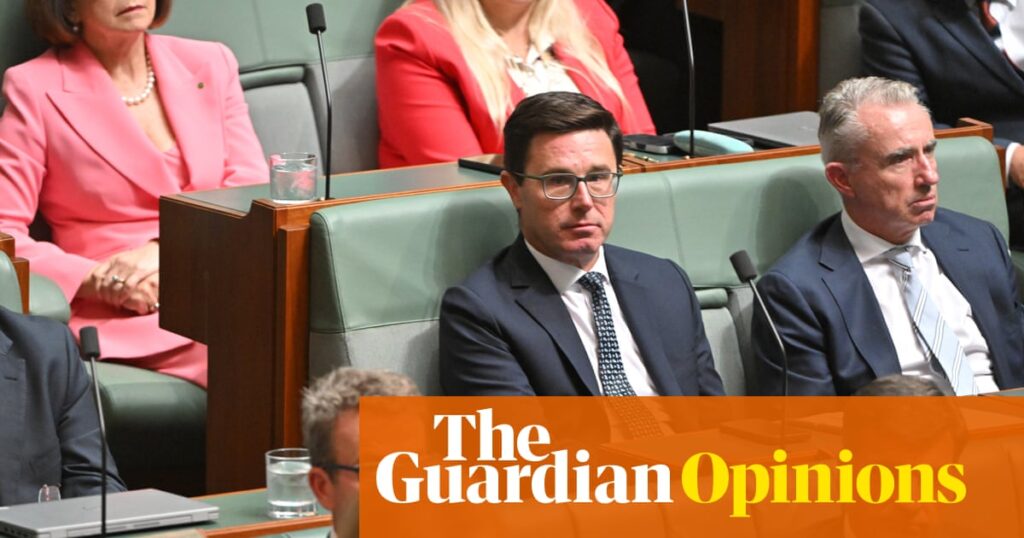
While there was a touch of humor in Wilkie’s inquiry, the underlying reality was stark. The Coalition appeared to be unraveling in real time, with Sussan Ley leading the smallest opposition party in the history of Parliament House, flanked by leadership hopefuls Angus Taylor and Andrew Hastie. The scene prompted musings about whether it might be time to let another party take the reins.
Political Disarray and Media Metaphors
The traditional first-day ecumenical service at a local Canberra church provided ample fodder for media metaphors about duty, forgiveness, and divine intervention. Liberal MP Scott Buchholz quipped that his colleagues needed some “divine intervention,” while others speculated about the possibility of the Liberals and Nationals reconciling their differences.
Prime Minister Anthony Albanese likened the situation to the reality TV show “Married At First Sight,” while Minister Jason Clare compared it to the Beckham family breakdown. Meanwhile, Greens sources drew parallels to the chaos of a “Jerry Springer” episode.
As Labor capitalized on the opportunity to mock the opposition during question time, Reserve Bank Governor Michelle Bullock announced the first interest rate hike since 2023. A more cohesive opposition might have seized this moment to critique the government’s economic policies, but instead, Treasurer Jim Chalmers faced little resistance.
The Crossbench and Opposition Dynamics
With the Nationals recently breaking away, Ley’s challenges seemed as daunting as ever, though the benches behind her appeared emptier. Labor’s Tony Burke noted that the crossbench and opposition had not been of similar size since the 1930s. “We still have the traditional crossbench, but now we’ve got the cross, the very cross, and the apoplectic,” Burke remarked, pointing to the independents, the Nationals, and the Liberals respectively.
Burke informed the lower house that the opposition would now receive the same number of questions as the newly expanded crossbench, thanks to the Nationals’ departure. However, he acknowledged that procedural questions, such as committee memberships, remained unresolved until there was clarity on the Coalition’s future.
Liberal MPs countered, accusing the government of using the Coalition’s disarray to deflect attention from unpopular changes to freedom of information laws and delays in addressing gambling issues. These were valid criticisms, with the FoI bill lacking support and even Labor MPs expressing dissatisfaction with the lack of action on gambling advertisements.
Calls for Unity Amidst Chaos
Even Barnaby Joyce, a recent defector to One Nation, condemned the “total fiasco,” urging his former colleagues to “get it together.” Joyce’s call for sensible politics underscored the extent of the turmoil, as he emerged as an unlikely voice of reason.
The Nationals found themselves sidelined in parliament, while the diminished Liberal-only opposition clustered behind Ley. Like divorced parents at a wedding, the two parties sat side-by-side but rarely interacted. Nationals MP Darren Chester humorously mimed binoculars to the press gallery, as if struggling to see the chamber’s distant reaches.
With forced smiles and lips curling into masks, the Liberals and Nationals endured the barrage of jokes and derision from the other side during question time. Health Minister Mark Butler directly targeted Taylor, accusing him of “plotting against his leader from the frontbench.” Despite protests from the Liberals, Burke retorted that Taylor “never claimed he was misrepresented.”
Looking Ahead: A Fragmented Future
With no Coalition reunion in sight, this could be the status quo for the foreseeable future: an opposition in disarray and a government facing insufficient scrutiny. While Andrew Wilkie may not become the opposition leader for the crossbench party, persistent rumors of a Taylor leadership challenge suggest that further leadership changes could be on the horizon.
The situation raises questions about the future of Australia’s political landscape and whether new alliances or realignments will emerge from the current chaos. As the parliament grapples with these challenges, the nation watches closely, anticipating the next chapter in this unfolding political drama.