




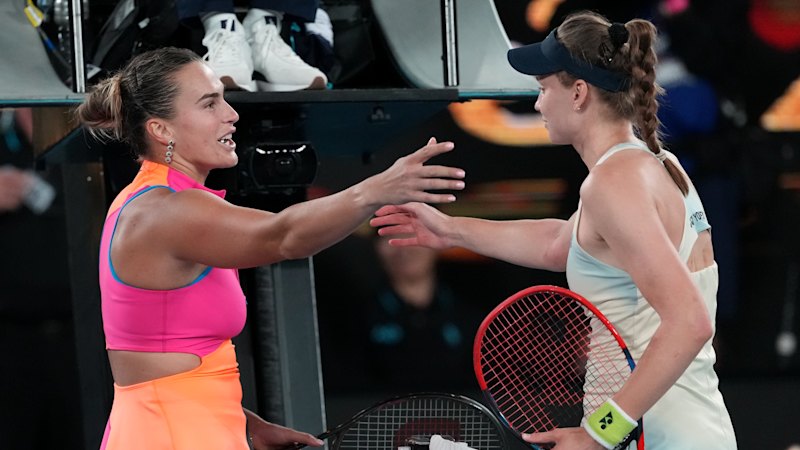
The Australian Open could see a significant change in its format next year, as tournament director Craig Tiley proposes extending women’s matches to best-of-five sets from the quarter-finals onward. This potential overhaul comes despite uncertainties surrounding Tiley’s future in his current role.
Tiley has initiated informal discussions with players about the change, emphasizing that it would only be implemented with substantial support. The proposal aims to align the women’s final three matches with the men’s format, which features best-of-five sets starting from the first round.
Consultation and Historical Context
Tiley has already evaluated the feasibility of this change within the tournament schedule. If implemented, it would allow a women’s match to headline a night session, a departure from the current format where women’s matches are typically scheduled around men’s contests. Notably, Tiley stated he does not require external permission to make this change, recalling a similar proposal in 1995 that was halted by a player protest led by Steffi Graf.
“We wouldn’t do it if the players were unanimously against us because we are a players’ slam,” Tiley explained. “We’ve spoken anecdotally to some players, and some say, ‘Oh, good idea,’ but are not taking it too seriously. I think it’s something we should explore because the final was great. The WTA has new leadership, and I think Valerie [Camillo], the new chair, would be thinking along these lines of, ‘How do we keep adding more good content?’”
Tiley’s Ambitious Vision for the Future
This development follows Tiley’s broader vision for the Australian Open, which includes three major goals for the 2027 tournament: increasing player compensation, introducing a pit-lane-type player experience, and establishing a performance center for medical assessments. Tiley aims to boost player revenue share from the current 21% to 22% or 23% by 2030.
“We want to pay them more money. We want to be aggressive in how we compensate the players,” Tiley stated. “I don’t know what more is, but 22, 23 [per cent of revenue]. I think we should keep going.”
The proposed pit-lane experience would offer technological upgrades to player chairs, providing instant cooling and displaying vital signs such as pulse rate and blood pressure. Additionally, the performance center would serve as a hub for players’ health and wellness, offering services ranging from blood tests to podiatry and dermatology.
Innovations and Infrastructure Expansion
Tiley envisions further innovations, including an interactive glass court for fans and an immersive dome with 270-degree screens. His long-term plan involves expanding Melbourne Park into the Olympic and Yarra Park precincts, adding tens of thousands of seats to accommodate the growing number of daily visitors.
“Moving forward, we do need another stadium – but so does Melbourne,” Tiley remarked. “We were close to getting the Collingwood oval this year, and we didn’t, but we will continue to work with all the stakeholders to get there.”
Addressing Player Concerns and Legal Matters
Meanwhile, Tiley has addressed players’ privacy concerns following an incident involving American superstar Coco Gauff. Six-time grand slam champion Iga Swiatek raised questions about player privacy, to which Tiley responded by clarifying the facts and emphasizing the balance between privacy and fan engagement.
In legal matters, Tennis Australia recently reached a settlement with the Professional Tennis Players Association as part of a wider antitrust lawsuit. Tiley mentioned that the terms would be made public soon, highlighting the importance of the agreement for Tennis Australia.
“The slams aren’t all the same … but the view is that over time, we really want everyone to work together,” Tiley said.
Record-Breaking Attendance and Future Prospects
This year’s Australian Open set a new attendance record, with over 1.3 million visitors by the tournament’s conclusion. However, the surge in crowd numbers led to logistical challenges, including lengthy queues and ticket sales delays. Despite these issues, Tiley remains optimistic about the event’s future, emphasizing its dual appeal as both a tennis tournament and a broader entertainment festival.
“We’ve had a phenomenal event that’s going to be hard to beat. AO 2026 will go down in history for so many reasons, and, in my view, because of its innovation,” he said. “But I think it will still be remembered for the tennis.”
As the Australian Open continues to evolve, Tiley’s proposals and long-term vision could reshape the tournament’s landscape, enhancing its appeal to both players and fans.