



Two of Australia’s most experienced foreign ministers have issued a stark warning to Prime Minister Anthony Albanese about accepting an invitation from former US President Donald Trump to join his newly established Board of Peace. The board, which Trump claims will be pivotal in global peace efforts, is seen by critics as a potential vanity project that could entangle Australia in US-centric geopolitical maneuvers.
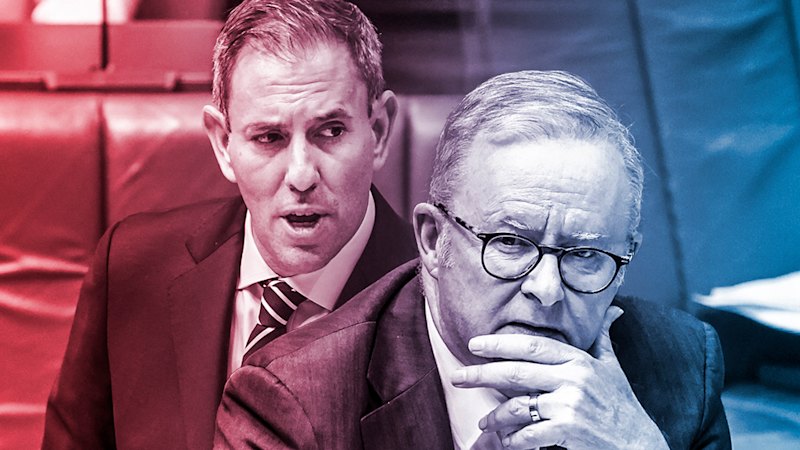
Prime Minister Albanese has yet to make a formal decision regarding the invitation but has expressed reservations, emphasizing Australia’s commitment to the United Nations. “Well, it’s unclear what the objectives of this are, which is why we will give it further consideration,” Albanese remarked during an interview with the ABC’s Insiders on Sunday. He added, “My government is one that always has an orderly, considered approach to all of our policy, including our international engagement.”
Concerns Over the Board’s Objectives
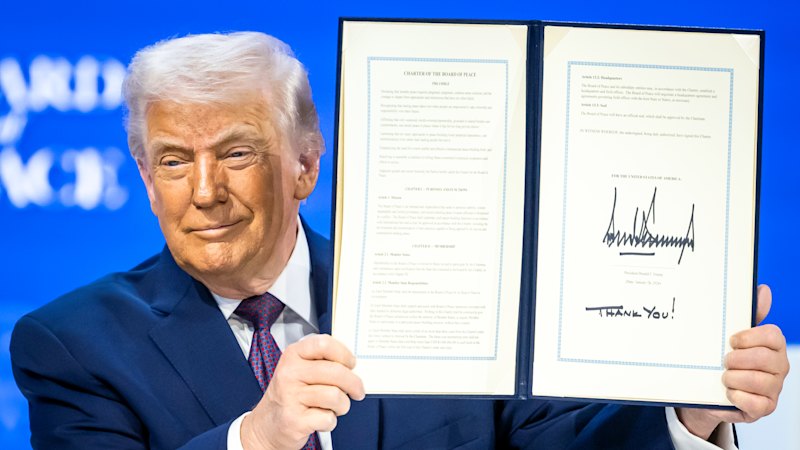
Initially, Trump’s Board of Peace was proposed as a mechanism to aid in the reconstruction of Gaza following years of conflict. However, a leaked charter for the board makes no mention of Gaza, instead highlighting broader ambitions that some fear could undermine the UN’s authority.
Gareth Evans, who served as Australia’s foreign minister from 1988 to 1996, has been vocal in his opposition. “Australia should play an active and generous role in Gaza’s reconstruction, but the Board of Peace as it has evolved is just another Trump vanity project, and an impossibly flawed vehicle for doing so,” Evans stated. He criticized the board’s governance structure, which grants the US president significant veto power, as unsuitable for its intended purpose.
“The board’s charter makes no mention of the UN Security Council resolution which authorized its creation. Its governance structure is not fit for purpose, not least by giving the US president near-total veto power over its decisions.” — Gareth Evans
Mixed Reactions from Australian Leaders
Alexander Downer, Australia’s longest-serving foreign minister, also expressed caution. “We shouldn’t rush into a decision. I think we need to know more about what this Board of Peace would actually do,” said Downer, who served under the Howard government from 1996 to 2007. He highlighted concerns over the board being potentially manipulated by Trump, suggesting Australia should only consider participation if the board focuses on Gaza.
Meanwhile, former Labor foreign minister Bob Carr offered a different perspective, suggesting that joining the board could be beneficial if aligned with other like-minded nations such as the United Kingdom and Japan. Carr invoked historical parallels, referencing Australia’s role in the 1945 San Francisco conference, which established the UN. “Given our success at dealing with Trump, it would make sense for us to move with others,” Carr noted, while also acknowledging significant unresolved questions about the board’s operations and its relationship with the UN.
International Response and Future Implications
Trump officially announced the Board of Peace at the World Economic Forum in Davos, predicting it would become “one of the most consequential bodies ever created in the history of the world.” Over 20 countries have agreed to join, including nations across Asia, the Middle East, and Eastern Europe. However, notable absences include many European countries, with French President Emmanuel Macron’s office expressing concerns that the board’s charter extends beyond Gaza and challenges the foundational principles of the UN.
More than 20 countries have said they will join the board, including Albania, Argentina, Armenia, Azerbaijan, Bahrain, Belarus, Bulgaria, Egypt, Hungary, Indonesia, Israel, Jordan, Kazakhstan, Kosovo, Mongolia, Morocco, Pakistan, Paraguay, Qatar, Saudi Arabia, Turkey, the United Arab Emirates, Uzbekistan, and Vietnam.
The invitation to join the board has also been extended to China and Russia, though their participation remains uncertain. The development comes at a time when global diplomatic dynamics are increasingly complex, and Australia’s decision could have significant ramifications for its international relations and standing.
As the Albanese government deliberates its response, the decision will likely weigh heavily on Australia’s strategic priorities and its commitment to multilateralism. The unfolding situation underscores the delicate balance between participating in new international initiatives and maintaining established global alliances.