
An Australian-made hypersonic aircraft, the DART AE, has successfully completed its inaugural test flight from a NASA facility in the United States, achieving speeds five times that of sound. This landmark event is poised to significantly influence the future trajectory of air travel, according to leading scientists.
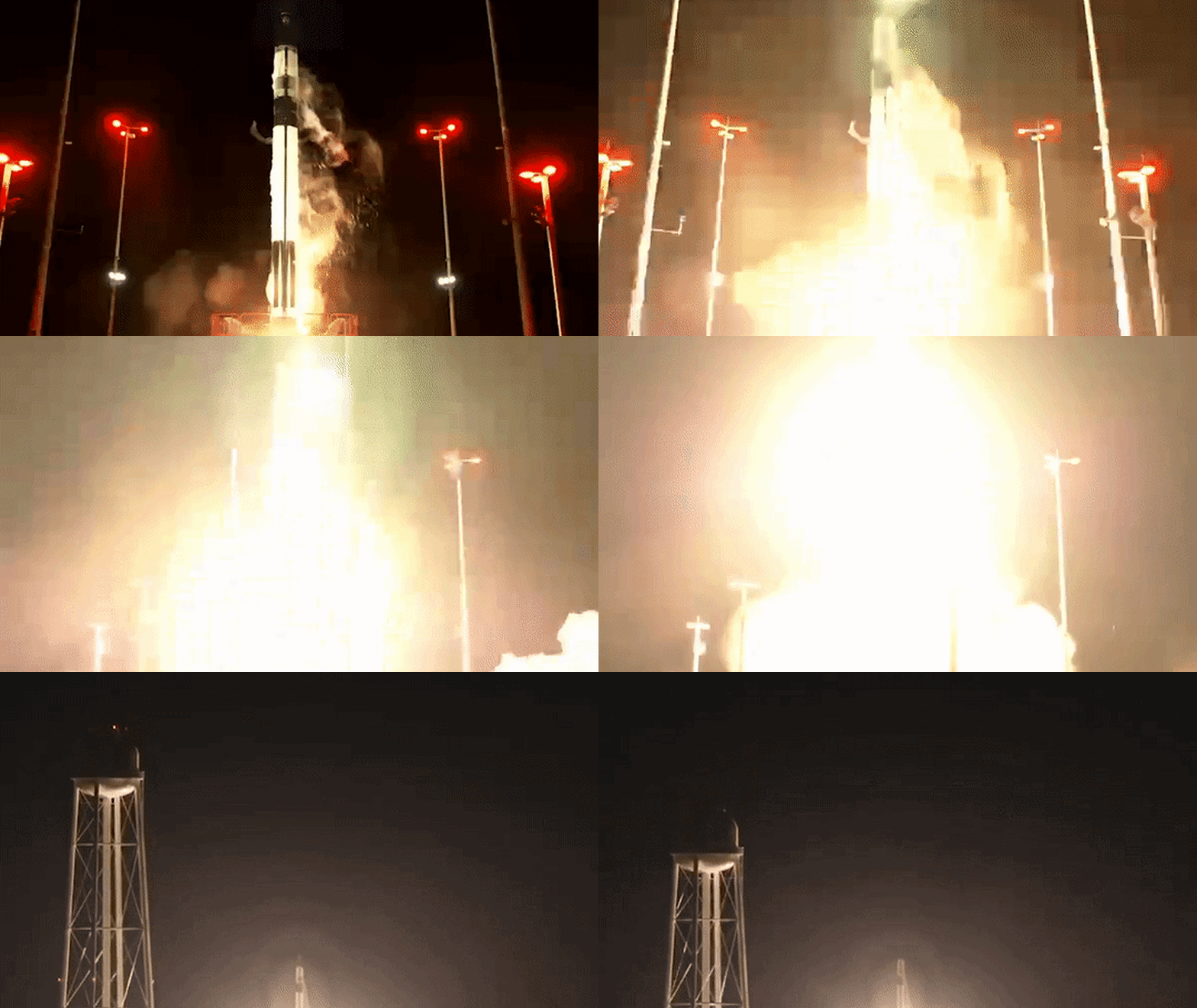
The DART AE, developed by Brisbane-based Hypersonix Launch Systems, was launched from NASA’s Wallops Flight Facility in Virginia. The aircraft, powered by an innovative 3D-printed, hydrogen-fueled scramjet engine, traversed approximately 800 kilometers in the upper atmosphere, reaching a maximum speed of Mach 5, equivalent to over 6000 km/h.
Revolutionizing Hypersonic Flight
The DART AE is not merely a projectile; it is a maneuverable aircraft, a feature that sets it apart from traditional hypersonic rockets. Michael Smart, a former NASA research scientist and current leader of the Hypersonix team, emphasized the significance of this capability. “Most hypersonic craft are rockets. Rockets can’t maneuver. You just point and shoot them,” Smart explained. “The maneuverability is an absolutely critical new characteristic … Anything you think an aircraft does, we can do.”
The launch represents the first mission for Hypersonix, a company founded in late 2019 by Smart, who previously served as a professor of hypersonic propulsion at the University of Queensland. The firm was chosen by the US Defence Innovation Unit from over 60 applicants, highlighting its potential in the competitive field of hypersonic technology.
Potential Impact on Air Travel
Hypersonix CEO Matt Hill, who was present in Virginia for the mission, envisions a future where such technology could enable flights from Sydney to London in just two hours. While the logistics of long-distance passenger flights remain complex, Hill is optimistic about the core technology’s feasibility within the next decade.
“When people fly, they expect air and champagne and movies – all those things – and that’s really the more complex thing,” Hill noted. “It’s still a way off. But we’re building the core technology that would enable that type of flight.”
The successful separation of the DART from its booster rocket occurred at an altitude of 45 kilometers above Earth. The launch, conducted by Rocket Lab, was broadcast live and declared “100 per cent” successful despite several delays due to adverse weather conditions.
Australia’s Role in Hypersonic Innovation
This achievement underscores Australia’s burgeoning capabilities in the field of hypersonic technology. With 58 staff members, most under the age of 30, Hypersonix is at the forefront of this innovative sector. The University of Queensland continues to be a global leader in hypersonic research, further cementing Australia’s position in this cutting-edge field.
The DART AE’s scramjet engine is currently the fastest of its kind worldwide, with the potential to propel vehicles at speeds up to 12 times the speed of sound. This technology is not only pivotal for scientific exploration but also has substantial implications for defense and commercial aviation.
“It is an important step toward delivering hypersonic systems that are operationally relevant for Australia and its allies,” Hill stated, emphasizing the strategic significance of the successful test flight.
Looking Ahead
The successful test of the DART AE marks a significant milestone in the development of hypersonic technology. As Hypersonix continues to refine its designs and capabilities, the potential applications of this technology could revolutionize both military and civilian aviation sectors.
As the world watches Australia’s advancements in hypersonic flight, the implications for global travel and defense strategies are profound. The DART AE’s successful test flight is a promising step towards a future where high-speed, long-distance travel becomes a reality.