

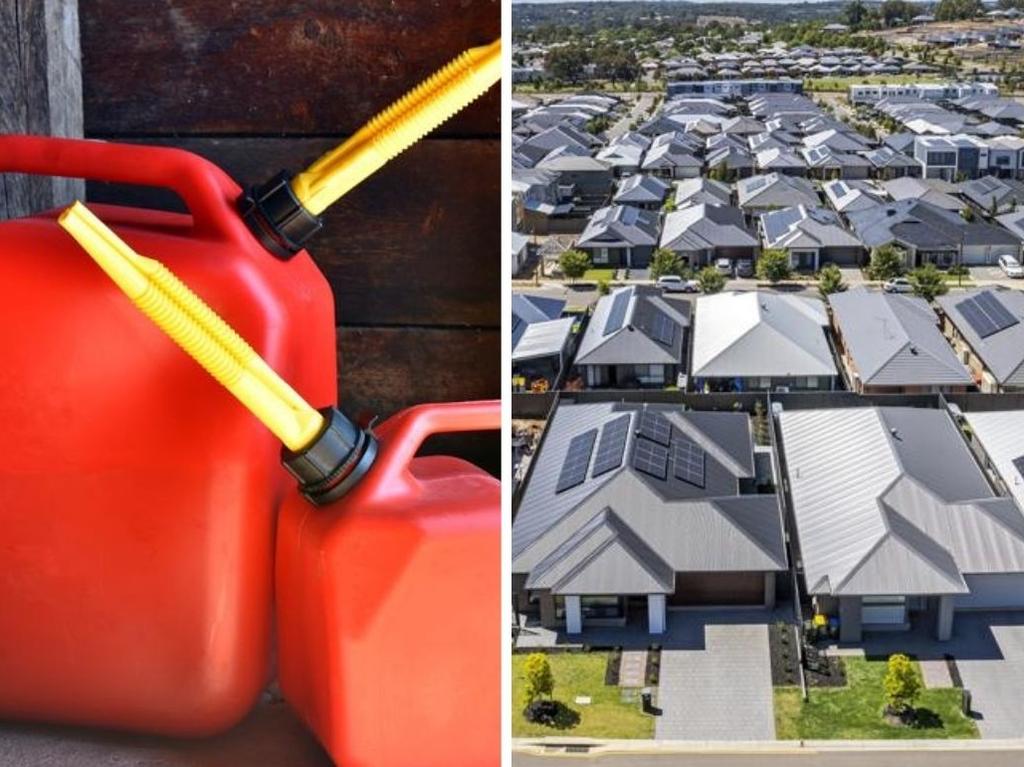
Amidst rising fuel prices driven by escalating Middle East tensions, Australian homeowners stockpiling petrol and diesel face a significant risk: the potential voiding of their insurance policies. The Insurance Council of Australia has issued a stark warning that storing large quantities of fuel at home could lead to crippling financial consequences if an accident occurs.
Homeowners eager to safeguard themselves against fuel shortages may inadvertently find themselves without coverage. Standard insurance policies typically exclude damage caused by hazardous materials, and storing fuel in large quantities could be classified as such, according to the Insurance Council.
Insurance Implications and Legal Responsibilities
A spokesperson for the Insurance Council of Australia emphasized, “Policyholders have a duty to disclose anything that materially changes the risk profile of their property, and significant fuel storage may constitute such a change.” They further noted that home insurance policies often have exclusions for loss or damage resulting from non-compliance with laws.
Homeowners are urged to review their insurance policies carefully, as most standard agreements exclude coverage for damage or liability arising from hazardous materials like stored fuel. This includes pollution or contamination from chemical spills and any bulk fuel storage beyond basic domestic purposes. The financial burden of clean-up costs, property damage, and potential liability to neighbors could fall entirely on the homeowner in the event of an accident.
Hazardous Materials and Storage Regulations
Brisbane City Council identifies hazardous chemicals as those defined in the Work Health and Safety Regulation 2011. These include substances harmful to people and the environment, such as fuel oil, motor oil, and various solvents and pesticides, all of which have specific storage safety rules.
According to Suncorp Insurance, their home insurance policies do not cover “loss, damage or legal liability for or caused by, connected with, or arising from any hazardous materials if not stored or used in accordance with the relevant law, controls, and manufacturer’s instructions.”
Queensland already has an existing case where a homeowner lost an insurance claim for a leaking underground petroleum tank because it was not considered a fixture of the home and the policy excluded damage from pollutants.
Government and Consumer Advocacy Responses
Energy Minister Chris Bowen has urged Australians not to resort to panic buying, despite long queues at service stations nationwide. “There is no need to rush to the service station and fill up,” Bowen stated, reassuring the public that Australia holds “in excess of the minimum stock obligations” for petrol, diesel, and jet fuel.
Bowen also noted that refining companies have contracts in place that are expected to be honored, ensuring a stable supply chain through to May. He added that the Treasurer has contacted the Australian Competition and Consumer Commission (ACCC) to monitor for potential price gouging.
Meanwhile, Queensland’s peak motoring body, RACQ, has referred major fuel retailers to the ACCC for investigation after a sudden price surge. Dr. Ian Jeffreys, RACQ’s Principal Economic and Affordability Specialist, criticized the rapid price increase, stating it typically takes two weeks for global oil price changes to affect local prices, not two days.
“This behavior from fuel retailers is extremely disappointing at a time when Queenslanders are worrying about already high cost-of-living pressures,” Dr. Jeffreys remarked.
Safety Concerns and Best Practices
RACQ has issued a safety warning regarding fuel storage, emphasizing the importance of using approved containers and adhering to safety standards. Key recommendations include:
- Only carry or store fuel in approved metal or plastic fuel containers meeting AS 2906-2001 standards.
- Avoid carrying fuel inside a car or caravan.
- Do not store fuel for long periods; most fuels have a shelf life of about three months under ideal conditions.
- Store fuel in a cool place away from potential ignition sources.
- Never fill a container that’s in a car, ute tray, or trailer; always place it on the ground first.
As the situation continues to evolve, homeowners are encouraged to stay informed and consult with their insurers to ensure compliance with all safety and legal requirements. The potential financial and safety risks associated with improper fuel storage underscore the importance of adhering to guidelines and maintaining open communication with insurance providers.