



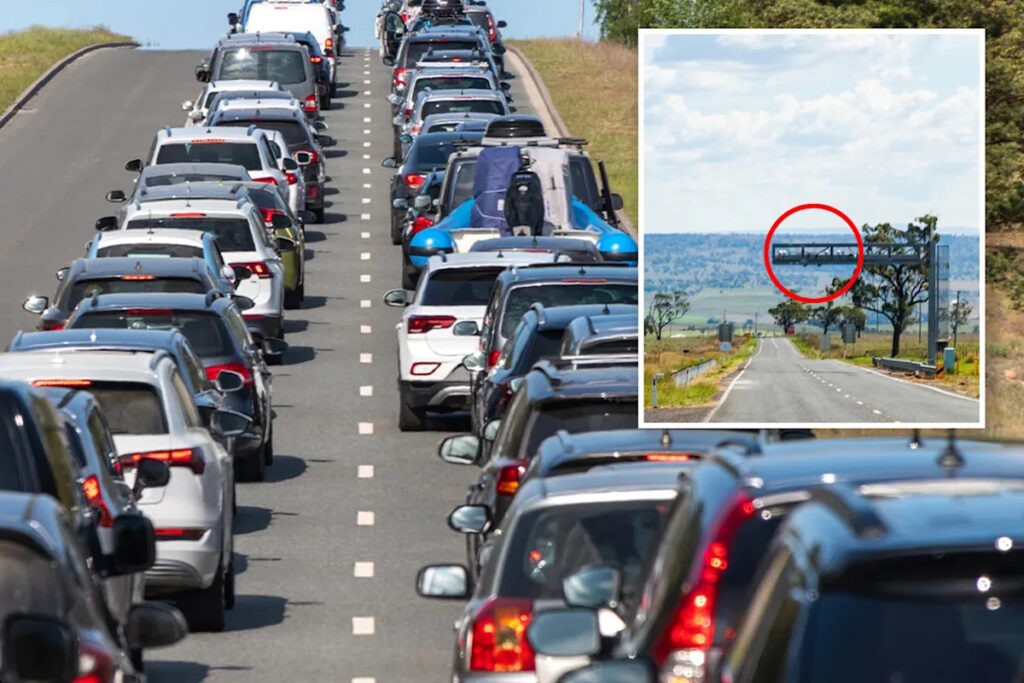
A controversial roadside feature that has been irking Australian drivers for years might just be the thing that helps save their lives. “Safety cameras” have been increasingly appearing across the country as authorities attempt to lower Australia’s soaring road death toll. Motorists, fearful of incurring hefty fines, remain skeptical of these devices. However, new AI-powered safety cameras that detect mobile and seatbelt offences have been quickly embraced by Australian state governments.
While an array of risk factors need to be addressed to effectively decrease the number of fatalities on the roads, improving drivers’ behavior is a crucial element, according to Professor Stuart Newstead, Director of the Monash University Accident Research Centre. He told Yahoo News Australia that roadside cameras detecting speeding, phone use, or improper seatbelt use “have the potential for immense behavioural change” if implemented effectively.
Understanding the Impact of Roadside Safety Cameras
Professor Newstead explained that the more drivers get caught, the more they fundamentally change their behavior and become more compliant. “Because they’re getting caught, they complain, but it’s because people don’t really understand the collective risk that comes from sort of mass poor behaviour,” he noted.
When drivers break road rules, they can be slapped with fines that differ between states and territories. For example, in New South Wales, fines for speeding range from $149 to $2,959, depending on how far over the limit one is clocked, according to Transport NSW.
Advantages of Roadside Safety Cameras
Roadside safety cameras are not only cost-beneficial for authorities, but they also “have the opportunity to change the behavior of large proportions of the community relatively quickly,” Professor Newstead told Yahoo. He emphasized that these laws are in place to improve safety, and non-compliance reduces safety. Automated enforcement programs that increase compliance often result in a reduction in road trauma.
“A typical mobile speed camera program has probably reduced trauma, particularly in Victoria, by about 25 to 30 per cent less than what it would have been without it,” Professor Newstead added.
Despite complaints from drivers who deem the technology unfair, Professor Newstead explained that the issue is not the enforcement of the law but rather a disagreement with the law itself. “There is plenty of evidence to show that all behaviours that are enforced, particularly by those automated technologies, are actually dangerous,” he said.
Rising Road Deaths and the Need for Change
In 2025, the national road death toll climbed to its highest level in more than a decade, with 1,314 people killed. A Bureau of Infrastructure and Transport Research Economics (BITRE) report published on Thursday revealed that road deaths were 1.7 percent higher than the previous year. New South Wales saw the largest increase of 8.6 percent, with Queensland trailing with a 2 percent jump.
To curb this concerning trend, Professor Newstead highlighted the need to address the “incredibly multifaceted” key problems in road trauma, including poor road design, poor vehicle choice, and risky behaviors such as speeding and distracted driving. He also noted the impact of Australia’s ageing population on road safety.
Challenges and Future Directions
Professor Newstead pointed out a “fundamental incompatibility” between road design and vehicle specifications, particularly in outer suburbs where drivers face challenging conditions. He stressed the importance of investing in road network upgrades or lowering speed limits where upgrades are not feasible.
“Without some major discussions and changes, the country has no chance of reaching its goal of zero deaths by 2050,” he warned.
As Australia grapples with these challenges, the role of AI-powered safety cameras in shaping driver behavior and enhancing road safety remains a contentious yet potentially life-saving measure. The debate continues as authorities and experts seek effective solutions to reduce road fatalities and improve compliance with traffic laws.