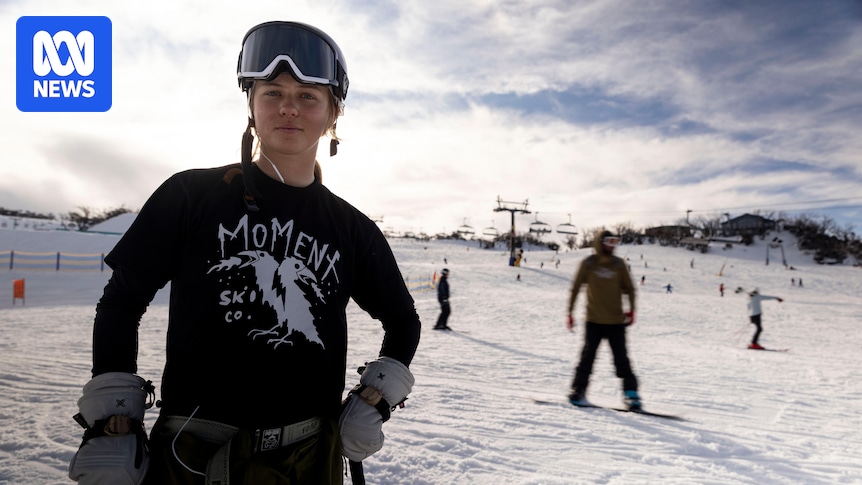
As Australians flock to the beaches to embrace the summer sun, Olympic bronze medallist Tess Coady is instead envisioning the snowy slopes of Italy. With the 2026 Winter Olympic Games just two months away, Coady is focused on achieving new heights in her snowboarding career.
The Melbourne native highlights the unique challenges faced by Australian snow-sports athletes compared to their northern hemisphere counterparts. “It’s a geographic challenge,” the 25-year-old Coady explained. “They grow up in these towns that are 5 minutes from the hill they ride at.”
Due to Australia’s limited winter season, athletes like Coady spend a significant portion of the year training overseas. “I spend a lot of time on the road, easily 10 months of the year,” she said. “Yeah, it’s savage, [but] that’s what you have got to do if you want to be good.”
Overcoming Geographic Challenges
Sydney-based Olympic hopeful and professional skier Daisy Thomas echoes Coady’s sentiments. Thomas, who regularly travels to the NSW Snowy Mountains to train and compete, recalls the exhaustion of her early training days. “Being far away from it meant that every time I got the opportunity to ski it made it more special,” she shared.
The 18-year-old is vying for a spot on the Olympic team in the slopestyle and big air disciplines. However, her journey hit a roadblock with a knee injury sustained during a competition in China at the end of November. The Olympic Winter Institute of Australia is currently assessing the extent of her injury.
Advancements in Off-Snow Training
While many athletes are now competing overseas in the final qualifying rounds for the Olympics, the development of training facilities in Australia has allowed them to spend more time on home soil. In 2021, a 17-metre airbag jump was introduced at the National Snowsports Training Centre in Jindabyne, enhancing off-snow training opportunities.
“We basically get an extra three months being able to stay in our own country and train with all the amazing resources and facilities that we have here,” Coady noted. The airbag jump provides a safe environment for athletes to practice tricks without relying on perfect snow conditions.
“Having the facility with the airbag really blew the doors open on what was possible, because you take away that element of risk to a certain extent,” she explained. “There’s some young kids around who are trying these crazy tricks, which is so sick. If the airbag wasn’t there, they might not be trying them.”
The nearby athlete gym has also seen significant improvements, doubling in size in recent years. Strength and conditioning lead Janina Strauts emphasized the impact of these developments. “We have almost 100 athletes that come through during the domestic season and use this facility, which is absolutely mind-blowing,” she said. “So that by the time they get to a stage where they’re an elite performer, they’ve already got a great capacity and base of physicality.”
Aiming High on the Global Stage
Meanwhile, in Brisbane, a water jump is being utilized by aerial skiers for training, further expanding the resources available to Australian athletes. Despite the challenges, Australian snowboard park and pipe team head coach Ollie Midgley remains optimistic about the team’s prospects.
“European athletes have the greater opportunity to train at home and they get more snow, they have bigger infrastructure, there’s more money in skiing and snowboarding there,” Midgley acknowledged. However, he believes the Aussie athletes are “punching above their weight” and are poised to make a significant impact at the upcoming Winter Games.
“There’s some incredible athletes that are coming through,” he said, highlighting the team’s potential to excel on the world stage.
The Milano Cortina Winter Olympic Games are set to commence on February 6, 2026, and as the countdown continues, Australia’s dedicated athletes remain focused on overcoming challenges and achieving excellence.