




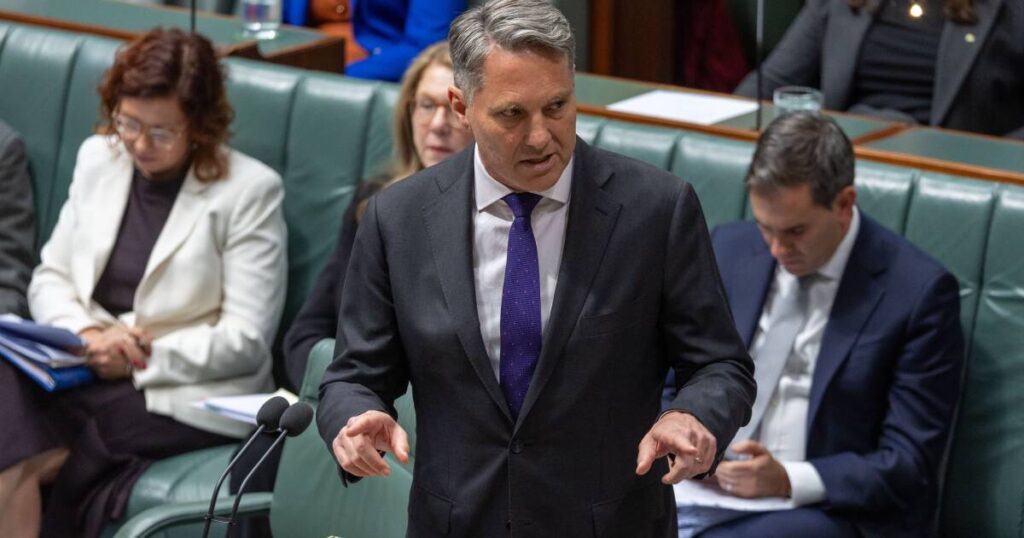
The Albanese government has announced a landmark transformation of Australia’s defence department, marking the most significant overhaul in over half a century. The establishment of a new Defence Delivery Agency aims to streamline project management and prevent costly delays, as the nation intensifies its military spending with an additional $70 billion earmarked over the next decade.
This strategic move comes as Australia commits to bolstering its military capabilities, including the high-profile AUKUS submarine deal. The newly formed agency will be spearheaded by a national armaments director, who will provide crucial advice on acquisition strategies and oversee project delivery once approved.
Strengthening Defence Capabilities
Acting Prime Minister and Defence Minister Richard Marles highlighted the importance of this initiative, stating, “As the Albanese government makes the biggest ever peacetime investment in Defence, it is important that we put in place the structures and systems to ensure Australia’s Defence Force can deliver the capabilities we need at speed and within budget.”
The Defence Delivery Agency is expected to enhance professionalism and strategic focus within Defence capability acquisition and sustainment. Marles added, “It will drive stronger contestability, more accurate cost estimation and clearer accountability for the delivery of major projects.”
Set to commence operations on July 1, the agency will initially function under the defence department before becoming an independent entity a year later, reporting directly to ministers and managing its own budget.
Integration and Innovation
Once fully operational, the agency will integrate three existing Defence capability and delivery groups: capability, acquisition and sustainment; guided weapons and explosive ordinance; and naval shipbuilding and sustainment. This consolidation is designed to streamline operations and improve efficiency across various defence sectors.
Defence Industry Minister Pat Conroy emphasized the agency’s role in fortifying Australia’s industrial base. “It will create more opportunities for Australian businesses and workers to contribute to Australia’s national security,” Conroy stated. He noted the increasing complexity of Defence capabilities necessitates a comprehensive reevaluation of the development and delivery system.
“This is about setting Defence up for success so we can modernise the ADF in line with the National Defence Strategy,” Conroy added.
Historical Context and Expert Insights
This development follows a long history of defence reforms in Australia, often driven by geopolitical shifts and technological advancements. The current overhaul reflects a response to emerging global threats and the need for a more agile and responsive military infrastructure.
Experts in defence policy have lauded the move, suggesting that it aligns with global trends where nations are increasingly prioritizing defence modernization. Dr. Sarah Collins, a defence analyst at the Australian Strategic Policy Institute, commented, “The establishment of a dedicated agency for defence delivery is a critical step in ensuring that Australia remains competitive and prepared for future challenges.”
By the Numbers: Australia plans to increase its defence budget by $70 billion over the next decade, underscoring the country’s commitment to enhancing military capabilities.
Future Implications
The creation of the Defence Delivery Agency represents a significant shift in how Australia approaches defence procurement and project management. It is expected to bring about not only efficiency gains but also foster innovation within the defence sector.
As the agency begins its operations, stakeholders will be closely watching its impact on project timelines and budget management. The success of this initiative could set a precedent for future reforms in other government sectors.
Looking ahead, the agency’s integration of existing groups and its focus on strategic alignment with national priorities will be crucial in determining its long-term effectiveness. The Albanese government’s commitment to this overhaul signals a proactive approach to national security, ensuring that Australia’s defence capabilities remain robust and responsive in an ever-changing global landscape.