


In a decisive move following the recent Bondi Beach shooting, Australian Prime Minister Anthony Albanese announced the establishment of a national gun buyback scheme. This initiative aims to curb gun violence and prevent future incidents similar to the attack that shook the nation last Sunday night. Meanwhile, police have arrested several men in Liverpool, Sydney, who reportedly had ideological links to the Bondi shooters, though no direct connection has been confirmed.
Swift Police Action Praised in Liverpool
Health Minister Mark Butler commended the “extraordinary” efforts of tactical police who intercepted a carload of potentially armed men en route to Bondi Beach. The interception took place in Liverpool, Sydney’s south-west, and was prompted by intelligence suggesting a violent act might be in the works. Although these individuals were known to Victorian law enforcement, their motives remain unclear.
Butler remarked on the significance of the police action during an interview with Nine’s Today, stating, “They are extraordinary images… our policing intelligence authorities are still working day and night to keep our country safe from any further threats of violence and harm.”
Alex Ryvchin, CEO of the Australian Council for Jewry, echoed these sentiments, noting that the interception underscored the ongoing threat. “I don’t think they were coming to Bondi to pay their respects,” he said, referencing the recent wave of antisemitic attacks across the country.
Community Response and Healing Efforts
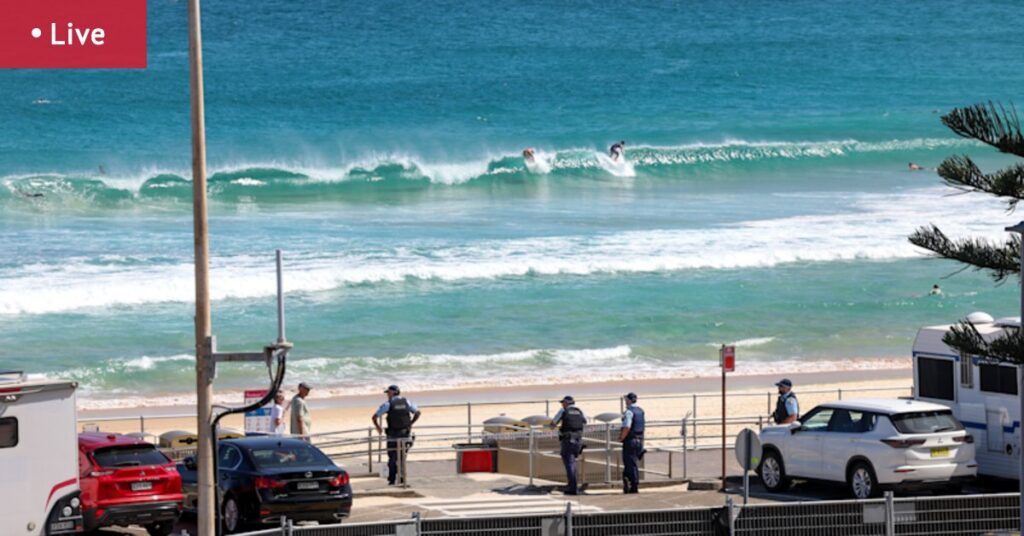
In a poignant display of solidarity, hundreds of surfers formed a giant circle in the ocean at Bondi Beach, splashing water in memory of those killed in the attack. This paddle-out, organized by various local groups, is seen as the beginning of the healing process for the community.
David Solsky, a surfer and organizer, commented on the rapid organization of the event, saying, “This has all come together really quickly, literally in the last 36 hours or so.” The event drew participation from Sydney’s Jewish community, Bondi Salties, and other local groups.
Political Reactions and Legislative Push
Amid the communal mourning, political leaders are calling for decisive action. Sussan Ley, speaking from Bondi Beach, urged the Prime Minister to recall parliament to pass legislation targeting “radical Islam preachers.” Ley criticized Albanese’s response to antisemitism as inadequate and called for the deportation of non-citizens who incite violence.
“If you preach hatred, if you preach radical Islam… if you incite, if you glorify terrorism, if you are not an Australian citizen you will be deported. If you are an Australian citizen, you will be arrested,” Ley asserted. The government has announced a five-point plan to combat antisemitism, including a crackdown on hate preachers.
International Reactions and Implications
The Islamic State group has praised the Bondi gunmen in its bulletin Al-Naba, though it stopped short of claiming responsibility for the attack. This development highlights the global nature of the threat and the potential for international influences on local acts of violence.
In a related development, Ahmed al Ahmed, hailed as a hero for his actions during the attack, received a $2.5 million cheque from supporters worldwide. Ahmed, speaking from his hospital bed, expressed gratitude and reiterated his commitment to protecting others, saying, “Enough is enough. God protect Australia.”
Future Steps and National Security
As investigations continue, the Australian government and law enforcement agencies remain vigilant. The national gun buyback scheme represents a significant step in addressing gun violence, while the ongoing police efforts underscore the importance of intelligence and rapid response in preventing further attacks.
The Bondi Beach incident has catalyzed a broader conversation about national security, community resilience, and the role of government in safeguarding citizens. As the nation grapples with these challenges, the emphasis remains on unity and proactive measures to ensure public safety.