



An Australian company has announced ambitious plans to produce 10,000 tonnes annually of a precious mineral deemed essential for the global AI industry. This development comes as the Australian government, through its financier, pledges a $75 million investment into Alpha HPA’s high-purity alumina operations. The investment will be made via an equity placement, granting the National Reconstruction Fund Corporation (NRFC) a 6.9 percent stake in the company.
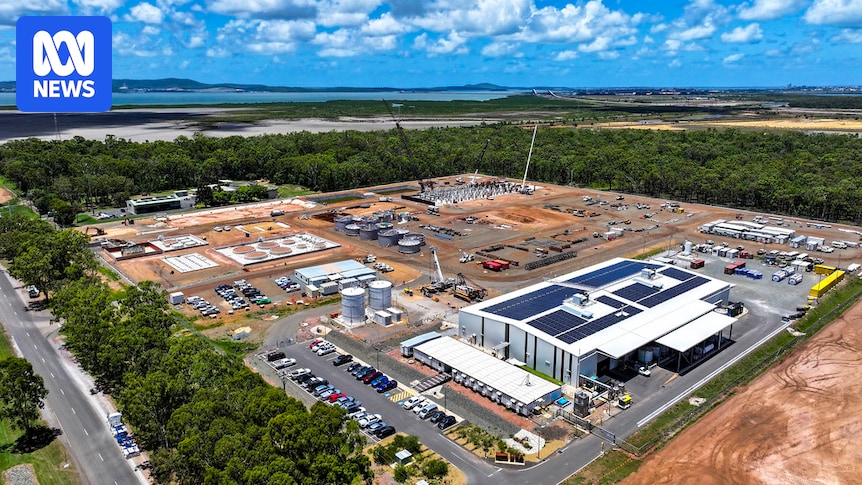
Alpha HPA, which operates a facility in Gladstone, central Queensland, currently produces the material on a small scale, exporting it to countries such as Japan and Korea. The funds are expected to support the second phase of the project’s construction and facilitate the company’s expansion into the AI supply chain.
Strategic Expansion and Economic Impact
Rob Williamson, Managing Director of Alpha HPA, emphasized the significance of this development for Australia. “It’s really important for Australia because it’s actually the first time the country can be saying we’re supplying materials into advanced node semiconductors for AI,” he stated. The NRFC highlighted that Alpha HPA’s expansion would establish it as the world’s largest single manufacturing facility for high-purity aluminium materials and Australia’s first commercial-scale operation.
The first stage of the project currently employs around 130 people in Gladstone. The second phase is projected to create an additional 120 full-time positions and 420 construction jobs, with completion slated for 2027.
The Critical Role of High-Purity Alumina
High-purity alumina, with a texture akin to icing sugar, is a versatile material used in lithium-ion batteries, pharmaceutical manufacturing, and high-performance computer chips, known as semiconductors. These chips, crucial for AI applications, are utilized by leading technology companies like NVIDIA and Amazon.
“The volumes [we’re producing] are only small because it’s a small facility, but it’s really important we continue to service our customers that are selling the material in the supply chain for semiconductors in Korea and Japan,” said Williamson.
Williamson also noted the potential for further opportunities, enhancing Australia’s trading prospects. “As a country, that puts us in a great position in terms of trade between us and other nations … it really puts us in a good position in terms of trade talks with the United States, as an example,” he added.
Enhancing Supply Chain Resilience
The NRFC underscored the investment’s role in bolstering Australia’s supply chain resilience, particularly given the material’s critical use in cooling advanced computer chips in AI data centers. Alpha HPA’s innovative technology processes the raw material at lower temperatures, utilizing 100 percent renewable electricity, which results in approximately 70 percent fewer emissions compared to traditional methods.
High-purity alumina was added to Australia’s critical minerals list in 2022, highlighting its strategic importance.
To date, the company has raised $225 million in capital for the project. It has also secured $400 million in finance from the federal government’s Northern Australia Infrastructure Facility and Export Finance Australia, along with $30 million from the Queensland government’s investment corporation.
Future Prospects and Global Implications
This investment represents a significant step forward for Australia in the global AI supply chain. By producing a critical component domestically, Australia not only strengthens its economic position but also contributes to the global demand for sustainable and efficient supply chains in the tech industry.
As the project progresses, it will be crucial to monitor its impact on both local employment and international trade relations. The successful expansion of Alpha HPA’s operations could serve as a model for other countries looking to enhance their roles in the burgeoning AI sector.