



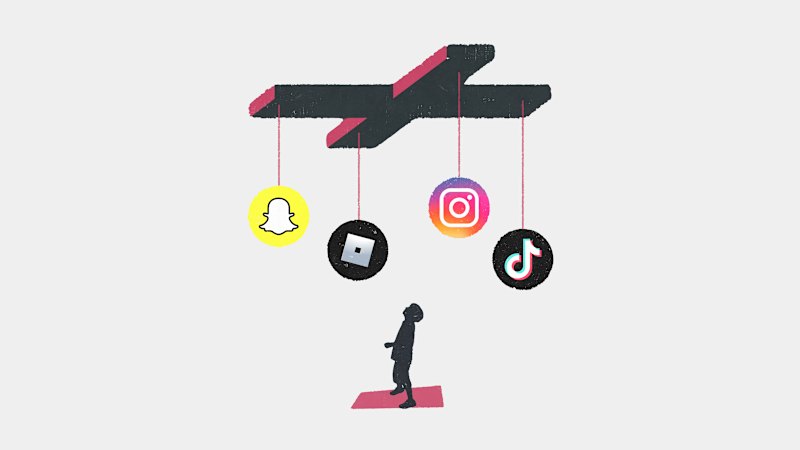
The Australian government has enacted a groundbreaking ban on social media for individuals under the age of 16, a move that has sparked global attention and debate. The decision, influenced by a convergence of political, social, and academic pressures, aims to address the growing concerns over the impact of social media on young users. This unprecedented policy is set to take effect in the coming days, marking Australia as a pioneer in the regulation of social media usage among teenagers.
The origin of this initiative can be traced back to several key figures and events. Among them is Jonathan Haidt’s influential book, The Anxious Generation, which provided a framework for parents anxious about their children’s online activities. South Australian Premier Peter Malinauskas, prompted by his wife’s concerns, became a vocal advocate for action. The bipartisan political momentum was further fueled when opposition leader Peter Dutton pledged to implement the ban within 100 days if elected, compelling the ruling Labor Party to follow suit.
Political and Social Catalysts
The policy’s rapid development was also driven by a media campaign, notably News Corp’s “Let Them Be Kids”, which highlighted the tragic stories of parents who lost children to cyberbullying. Emma Mason, whose daughter Tilly died by suicide, has been a prominent voice in this movement, sharing her story internationally to advocate for change. Her efforts underscore the emotional and societal stakes involved in this legislative decision.
Julie Inman Grant, Australia’s eSafety Commissioner, now faces the daunting task of implementing this policy. With a background in the tech industry, including a tenure at Twitter, Grant is acutely aware of both the potential and pitfalls of social media. Despite personal reservations and opposition from her own children, she remains committed to the policy’s objectives.
Expert Opinions and Data
Supporters of the ban, such as Charlotte Mortlock of Hilma’s Network, argue that the rapid implementation was necessary due to the detrimental effects of social media on youth. Mortlock emphasizes the addictive nature of current algorithms, which she believes leave no alternative but to restrict access. Frances Haugen, the whistleblower behind the “Facebook Files,” cautiously supports Australia’s approach, viewing it as a necessary step to pressure tech companies into prioritizing public health.
“I believe it is possible to design social platforms that are healthy for young teens, but until the big platforms take seriously the public health concerns they’re inflicting on the world’s children, taking a step back and choosing to age-gate social media is a practical way to pressure for change.” – Frances Haugen
Challenges and Criticisms
Despite widespread support, the ban has faced criticism from various quarters. Dr. Taliah Prince, a researcher in adolescent brain development, questions whether the policy addresses the root causes of harm rather than merely the symptoms. An open letter signed by over 140 academics argues that the ban is too blunt an instrument and fails to improve the products children will inevitably use.
Critics also point to the unintended consequences of the ban. For instance, children can still access platforms like YouTube without accounts, leading to less parental oversight and exposure to unfiltered content. David McKinney, a father who had carefully monitored his children’s online activities, expressed frustration that the ban removed his ability to manage their digital consumption effectively.
Potential Legal and Social Implications
As the ban takes effect, its impact will be closely monitored. Legal challenges are already underway, with the Digital Freedom Project and Reddit filing actions in the High Court. The policy’s effectiveness will also be evaluated by independent academics to assess its outcomes and potential adjustments.
“This ban targets a handful of powerful, overseas platforms that profit from tracking young users to capture their attention and pepper them with ads. It’s a timely intervention in an increasingly unregulated digital environment.” – Professor Mark Andrejevic, Monash University
The Path Forward
The coming months will be critical in determining the success of Australia’s social media ban. As young users migrate to alternative platforms, the government will need to adapt its strategies to maintain the policy’s integrity. Meanwhile, the global community watches closely, considering the implications for their own regulatory approaches.
While the ban represents a significant step in regulating digital environments, it also raises questions about the broader impact on social media dynamics. Will this lead to a fragmentation of platforms, reducing the influence of giants like TikTok and Instagram? Or will it merely shift the problem to less regulated spaces?
“The government is setting reasonable expectations that this won’t be perfect on day one.” – Frances Haugen
As Australia embarks on this ambitious social experiment, the world awaits the results. Success could demonstrate that democracies can effectively regulate technology giants, setting a precedent for future policies. Regardless of the outcome, this initiative marks a pivotal moment in the ongoing dialogue about the role of technology in society.
If you or someone you know needs support, contact Lifeline on 13 11 14 or Beyond Blue on 1300 22 4636.