



Australia’s reliance on imported refined fuels has reached a critical point, with approximately 80% of its liquid fuel now sourced from overseas. This growing dependency leaves the nation increasingly vulnerable to global supply disruptions, sparking concern among experts and government officials.
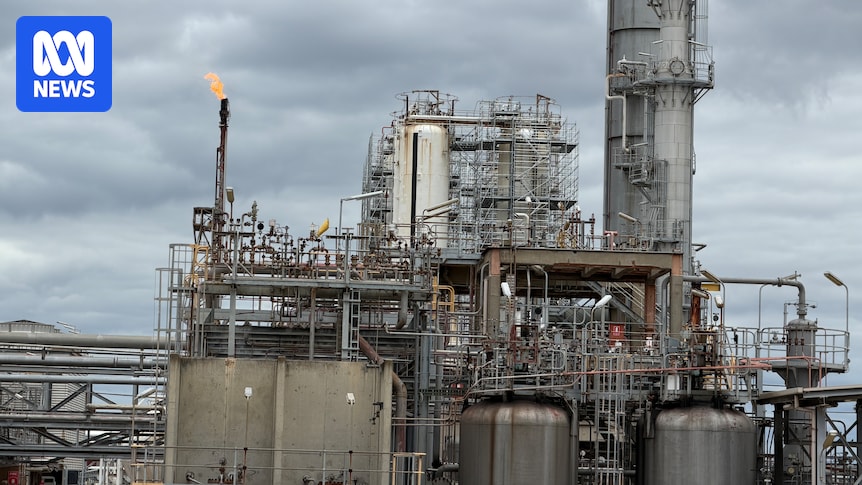
John Blackburn, former deputy chief of the Royal Australian Air Force, emphasized the significance of diesel in Australia’s logistics and lifestyle, stating, “Our whole logistics systems and our way of life depends on diesel.” This reliance is underscored by the fact that only two oil refineries remain operational in Australia: Ampol’s Lytton refinery near Brisbane and Viva Energy’s refinery in Geelong.
The Decline of Domestic Refining
Over the past two decades, Australia’s refining capacity has dramatically decreased. Once home to eight oil refineries that met most of the nation’s demand, economic challenges have forced the closure of six. Bill Patterson, general manager at Viva Energy’s refinery, highlighted the importance of maintaining onshore production, noting that products such as gasoline, diesel, and jet fuel are essential for planes, automobiles, and trucks.
Despite these efforts, only 20% of Australia’s liquid fuel demand is currently met domestically. Vice Admiral Mark Hammond, Chief of Navy, recently reignited the debate on fuel security, warning of the potential vulnerabilities if sea lanes were disrupted. Blackburn echoed these concerns, pointing to Australia’s limited diesel stocks, which stood at just 24 days as of July.
“In Australia, as of July this year, we had 24 days of diesel stocks,” Blackburn said, referencing government data.
Government Intervention and Industry Challenges
Australia’s failure to meet its International Energy Agency obligation for a 90-day net import coverage of oil is a significant concern. In September, the country had only 53 days of coverage, highlighting the urgent need for strategic intervention.
Queensland MP Bob Katter has been a vocal advocate for fuel security, criticizing past government inaction. He argues for the development of alternative fuels like ethanol and calls for investment in new, economically viable refineries.
“If we run out of fuel here for two or three months, I have to tell you, you’re going to have to walk to your local supermarket,” Katter warned.
Government support has been crucial for the survival of Australia’s remaining refineries. In 2021, the Fuel Security Services Payment was introduced to subsidize refineries during loss-making periods. Viva Energy’s Geelong refinery has benefited from nearly $40 million in payments, a lifeline that allows it to compete with international counterparts operating in lower-cost environments.
Future Prospects and Strategic Measures
Discussions are underway between the federal government and refinery operators to extend support beyond 2027. A government spokesperson assured that Australia is currently fuel secure, with more stocks of aviation fuel, petrol, and diesel than at any time in the past 15 years.
In June, the government concluded the Boosting Australia’s Diesel Storage Program, adding 330 million litres of diesel storage capacity nationwide. This includes 90 million litres stored at Viva Energy’s Geelong refinery, enough to meet a week’s diesel demand for Victoria.
“Obviously, every bit of storage helps,” Patterson remarked. “This is a substantial amount of storage, and it really does mean that we just have that little bit of extra fuel in case of interruptions.”
Looking ahead, the sustainability of Australia’s refining sector without government assistance remains uncertain. Patterson emphasized the need for targeted support, stating, “We’re only asking for support when we need it, not for all the time.”
The ongoing dialogue between industry leaders and the government will be crucial in determining the future of Australia’s fuel security and refining capacity. As global uncertainties persist, ensuring a stable and secure fuel supply remains a top priority for the nation.