


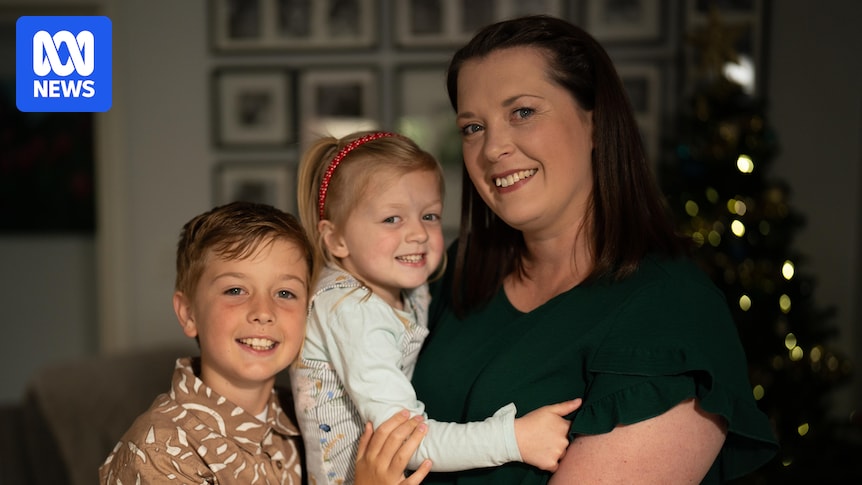
When seven-month-old Evelyn Tuckerman was diagnosed with a rare cancer in 2022, her mother was informed that proton therapy would be her daughter’s best chance for survival. However, this lifesaving treatment was not available in Australia at the time, and it remains unavailable three years later, despite plans for a service dating back more than a decade.
The $US49.5 million contract to deliver Australia’s first proton therapy unit in Adelaide was awarded in 2018. Yet, the South Australian Health and Medical Research Institute (SAHMRI) terminated the contract in October last year, citing cost blowouts. SAHMRI, an independent, not-for-profit health and medical institute, is now suing the technology company behind the project, ProTom International, for $US32 million ($48.6 million), alleging breach of contract and misleading and deceptive conduct.
Legal and Financial Challenges
Court documents reveal that ProTom requested an additional $US57.2 million from SAHMRI to complete the work. The company’s CEO has attributed the cost escalation to the coronavirus pandemic, although the figure was later revised down. ProTom has denied misleading SAHMRI, leaving the future of the proton therapy unit uncertain.
Ms. Tuckerman, who also serves as the co-chair of the Adelaide project’s consumer advisory group, has expressed frustration with the situation. She has reached out to both state and federal governments but is still awaiting a response. “There’s 135 treatment centres in the Northern Hemisphere and none in the Southern Hemisphere, yet Australia claims to be at the forefront of modern medicine,” she said.
The Importance of Proton Therapy
A proton cancer therapy unit delivers precise beams of high-energy protons to destroy cancer cells while minimizing damage to surrounding healthy tissue. The Australian service was intended to assist 700 cancer patients annually, focusing on children with certain cancers and adults with rare tumors. Approximately $115 million in public funding was committed by the state and federal governments.
In a statement, federal Health Minister Mark Butler highlighted that the contract for the proton therapy unit was established under the state Liberal and federal Coalition governments. “We’ve lost significant taxpayer dollars because of that deal, but more importantly, we’ve lost years in developing a capability Australia should have, particularly to care for children with cancer,” the statement said.
Future Prospects and Challenges
Mr. Butler is currently assessing whether there is a “viable proposal” for the proton unit to still be delivered in South Australia. “If not, we’re going to have to go to other jurisdictions, because this is not going to be a South Australian service or a state-specific service, this is going to be a national service,” he added.
Ms. Tuckerman eventually traveled to the United States to access proton therapy treatment for Evelyn, with the federal government funding the $500,000 medical trip. However, the experience left her with mixed feelings, as her daughter suffered complications and the family faced $40,000 in out-of-pocket expenses. Her husband and son remained in Australia during this time.
Advocacy and Hope for the Future
Ms. Tuckerman emphasized that she does not care where Australia’s first proton therapy service is located, as long as it is established soon. She believes Adelaide is a logical choice, given the existing infrastructure at the Bragg Centre for Proton Therapy and Research. “It has a bunker, it has a centre, it has a project team, and it has the medical staff ready to go,” she said. “We are far ahead of other states and territories in getting this project to actually open the doors to patients.”
While Evelyn has also undergone chemotherapy and currently shows no evidence of cancer, she continues to battle other health issues. Ms. Tuckerman remains grateful that her daughter is alive and is passionate about advocating for other families facing similar challenges. “There are many Australian families currently or still unfortunately on the horizon who will need that treatment centre,” she stated. “My feelings about the future for proton therapy here in Australia are quite simple — we just need it.”