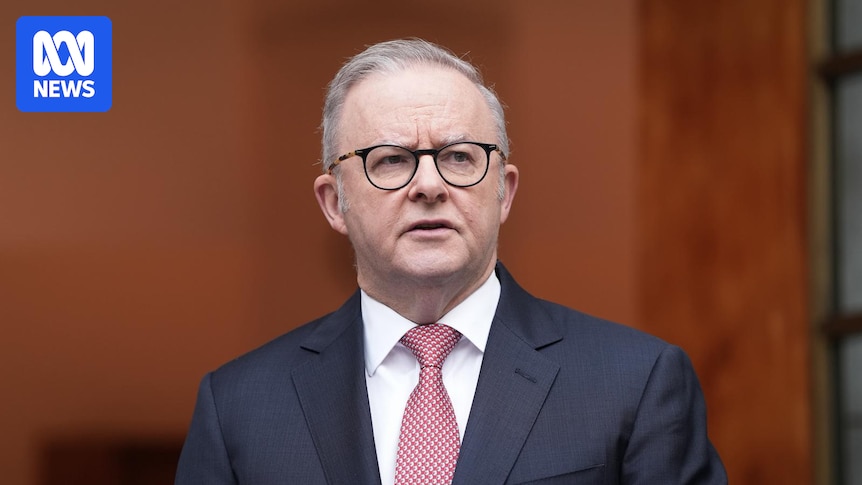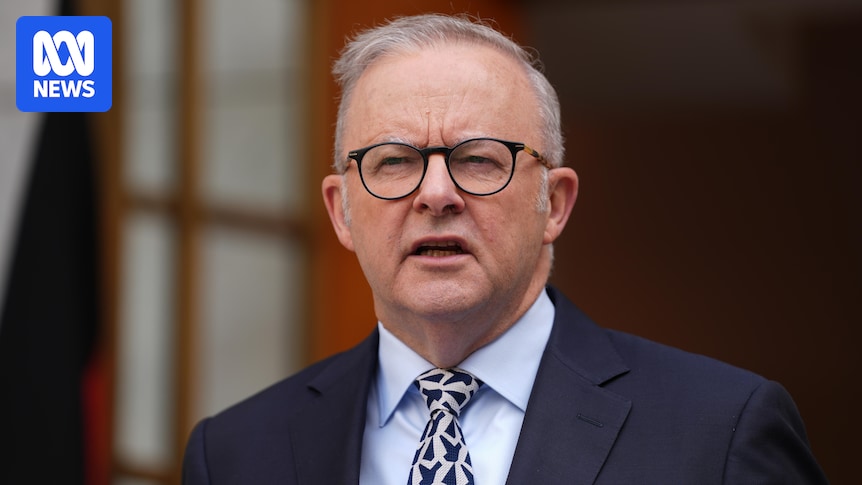

January 26, 2026 — In a poignant Australia Day address, Prime Minister Anthony Albanese emphasized the importance of democracy and shared values to new citizens at a national ceremony in Canberra. His remarks came in the wake of a terror attack in Bondi and amid a heated national debate over immigration policies.
Albanese addressed the new Australians with a message of unity and hope, stating, “It’s the respect for our common humanity that defines Australia. Hope, not fear, optimism, not negativity, and indeed, unity, not division – that is the Australia of 2026 that you are pledging to be a part of.” He drew on the words of former Labor Prime Minister Ben Chifley, highlighting that democracy in Australia is not merely a platitude but a practiced reality.
His speech underscored citizenship as a civic duty, emphasizing the shared responsibility of all Australians, whether by birth or by choice. “Whether we are Australian by birth or by choice, we all share the opportunity, the privilege and also the responsibility of being part of something quite extraordinary,” Albanese remarked.
Protests and Tensions Across the Nation
The prime minister’s address coincided with significant unrest in major cities, where Invasion Day protests and March for Australia rallies underscored deep divisions over race, immigration, and national identity. In Brisbane, One Nation leader Pauline Hanson criticized migration policies and dismissed climate change, positioning herself as a defender of “true” Australian values.
In Perth, tensions rose as police instructed parts of the Invasion Day rally crowd to disperse due to safety concerns. Meanwhile, in Sydney, a 31-year-old man was arrested for antisemitic remarks during the March for Australia rally, violating NSW hate speech laws. NSW Assistant Commissioner Brett McFadden stated, “We will allege that the language used breached, well and truly, the line of free speech to incite hatred towards another group of the community.”
Violence and Arrests
Violence erupted in Melbourne near Parliament Station following the March for Australia rally, with a brawl breaking out between two young men. Police intervened as rally-goers clashed with a family of Invasion Day protesters, highlighting the day’s volatility.
Anti-immigration sentiments were vocalized with chants of “send them back” and “Albo must go.” Extreme-right influencer Hugo Lennon addressed the crowd, unapologetically declaring, “not sorry for being white,” which was met with cries of “heil Hugo” from some attendees.
Political Reactions and Implications
In Brisbane, Hanson sharpened her attack on immigration and climate policy, rallying support as One Nation’s popularity rises in the polls. She criticized the government for high migration levels, quoting statistics that the Australian Bureau of Statistics advises against using for immigration purposes.
“You’re the one who created this mess, you’re the one who brought all these people into the country – 1560 a day, that’s how many are coming in,” she asserted, waving a large Australian flag. Hanson urged her supporters to join One Nation, with volunteers distributing pamphlets to the crowd.
Meanwhile, Liberal leadership hopeful Andrew Hastie attended a citizenship ceremony in Perth, advocating for lower migration levels while emphasizing the need for immigrants to embrace Australian values. “I think Australia is a country that is welcoming. We want people to come here and settle in this country, but they have to sign up to what the prime minister called the Australian covenant,” Hastie stated.
Looking Forward
The events of Australia Day 2026 highlight the ongoing tensions and debates surrounding immigration and national identity. As the nation grapples with these issues, the government faces the challenge of balancing security, cultural integration, and the values of democracy and unity that define Australia.
The coming months will likely see continued discourse on these topics, with political leaders and the public engaging in discussions about the future direction of the country. The prime minister’s call for unity and respect for shared values serves as a reminder of the ideals that underpin Australian society, even amid division and unrest.