




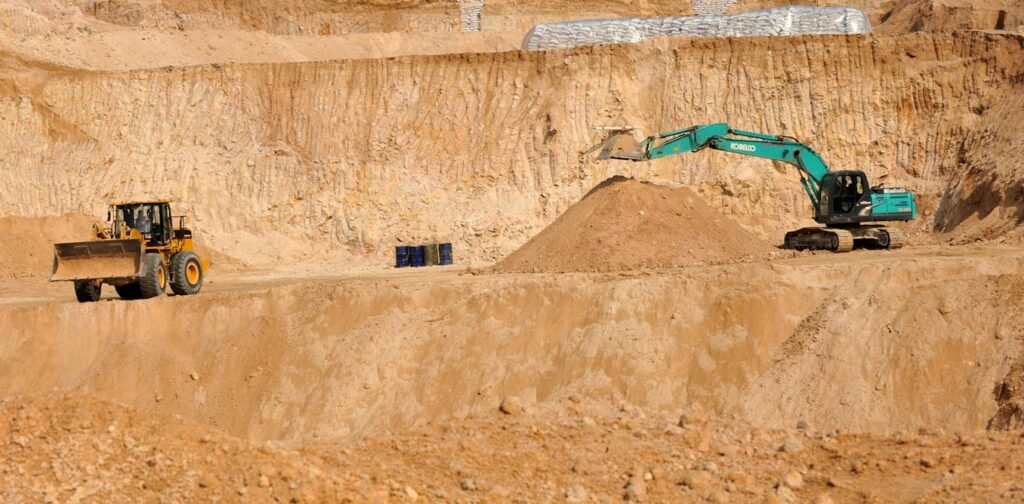
In a significant move towards establishing itself as a global leader in critical minerals, Australia signed a landmark A$13 billion agreement with the United States this October. The deal is set to enhance the supply of minerals essential for military technology and clean energy solutions. While Australia boasts substantial reserves of these minerals, the United States is keen to diversify its sources, breaking away from China’s near-monopoly over the global supply chain.
However, the path to becoming a critical minerals superpower is fraught with challenges. Historically, Australia has preferred to export raw ores, leaving the environmentally damaging processing stages to other countries. This strategy has allowed Australia to sidestep the pollution issues associated with transforming ores into usable minerals, which include managing radioactive waste and hazardous chemicals.
Environmental Challenges and Historical Context
The decision to outsource the most polluting aspects of mineral processing is not unique to Australia. In the 1990s, the United States saw major rare earth mines like Mountain Pass scale down or cease operations due to their environmental impact. As a result, countries under economic pressure, or those with less stringent environmental regulations, absorbed these activities. China, in particular, capitalized on this shift, and now refines approximately 80% of the world’s rare earths.
This trend reflects a broader global pattern where affluent nations outsource pollution and environmental degradation to less regulated regions. Investigations have highlighted the severe environmental damage caused by rare earth mining, including heavy metal pollution and the release of radioactive materials.
Australia has been a beneficiary of this outsourcing. For over a decade, Lynas Corporation, a major Australian rare earths producer, has mined ores in Western Australia and shipped them to Malaysia for processing. While this approach satisfies national environmental standards, it effectively relocates the environmental burden. Despite Lynas’s defense of its operations as safe and compliant, the Malaysian government mandated in 2020 that Lynas relocate its processing of low-level radioactive waste back to Australia.
Developing Domestic Processing Capacity
In response to environmental concerns and regulatory pressures, Lynas has inaugurated a new facility in Kalgoorlie, Australia, to handle some processing stages domestically. Similarly, Iluka Resources is constructing the country’s first fully integrated rare-earth refinery near Perth. These developments mark a shift towards expanding domestic processing capacity, although reliance on overseas facilities for the most hazardous stages persists.
Cleaner processing technologies, such as improved solvent extraction and closed-loop systems, offer potential solutions but remain costly and challenging to scale. Consequently, many producers continue to depend on international facilities where these processes can be conducted more cheaply or under lighter regulatory frameworks.
Shared Governance and Sustainable Practices
Addressing the environmental impact of critical minerals requires a fair distribution of responsibilities. To make Australia’s supply chains sustainable, several measures are essential:
- Robust environmental standards for both mining and processing activities.
- Transparent and traceable supply chains to ensure accountability.
- Incentives that reward cleaner production and penalize polluting practices.
Industry self-regulation has proven inadequate, often falling prey to weak oversight. Instead, a co-regulation approach, involving government, industry, and communities, can create adaptive and enforceable regulations. The European Union’s frameworks, such as the Ecodesign for Sustainable Products Regulation, exemplify how collaborative governance can foster sustainable practices.
Incentives like green tax breaks or certification schemes can promote cleaner production. The EU’s Carbon Border Adjustment Mechanism, set to take effect on January 1, is already encouraging producers to improve emissions reporting.
The Role of Digital Traceability
Ensuring the sustainable production of critical minerals is challenging, as highlighted in a recent United Nations white paper. One proposed solution is the implementation of digital product passports, which would track minerals through every stage of their lifecycle. These passports would enhance transparency, secure cross-border transport, and build trust among consumers and investors.
Digital product passports are set to be introduced in the EU next year for various products, including textiles and car batteries. However, their implementation faces legal challenges, such as the lack of a standardized list of critical minerals and the complexity of tracking minerals across multiple countries.
Towards a Sustainable Future
Australia’s agreement with the United States is a strategic step in the clean-energy transition. However, increasing the production of critical minerals must not perpetuate environmental injustices. The future of this transition lies in eliminating pollution through innovative technologies, traceability, and shared responsibility across borders.
As Australia navigates its path to becoming a critical minerals superpower, it must balance economic ambitions with environmental stewardship. The success of this endeavor will depend on the country’s ability to implement sustainable practices that protect the planet while meeting global demand.