


When you ask ChatGPT about joining the navy, it often directs you to the United States Navy. Similarly, when a doctor uses AI to transcribe patient notes and hears, “I’m not too bad,” the American-built system might miss that this actually means the patient isn’t feeling well. These cultural blind spots are driving Sovereign Australia AI’s bold plan to create a home-grown alternative to ChatGPT for under $100 million—a fraction of the billions invested by Silicon Valley’s AI giants.
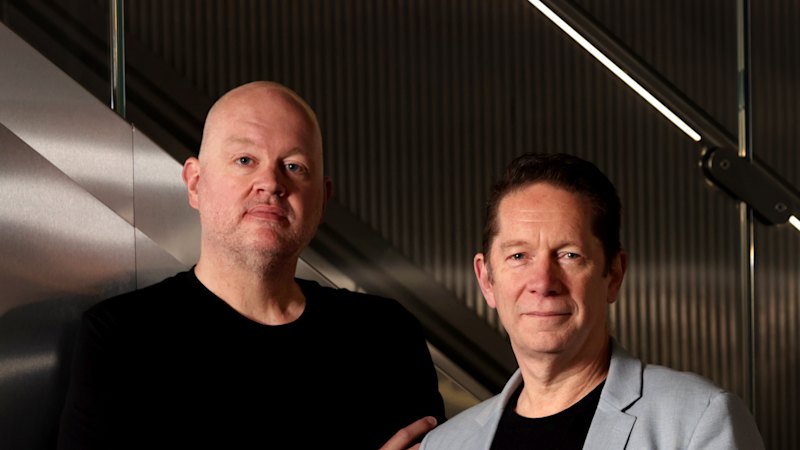
“We don’t need to go head-to-head with OpenAI, and we don’t want to,” said Simon Kriss, co-founder and CEO of Sovereign Australia AI. “They’re five years and several billion dollars ahead of us. But most Australian business use cases are simply a language model.”
Building a Culturally Aware AI
The company has ordered 256 Nvidia Blackwell B200 GPUs, marking the largest sovereign AI hardware deployment by an Australian company. These will be housed in NEXTDC’s Melbourne data centre. Sovereign Australia AI is developing two models: Ginan, a smaller research model to be open-sourced for free, and Australis, a 700-billion-parameter flagship designed to understand Australian slang, legal frameworks, and cultural values.
“We wanted a model that understands the difference between a pair of togs and a pair of thongs, and knows that thongs aren’t underwear,” Kriss explained. “In Australia, we talk about what things aren’t. How are you today? I’m not bad. How much did that cost? Not too much. Americans are really forthright and talk about what things are. Unless you understand Australian culture, you wouldn’t get that.”
The Case for Sovereignty and Security
The push for a sovereign AI isn’t just cultural—it’s about security. Under the US Cloud Act, American companies can be compelled to hand over data from servers anywhere in the world without notifying clients. “If it’s a US identity, you’ve got zero protection,” Kriss noted.
He pointed to Finance Minister Katy Gallagher’s recently announced Gov AI Chat initiative as a natural fit. “We would love to be the model that sat underneath Gov AI Chat, because it is an Australian model built here, housed here, inferenced here,” he said. “That’s going to be a whole lot more secure than getting ChatGPT and tweaking it to sound more Australian.”
OpenAI’s Response and Local Investment
OpenAI, which opened its first Australian office in Sydney this year, isn’t ceding ground. At Canva’s Create event, OpenAI’s managing director for international, Oliver Jay, emphasized Australia’s importance to the company. “The user growth in Australia has gone two and a half times since a year ago,” Jay told Canva co-founder Cameron Adams on stage. “We’re seeing a lot of momentum.”
Jay mentioned that OpenAI was hiring aggressively locally and collaborating with partners including CommBank, Coles, and Canva. The company has developed an “OpenAI for countries” program to work directly with governments on national AI strategies.
In a separate interview, Jay acknowledged the case for local investment: “Countries investing in their own AI capabilities is a good thing—it builds resilience and sovereignty.” However, he argued that OpenAI’s frontier models could serve Australian needs through localisation “across three layers—in the model itself, in the product, and in the broader ecosystem of Australian partners.”
Debate Over AI Development Strategies
Kriss isn’t convinced. He referenced Donald Trump’s recent directive to American AI founders that their next models “cannot be woke”—no discussion of diversity, inclusion, or climate change. “Is that what we want for Australia? We have our own values here,” he said. “It’s the same thing as should we pay for copyrighted content. We believe we should, because that’s Australian.” Sovereign Australia AI has earmarked $10 million to compensate copyright holders and announced research partnerships with UNSW and Deakin University to develop benchmarks for measuring how “Australian” an AI model actually is.
Meanwhile, Mike Cannon-Brookes, Atlassian co-founder and Australia’s most prominent tech billionaire, remains skeptical. He argues that Australia should focus on applying AI rather than building foundation models. “I’m not building foundation models. There’s some crazy, cool science in building these models—it’s an awesome intellectual exercise,” Cannon-Brookes told this masthead. “What I need to be good at is applying those models to customer problems.”
He believes Australia’s real opportunity lies in cheap renewable power for AI data centres and smart adoption across the economy—not chasing Silicon Valley’s model-building race. “This sense that we need to own all the fundamental technologies—I get lost by that,” he said. “If we provided a shedload of power to data centres and we’re applying AI in our economy, we’d be in a way better spot.”
Technology veteran Craig Dargusch, chief data officer at information services company Cotality, said the challenge was more fundamental than most realized. “If we gathered every word ever written by Australians throughout history, it still wouldn’t come close to the data required to train a purely Australian foundational model,” Dargusch said. “Large language models are built on humanity’s collective knowledge-wisdom accumulated over thousands of years. AI has already broken free of nations and borders.”
However, he argued that the solution wasn’t necessarily building from scratch—it was fine-tuning existing models for local context.
The debate over whether Australia should develop its own AI models or focus on adapting existing technologies continues to unfold. As Sovereign Australia AI moves forward with its ambitious plans, the outcome could significantly shape the future of AI in the region.